Weis Markets (WMK) — Supplier Relationships and Operational Constraints Investors Should Price In
Weis Markets operates as a regional grocery retailer headquartered in Sunbury, Pennsylvania, monetizing through brick-and-mortar food sales, private-label and promotional programs, and a partly self-distributed supply chain that drives margin control. The company runs a hybrid distribution model—self-distributing roughly half of store product through its own distribution centers and transportation fleet—while cultivating targeted supplier partnerships for fresh and differentiated produce programs that support in-store traffic and reduce shrink. Investors should value Weis for stable revenue (roughly $4.96B TTM) and modest margins, but balance that with supplier concentration and contractual dynamics that affect perishables sourcing and in-store execution. For a deeper view of supplier exposures and operational constraints, visit https://nullexposure.com/.
Why supplier relationships matter to WMK investors: the quick take
Weis is a low-beta, regionally focused grocer with steady cash flow characteristics and a distribution-centric operating posture. That posture produces a small set of structural facts that drive investor returns:
- Control over distribution (self-distribution ~53%) is a margin lever and a source of operational risk when supplier logistics or exclusivity terms change.
- Fresh and proprietary supplier programs (e.g., in-store herb displays, hydroponic produce, regional leafy greens) are revenue enhancers because they improve yield and customer differentiation.
- Long-term contracting incentives with exclusivity create locked-in assortments that stabilize supply but also concentrate counterparty risk.
These operating characteristics explain why Weis trades with moderate multiples (trailing P/E ~18.3, forward P/E ~8.7) against steady revenue and a low beta profile. If you evaluate WMK exposure, supplier program durability and distribution economics are as material as same-store sales trends. Explore supplier mapping and risk scoring at https://nullexposure.com/.
Who supplies Weis and why investors should note each relationship
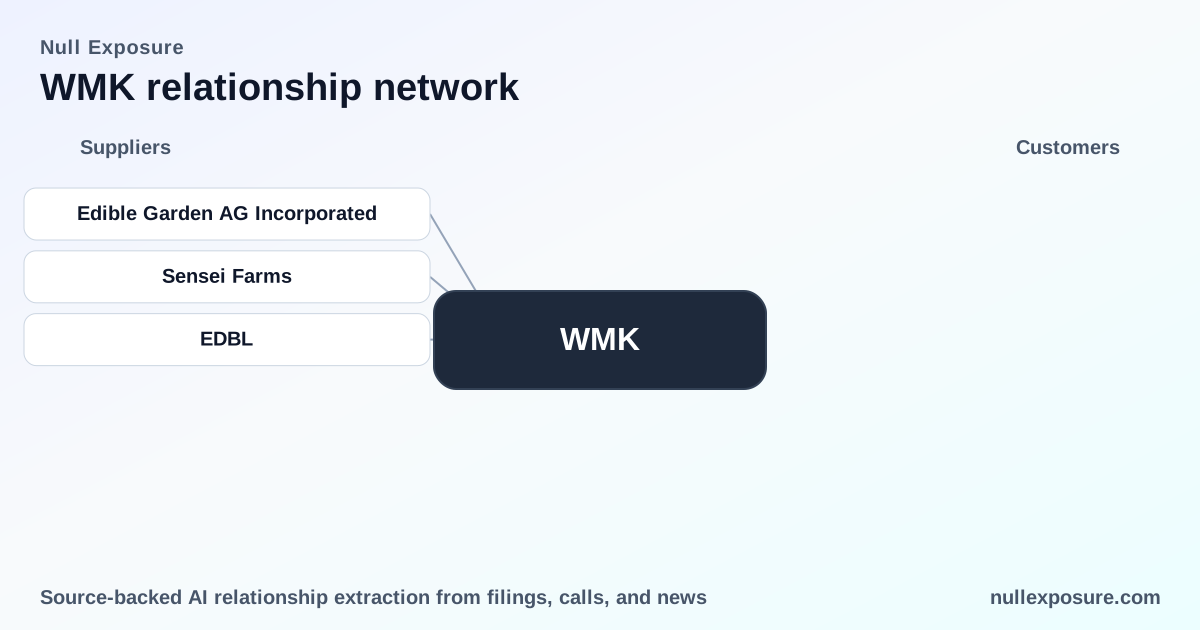
Edible Garden AG Incorporated — regional hydroponic herbs and integrated in-store program
Edible Garden began shipping a fully integrated fresh herb program to Weis, supplying fresh potted herbs, hydroponic basil and cut herb varieties while delivering proprietary in-store displays designed to improve presentation and reduce food waste. This relationship signals a strategic push into higher-margin, sustainability-branded produce that supports in-store freshness claims and inventory efficiency, as reported in a GlobeNewswire press release on December 18, 2025, and covered by SimplyWallSt in March 2026.
Sensei Farms — leafy greens and salad mixes for Mid‑Atlantic stores
Sensei Farms expanded distribution into participating Weis Markets locations across the U.S. Mid‑Atlantic, supplying responsibly grown leafy greens and salad mixes that broaden Weis’s regional fresh produce assortment and appeal to health‑oriented shoppers. Bluebook Services reported this distribution expansion referencing FY2024 initiatives, positioning Sensei as a regional supplier to Weis’s store footprint.
Operating constraints and what they say about Weis's business model
The available constraint signals paint a consistent company-level picture: Weis runs a distribution-first model with selective long-term supplier agreements.
- Contracting posture: Long-term contract incentives that require exclusivity are allocated over the contract life, which means Weis negotiates durable supplier commitments in exchange for shelf and in-store real estate. That structure secures supply and merchandising continuity but increases vendor concentration risk for program participants.
- Distribution role and maturity: Weis self-distributes approximately 53% of product from strategically located distribution centers and its own transportation fleet; the remainder is supplied by direct store vendors and regional wholesalers. This is not a passive retail chain—distribution capability is a core competency and control point for margins and service levels.
- Segment implication: The company’s supplier relationships skew toward integrated fresh programs and regional produce partnerships, reflecting a business focus on perishable differentiation rather than commoditized national pack.
Treat these signals as structural constraints: exclusivity terms are a bargaining chip and a lock-in mechanism, while self-distribution creates operating leverage but also exposes Weis to logistics cost swings and supplier operational failure that can quickly affect sales of perishables.
Risk and upside vectors investors should monitor
- Risk — Supplier concentration and exclusivity: Long-term exclusive arrangements heighten counterparty risk if a supplier cannot scale or suffers quality issues; replacing an exclusive fresh program has real shelf‑execution costs.
- Risk — Logistics cost and fleet utilization: Self-distribution improves margin capture but makes the company sensitive to transportation fuel and labor dynamics; any underutilization of DC capacity can erode returns.
- Upside — Differentiated fresh programs: Proprietary in-store displays and sustainability positioning reduce shrink and create a higher gross-profit per square foot for fresh categories.
- Catalyst — Expand regional supplier partnerships: Additional regional producers like Sensei Farms broaden assortment with limited capital spend and support same-store sales growth in core markets.
How to translate supplier signals into investment action
For investors, supplier relationships are not a peripheral disclosure; they are a direct lever on gross margin and inventory turns. Underwrite WMK with explicit assumptions around:
- the durability of long-term exclusive supplier contracts and the cost of replacing them;
- DC and fleet utilization rates and sensitivity to logistics inflation;
- the conversion lift from proprietary fresh programs to ticket and frequency.
If you want structured supplier intelligence or a vendor-concentration heat map to feed financial models, check out NullExposure’s supplier mappings at https://nullexposure.com/.
Final read: positioning WMK in a portfolio
Weis Markets is a classic regional, low‑volatility grocery play with operational strengths in distribution and curated fresh programs. Investors should view supplier relationships—especially exclusive, long-term fresh programs—as a two-way sword: they stabilize assortment and improve margins, but they increase counterparty concentration and logistical exposure. Monitor rollouts from partners like Edible Garden and Sensei Farms as bellwethers of Weis’s ability to monetize differentiated produce while managing shrink and supply chain cost.
For active due diligence support on WMK supplier exposure and distribution risks, visit https://nullexposure.com/ and request a supplier risk briefing.