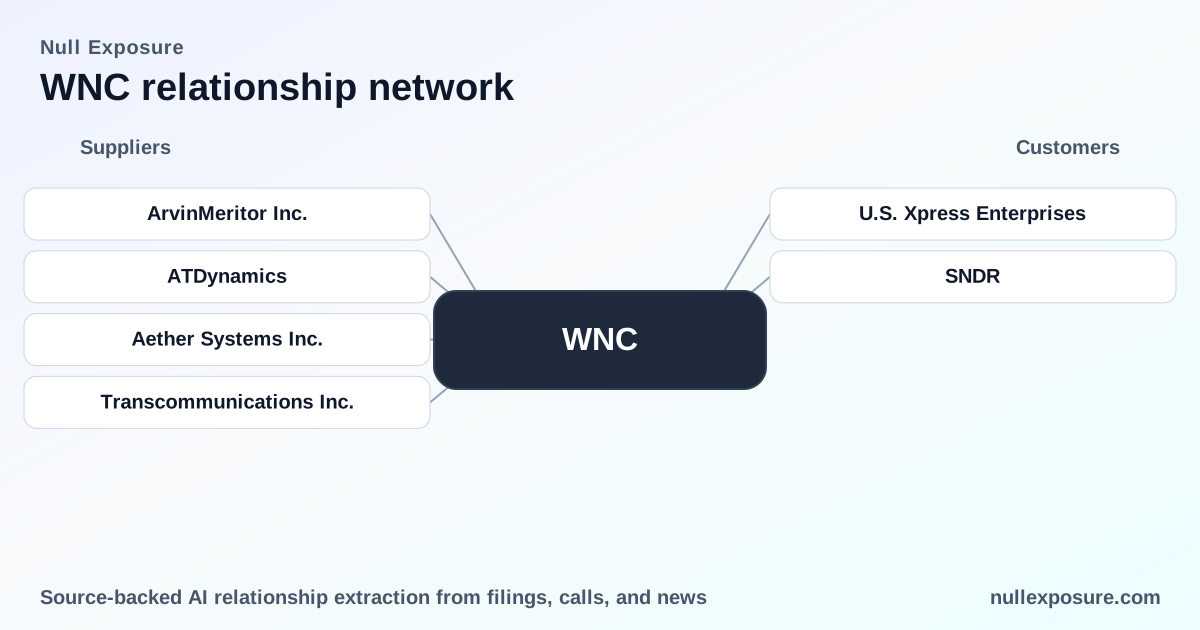
Wabash National (WNC) — Supplier Relationships and Operational Implications
Wabash National designs, manufactures and distributes trailers and engineered transportation solutions and primarily monetizes by selling semi-trailers, refrigerated vans, and value-added options and services to fleets and logistics operators. The company captures margin through integrated manufacturing, optional equipment upsells (aerodynamic devices, telematics), and aftermarket services, while its supplier network supplies critical subassemblies, telemetry systems and chassis inputs that determine cost, lead time and product features. For a concise market-level view of supplier risk and partner exposure, visit https://nullexposure.com/.
How Wabash contracts for inputs and what that means for investors
Wabash’s operating model combines in-house assembly with dependent upstream suppliers for complex sub-systems. Company disclosures identify a reliance on a limited number of suppliers for key components — axles, suspensions, landing gear, specialty steel and aluminum extrusions — which the firm classifies as critical. That concentration translates to a contracting posture that is operationally sensitive: supply interruptions or single-source pricing pressure would affect production cadence and margins more quickly than for a broadly diversified OEM.
- Concentration and criticality: Wabash confirms limited-supplier exposure for core hardware, a manufacturer posture that elevates supplier negotiation leverage and execution risk.
- Buyer and manufacturer roles: The company acts both as a buyer of chassis and as a manufacturer under converter-pool agreements, indicating recurring procurement commitments and integration complexity.
- M&A and spend signal: Recent corporate activity includes modest strategic purchases: an acquisition closed February 3, 2025 with an initial outlay in the low millions and potential earnouts, implying active but measured inorganic investment in capabilities.
These are company-level signals drawn from Wabash filings and reporting, and they frame the supplier relationships covered below.
The partner list — who supplies what and why it matters
ArvinMeritor Inc.
Wabash sources fully assembled undercarriage systems from ArvinMeritor’s Frankfort, Ky. facility, which are shipped to Wabash’s Lafayette assembly line for final integration on large fleet orders. This arrangement reflects a classic outsourced subassembly relationship that reduces Wabash’s in-house complexity but creates dependency on third-party assembly throughput (TruckingInfo, March 10, 2026 — https://www.truckinginfo.com/news/wabash-arvinmeritor-announce-120-million-us-xpress-order).
ATDynamics
Wabash now offers ATDynamics TrailerTails as an option across selected dry van and refrigerated models, enabling aerodynamic fuel-efficiency upgrades sold at point of trailer purchase. Offering TrailerTails as factory-fit optional equipment strengthens Wabash’s upsell revenue and product differentiation (TruckingInfo, March 10, 2026 — https://www.truckinginfo.com/products/atdynamics-trailertails-now-an-option-on-wabash-national-trailers).
Aether Systems Inc.
Wabash is equipping trailers with GeoLogic, an asset monitoring and tracking system provided by Aether Systems, bundled with other communications partners to deliver telematics and fleet visibility. Integrating GeoLogic positions Wabash to monetize telematics either through equipment premiums or subsequent services, expanding revenue beyond pure hardware sales (TruckingInfo, March 10, 2026 — https://www.truckinginfo.com/news/wabash-arvinmeritor-announce-120-million-us-xpress-order).
Transcommunications Inc.
Transcommunications is named alongside Aether Systems as a technology partner for GeoLogic asset-monitoring systems installed on Wabash trailers, indicating a multi-vendor approach to telematics integration and redundancy across connectivity layers. This dual-sourcing of telemetry components reduces single-vendor dependency for connected services (TruckingInfo, March 10, 2026 — https://www.truckinginfo.com/news/wabash-arvinmeritor-announce-120-million-us-xpress-order).
What the relationship map means for revenue, cost and margin
The combination of outsourced mechanical subassemblies and third‑party telematics options creates a two-pronged commercial model: hardware sales (trailers) drive base revenue while optional equipment and connected services provide higher-margin attach sales. Offering aerodynamic and telematics options factory-installed improves attach rates and lifecycle revenues. However, reliance on a limited supplier base for core mechanical components creates operating leverage both ways — procurement issues compress shipments and revenue, but efficient supplier relationships can scale margin improvements quickly once order books recover.
Wabash’s balance of manufacturer and buyer roles (procuring chassis and integrating them under converter agreements) underscores predictable recurring spend but also locks the company into medium-term supply commitments. The company’s February 2025 acquisition of TrailerHawk.ai (initial consideration in the low‑millions with potential earnouts) signals a deliberate move to consolidate digital capabilities, consistent with a strategy to expand telematics and software-enabled services revenue.
For a supplier-risk dashboard and investor-grade relationship analytics, see https://nullexposure.com/ — it’s a useful complement to public filings and news reporting.
Operational constraints and how they shape strategic risk
Wabash’s disclosures lay out constraints that investors must treat as structural, not anecdotal:
- Critical supplier concentration: Key components are sourced from a limited pool of suppliers, which creates supply fragility and concentrated negotiation risk.
- Manufacturer procurement commitments: The company obtains chassis under converter pool agreements, creating long-dated supply arrangements that are operationally binding.
- Buyer posture with measured M&A: Wabash acts as an active buyer in adjacent technologies, evidenced by a February 3, 2025 acquisition with an initial cash outlay in the $1–10 million band and possible future earnouts, indicating moderate capital allocation to capability expansion rather than large transformational deals.
These constraints elevate near-term execution risk but also create structured levers for margin improvement if supplier relationships and integration of telematics options scale effectively.
Investment implications and tactical takeaways
- Upside drivers: Factory-fit aero and telematics options (ATDynamics, Aether/Transcommunications) increase average selling price per trailer and create recurring service opportunities; successful integration of GeoLogic can convert hardware sales into annuity-like services.
- Downside risks: Concentrated supply of axles, suspensions and other undercarriage elements (ArvinMeritor partnership illustrates outsourced subassembly reliance) creates a path for supply shocks to compress revenue and reorder schedules.
- Governance and monitoring: Investors should watch supplier continuity disclosures, inventory and lead-time commentary in quarterly filings, and any escalation in single-supplier spend.
If you evaluate supplier concentration as part of due diligence, NullExposure’s supplier analysis tools provide consolidated partner intelligence and risk scoring — visit https://nullexposure.com/ for more.
Final read: balance of risk and optionality
Wabash National’s supplier map is a mix of necessary concentration for capital efficiency and strategic diversification where it enhances product value (telemetry, aero devices). The company is converting manufacturing scale into optional upsell economics while accepting supplier‑side concentration as a trade-off. For investors focused on industrials and supply-chain exposure, the primary monitoring items are supplier continuity, telematics attach rates and any shifts in procurement contract structure that could change cost pass-through dynamics.
For continuous monitoring of Wabash’s supplier relationships and for comparative supplier-risk analytics across industrials, visit https://nullexposure.com/.