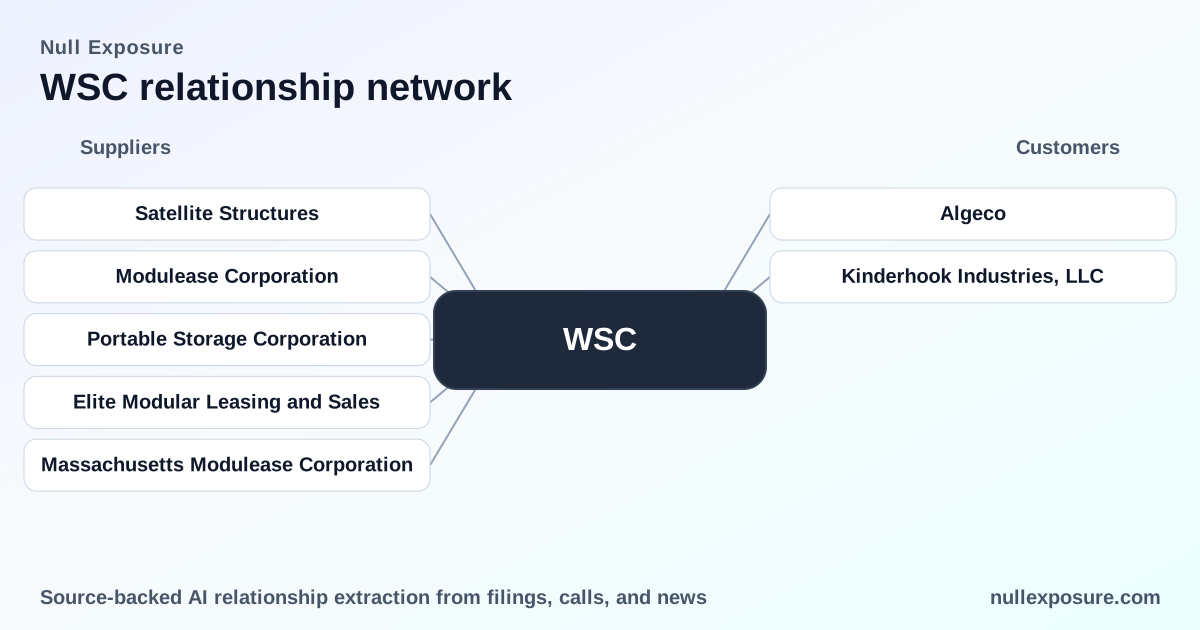
WillScot Mobile Mini (WSC): Supplier relationships and what they mean for investors
WillScot Mobile Mini operates as North America’s dominant modular space and portable storage lessor, monetizing through a large rental fleet, sales of surplus units, and targeted acquisitions that fold smaller regional fleets into a national platform. The company translates scale into higher utilization, pricing power and aftermarket sales; reported trailing revenue is roughly $2.28 billion with adjusted EBITDA near $601 million, underscoring a capital-intensive but cash-generative rental model. For investors and operators assessing WSC’s supplier posture and counterparty exposure, the firm combines ongoing M&A-driven fleet growth with explicit purchase commitments that shape procurement and capital allocation. Learn more at https://nullexposure.com/.
How WillScot runs procurement and supply relationships — the operating signal
WillScot’s supplier posture is active and contractually committed. Public disclosures show a November 2024 fixed-dollar, unconditional purchase obligation that requires the company to buy $20.0 million of rental equipment before November 2027, which indicates a multi-year supplier engagement strategy and a meaningful capital commitment to vendor-supplied equipment. According to filings, the company also routinely engages assessors, consultants and other third-party service providers to maintain operational quality and risk oversight, which positions many external providers as recurring service partners rather than one-off vendors.
These constraints yield several practical characteristics for WSC’s supplier ecosystem:
- Contracting posture: Long-term, committed purchase obligations (company-level signal) force predictable order flow and lock in spend patterns; this reduces short-term procurement optionality but supports vendor planning and scale discounts.
- Spend concentration and scale: The $20 million unconditional obligation sits in a $10M–$100M spend band, signaling material but not single-vendor-dominant spend levels across the supply base.
- Criticality: Equipment suppliers are mission-critical to operations because rental inventory underpins revenue; long-term commitments and active relationship status amplify this criticality.
- Maturity and oversight: Regular engagement of external assessors and auditors reflects a mature third-party management program, indicating enterprise-level controls over supplier performance and compliance.
If you want a concise, investor-grade map of these counterparty dynamics, visit https://nullexposure.com/ for a deeper supplier-risk brief.
The acquisitions and supplier relationships investors should know
WillScot’s supplier and acquisition activity is concentrated on buying regional modular and portable-storage providers and their fleets. Below are each of the relationships surfaced in coverage, summarized in plain English with sourcing.
Satellite Structures
WillScot acquired the range of blast-resistant modules and related products from Satellite Structures, adding specialized, higher-margin inventory that addresses defense and industrial customers requiring hardened shelter solutions. According to International Rental News, this purchase expands WillScot’s product breadth and capability set (International Rental News, article on the acquisition).
Modulease Corporation
WillScot purchased the rental fleet and related assets of Modulease Corporation, integrating regional fleet capacity and customer relationships into its national network to improve utilization and reduce marginal operating costs. This transaction was announced in a GlobeNewswire press release in July 2022 describing the acquisition of Modulease’s fleet and assets (GlobeNewswire, July 13, 2022).
Portable Storage Corporation
WillScot’s recent deals included Portable Storage Corporation as part of a string of purchases that increased unit count by thousands; the announcement links Portable Storage Corporation to a broader acquisition wave that added roughly 11,000 units to WillScot’s fleet. International Rental News documented Portable Storage Corporation’s inclusion in the deal flow that grew WillScot’s inventory footprint (International Rental News, coverage of the acquisition wave).
Elite Modular Leasing and Sales
WillScot completed a mid-year purchase of Elite Modular Leasing and Sales in California, acquiring an on-the-ground dealer and rental footprint that strengthens presence in a large West Coast market. International Rental News referenced this California purchase as part of WillScot’s tactical regional consolidation (International Rental News, coverage referencing the Elite Modular transaction).
Massachusetts Modulease Corporation
WillScot acquired the Massachusetts operation of Modulease Corporation in July, a targeted regional buy that supplied incremental fleet capacity in New England and reinforced local customer relationships. International Rental News listed Massachusetts Modulease as a component of WillScot’s acquisition activity in that period (International Rental News, article noting Massachusetts Modulease).
What these relationships imply for investors and operators
The pattern of transactions and disclosed procurement constraints delivers a clear strategic picture: WillScot grows both organically and by buying fleets, then harmonizes those assets into a national operating platform. That strategy has three investor-relevant implications:
- Scalability and margin leverage. Acquisitions that add fleets and specialized product lines (blast-resistant modules, portable storage) increase utilization potential and aftermarket sales, supporting the company’s reported operating margin profile and EBITDA generation.
- Capital intensity and committed spend. The November 2024 $20.0 million unconditional purchase obligation is a concrete example of how procurement commitments lock capital into future inventory additions; this is a manageable but non-trivial use of capital that affects free cash flow timing and vendor negotiations.
- Integration and execution risk. Repeated regional buys improve scale but require consistent integration—logistics, refurbishment, and route optimization—so operational execution drives value realization rather than deal count alone.
- Supplier management sophistication. Regular engagement with assessors, consultants and auditors signals formalized third-party oversight, reducing operational surprises and supporting predictable service levels from critical suppliers.
If you want a focused risk report on how these supplier commitments affect cash flow and valuation sensitivities, check the analysis hub at https://nullexposure.com/ for tailored briefings.
Bottom line: what to watch next
For investors and operators tracking WSC, monitor three variables closely: (1) utilization after each acquisition, which determines whether purchases translate to revenue growth; (2) capital allocation against purchase obligations, specifically the remaining timing and funding for the $20 million commitment through November 2027; and (3) integration costs and maintenance capex tied to newly acquired fleets. Collectively, these determine whether WillScot’s acquisition-led growth converts into durable margin expansion or simply raises capital intensity.
For an investor-ready supplier exposure dashboard and ongoing updates, visit https://nullexposure.com/ to subscribe to targeted briefings and supplier-risk analytics.