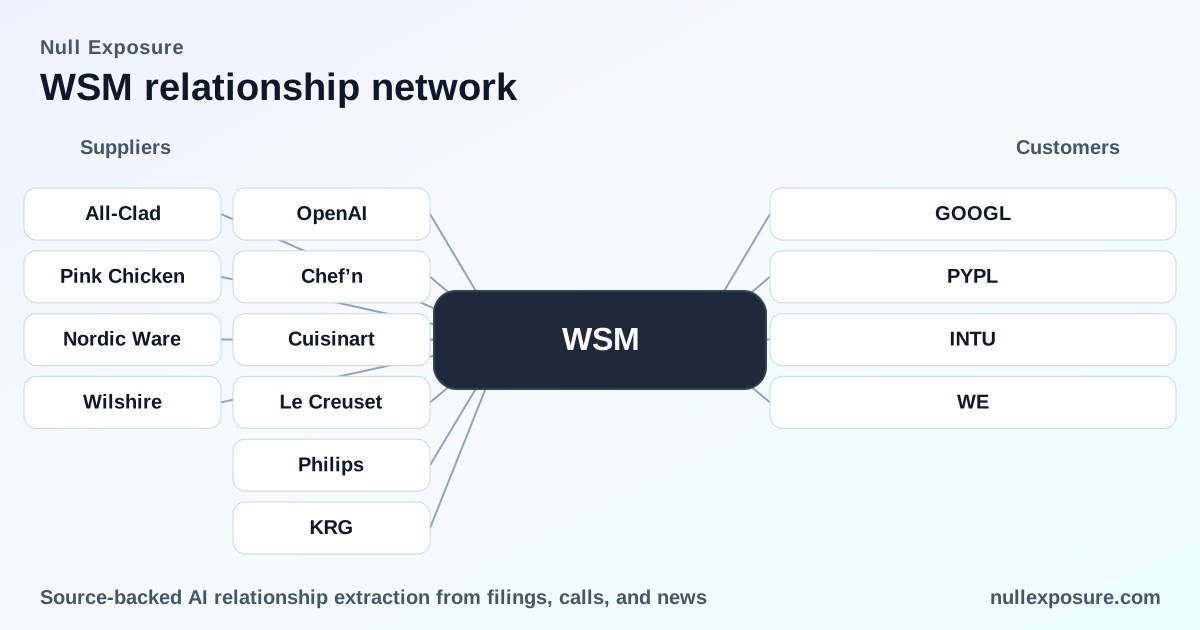
Williams‑Sonoma (WSM): Supplier relationships and what they mean for investors
Williams‑Sonoma is an omnichannel, design‑led home furnishings retailer that monetizes through the sale of premium branded merchandise across owned brands (West Elm, Pottery Barn) and a curated portfolio of third‑party cookware and lifestyle vendors, combining high gross margins with inventory‑driven seasonal cycles. Revenue is driven by product mix and brand strength while operating leverage flows from digital scale and store footprint; strategic supplier and marketing partnerships now influence both assortment and customer acquisition economics. For a concise, centralized read on supplier exposures and partner signalling, visit https://nullexposure.com/.
How Williams‑Sonoma sources risk and optionality
Williams‑Sonoma’s supplier posture is shaped by three operational realities that investors should internalize. First, the company books merchandise orders up to 12 months in advance, which creates lead‑time risk but also gives negotiating leverage on volume and quality. Second, the procurement base is geographically concentrated in Asia — roughly 82% of purchases are foreign‑sourced with meaningful shares from China, India and Vietnam — creating exposure to shipping, tariffs and regional inflation. Third, Williams‑Sonoma purchases from a large number of manufacturers where the largest supplier represented only about 3% of purchases in fiscal 2024, indicating low counterparty concentration and reduced single‑vendor dependency.
These characteristics produce practical business constraints: contracting is typically short‑term but seasonal, supplier relationships are transactional and high‑volume rather than exclusivity driven, and overall materiality of any single manufacturer is low — a company‑level signal that protects operations from supplier failure but not from systemic regional disruptions.
Enumerated partners and suppliers you should know
Below I cover every reported relationship in the most recent supplier/partner mentions and what each connection signals for Williams‑Sonoma’s commercial strategy.
-
OpenAI — Williams‑Sonoma joined OpenAI’s Ad Pilot Program to test clearly labeled, privacy‑conscious ads in ChatGPT aimed at product discovery and reaching customers during decision moments; this is a marketing channel experiment that could lower customer acquisition costs if effective. Source: Retail Dive and company announcements, FY2026 (see Retail Dive, March 2026; HF Business, March 2026).
-
Chef’n — Chef’n products were listed as part of Williams‑Sonoma promotional assortments during a Presidents’ Day sale, reflecting the retailer’s role as a high‑margin distributor for small kitchen gadget brands. Source: Food & Wine, Presidents’ Day sale coverage, FY2026.
-
Cuisinart — Cuisinart appliances were included in Williams‑Sonoma promotional merchandising, reinforcing the company’s position as a destination for established cookware brands. Source: Food & Wine, FY2026.
-
Le Creuset — Le Creuset cookware figures prominently in promotional assortments, underscoring Williams‑Sonoma’s curated premium cookware strategy that supports higher average order values. Source: Food & Wine, FY2026.
-
Philips — Premium kitchen appliances such as Philips’ pasta maker were promoted through Williams‑Sonoma sales events, signaling cross‑category breadth in the retailer’s curated assortment. Source: Food & Wine, FY2026.
-
All‑Clad — All‑Clad cookware was spotlighted during sales promotions, aligning with the company’s emphasis on professional‑grade branded kitchenware. Source: Food & Wine, FY2026.
-
Nordic Ware — Nordic Ware products featured in promotional messaging, illustrating Williams‑Sonoma’s mix of mass‑appeal specialty brands alongside luxury names. Source: Food & Wine, FY2026.
-
Wilshire — Wilshire glassware appeared in promotional lists, demonstrating the breadth of home goods categories Williams‑Sonoma merchandises and discounts seasonally. Source: Food & Wine, FY2026.
-
Kite Realty Group Trust (KRG) — Kite Realty’s transcript notes that a retail expansion is 65% leased to tenants including Williams‑Sonoma and other national home brands, confirming Williams‑Sonoma’s role as an anchor tenant in shopping center leasing and its ongoing reliance on physical retail for brand presence. Source: Kite Realty earnings call transcript via InsiderMonkey, FY2026.
-
Pink Chicken — West Elm, one of Williams‑Sonoma’s portfolio brands, launched a collaboration with Pink Chicken (children’s apparel) to target young families, showing the company’s playbook of brand collaborations to capture adjacent spend and drive traffic to owned channels. Source: Markets/Business Wire and Sahm Capital coverage, FY2026.
Each mention is a practical data point: some are merchandising/assortment calls (Chef’n, All‑Clad, Le Creuset, Cuisinart, Philips, Nordic Ware, Wilshire) while others are strategic (OpenAI advertising pilot, West Elm collaboration with Pink Chicken, and physical retail leasing reported by KRG). These signals collectively illustrate how Williams‑Sonoma balances owned‑brand economics with third‑party branded product margins and evolving customer acquisition tactics.
Visit https://nullexposure.com/ for a consolidated supplier risk view and tracking of ongoing partner developments.
What investors should read into these relationships
-
Digital marketing innovation: The OpenAI ad pilot is a notable strategic move — if ChatGPT ads generate efficient discovery for premium items, Williams‑Sonoma could materially improve online conversion economics and reduce reliance on paid search and generic social spend. Source: Retail Dive and HF Business, FY2026.
-
Assortment as moat: Repeated promotions of premium cookware and appliances highlight the company’s curated assortment strategy that sustains higher ASPs and margin resilience versus mass discounters. Promotions should be read in the context of seasonal inventory management, not as a wholesale change in positioning. Source: Food & Wine, FY2026.
-
Real estate anchoring: Leasing data referencing Kite Realty confirms Williams‑Sonoma’s continued role as an anchor tenant; physical presence remains strategically important for brand discovery despite the digital mix. Source: Kite Realty transcript, FY2026.
-
Supply chain posture: Company‑level constraints identify short‑term, seasonal contracting and heavy foreign sourcing concentrated in APAC. This is a double‑edged signal: it grants bargaining flexibility and product variety but creates exposure to shipping costs, lead‑time shocks and geopolitical risk. Source: Williams‑Sonoma filings summarized in supplier constraints.
Near‑term catalysts and risk triggers
- Catalyst: rollout results from OpenAI ad tests will be an early read on advertising ROI and could be a positive re‑rating catalyst if CAC falls materially. Source: Retail Dive, FY2026.
- Risk: any regional disruption in China/India/Vietnam shipping lanes or tariff policy could compress gross margin if freight and input costs cannot be passed through quickly, given advance purchase contracts. Source: company procurement disclosures.
- Operational watch: inventory turns ahead of peak selling seasons and the cadence of brand collaborations (e.g., West Elm × Pink Chicken) will indicate whether assortment initiatives are expanding customer cohorts or simply promoting transient sales. Source: Business Wire and Sahm Capital, FY2026.
For deeper supplier exposure analytics and ongoing relationship monitoring, go to https://nullexposure.com/.
Bottom line for investors and operators
Williams‑Sonoma runs a low‑concentration, high‑flex procurement model that supports a premium merchandising strategy and is now experimenting with advanced digital marketing channels. The company’s relationship mix — premium cookware brands, targeted collaborations, anchor tenancy in retail centers, and a high‑visibility AI ad pilot — implies diversified revenue drivers with targeted upside from advertising efficiency and collaboration‑driven customer expansion, balanced against APAC supply‑chain exposure and seasonal inventory timing. Track the OpenAI pilot results and quarterly inventory metrics as the most likely sources of near‑term variance to earnings and margins.
For ongoing supplier risk monitoring and a single source to track partner developments across retail, digital advertising and real estate interactions, visit https://nullexposure.com/ for updates and model inputs.