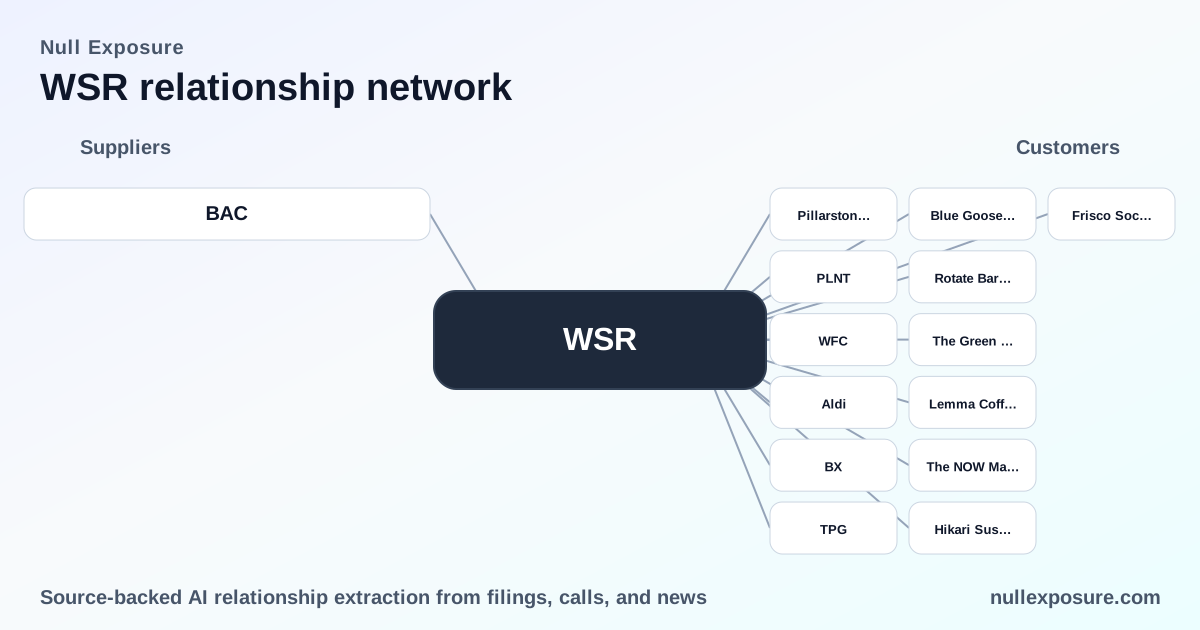
Whitestone REIT (WSR): Supplier Relationships and Strategic Signals for Investors
Whitestone REIT acquires, operates, and develops retail and mixed-use properties in underserved U.S. markets and monetizes through rental income, proactive asset management, selective development, and tenant success programs that boost occupancy and NOI. The company’s value-added strategy converts operational improvements into recurring cash flow and asset-level appreciation, with dividends supported by stabilized property income and occasional disposition proceeds. For investors and operators, supplier relationships—especially with capital markets and banking partners—signal strategic optionality and execution capacity. If you want a concise, sourced view of how these external ties affect risk and upside, start here: https://nullexposure.com/.
Why this matters now: a single strategic engagement changes the supplier map
Whitestone’s supplier universe is predominantly service and capital-oriented rather than industrial. The notable external engagement reported is with Bank of America as a financial advisor to evaluate strategic options, including a potential sale of the company. That engagement is a high-signal event: it directly impacts capital structure strategy, potential change-of-control execution, and the priority of vendor relationships in an M&A process. A Bitget news report on March 10, 2026 recorded that Whitestone engaged Bank of America to evaluate strategic options, including a possible company sale (https://www.bitget.com/amp/news/detail/12560605242286).
The relationship investors need to know about: Bank of America
Bank of America — Whitestone has commissioned Bank of America to evaluate strategic alternatives, a formal advisory relationship focused on exploring a sale or other strategic transactions. This engagement elevates Bank of America from a routine banking counterparty to a strategic adviser with material influence on transaction timelines and deal execution. A Bitget report (March 10, 2026) confirmed the engagement and listed sale exploration among the options (https://www.bitget.com/amp/news/detail/12560605242286).
What the Bank of America engagement implies for operations and suppliers
- Execution focus and contracting posture: Engaging a major investment bank signals a shift from steady-state operations to transaction mode, where contracting posture becomes tactical and time-sensitive—vendors and service providers will face accelerated diligence, contract novation risks, and potential prioritization of short-term cash preservation over long-term initiatives.
- Concentration and criticality: The advisory relationship is concentrated (a single lead advisor) and critical to corporate outcomes; the bank will coordinate capital markets access, buyer outreach, and deal structure, directly affecting lender covenants and preferred vendor status.
- Maturity and optionality: Use of an established global bank indicates a mature approach to strategic alternatives—Whitestone is positioning itself to monetize optionality cleanly and to manage counterparty risk through a reputable institution.
These company-level characteristics shape how suppliers—from property managers to service contractors and lenders—should evaluate counterpart risk and revenue continuity. Operators should prepare for concentrated due diligence requests and potential re-prioritization of spend if a sale progresses.
Risk and upside from a supplier and investor perspective
Whitestone’s reported engagement with Bank of America creates near-term transactional risk and optional value:
- Risk: Supplier contracts could be renegotiated, short-term cash preservation actions could affect discretionary maintenance or development projects, and counterparties should expect accelerated credit review if a sale process tightens liquidity constraints.
- Upside: A successful sale or strategic transaction could unlock valuation upside for shareholders and create exit-driven recoveries for preferred creditors; strategic buyers often standardize supplier relationships, which benefits scale providers and consolidators.
Financial context supports the signal. Whitestone’s market capitalization and operating metrics—Market cap ~$857M, Revenue TTM ~$160.9M, EBITDA ~$89.6M, and a dividend yield ~3.35%—create a realistic backdrop for buyer interest and financing scenarios. These figures indicate a business with meaningful cash flow and the potential to underpin a transaction premium for strategic acquirers.
If you want deeper supplier-risk modeling or transaction-readiness checklists tailored to WSR, follow this link: https://nullexposure.com/.
How operators and vendors should respond now
- Prioritize documentation: Prepare clean, auditable contracts and service histories; M&A processes accelerate document requests and penalize disorganized suppliers.
- Reassess credit exposure: If Whitestone pursues a sale, counterparties should stress-test 60–90 day cash scenarios and confirm remedies that preserve cash while protecting service continuity.
- Evaluate repricing and retention: Expect buyers to renegotiate large service agreements; suppliers with low-friction, high-value propositions (e.g., lease administration, tenant improvement delivery) will retain leverage.
Action point: Service providers should identify clauses that trigger on change of control and build negotiation playbooks that protect margin while increasing the buyer’s incentive to retain proven operators.
Relationship-by-relationship recap
Bank of America — Whitestone engaged Bank of America as a financial advisor to evaluate strategic options, explicitly including a potential sale of the company; the bank’s role is to coordinate buyer outreach and structure transaction alternatives (Bitget news report, March 10, 2026: https://www.bitget.com/amp/news/detail/12560605242286).
Final assessment and investor take
Whitestone is a cash-flowing retail REIT executing a value-add strategy, and the Bank of America engagement is a catalytic supplier relationship that shifts the company into strategic-transactions mode. For investors, this raises both event-driven upside and short-term operational uncertainty. For suppliers and operators, the engagement demands immediate preparedness for diligence, potential contract renegotiation, and a higher priority on cash conservation. Monitor filings and press activity closely; the advisor engagement is the clearest near-term signal of corporate intent.
For a concise playbook on supplier diligence and transaction readiness tied to this development, visit https://nullexposure.com/. For tailored monitoring and supplier-risk scoring on Whitestone, check the homepage for updates and analytical briefings: https://nullexposure.com/.
Bold, source-backed supplier signals matter in REIT transactions—this Bank of America engagement is the primary external signal today and it should shape both investment and operational decision-making.