WTBA: What West Bancorporation’s supplier relationships tell investors about funding, hedging and liquidity
West Bancorporation is a regional financial holding company that monetizes through net interest income, fee income from trust and community banking services, and a steady dividend paid from earnings. The company funds lending and liquidity needs using a mix of customer deposits and wholesale advances, and it actively uses interest-rate swaps to manage asset/liability mismatch; these elements together shape WTBA’s cost of funds and capital allocation. For deeper supplier relationship intelligence, visit Null Exposure.
The high-level thesis for investors
WTBA operates a classic community bank business model: local deposit gathering, small- and medium‑business lending, and trust services, with profitability driven by margin on loans and disciplined expense control. Funding through Federal Home Loan Bank advances and interest-rate swaps is an explicit lever in the balance sheet strategy — these counterparties influence liquidity, rate risk, and the bank’s funded balance-sheet growth. Investors should evaluate supplier counterparties as functional extensions of the bank’s treasury: they are critical to short- and medium-term liquidity and to hedging effectiveness.
How the supplier map is sparse but consequential
The supplier relationships captured in public mentions for WTBA are limited in number, but the ones present are systemically important for a bank’s operations. The available evidence shows:
- Weighted-average contractual maturities of funding are meaningfully multi-year — the company reports weighted-average maturities in the range of 2.4–2.6 years, which indicates a leaning toward longer-duration secured wholesale funding rather than very short-term lines. This is a company-level signal about contracting posture and maturity profile.
- Filings and disclosures reference offsetting fixed-rate swaps with swap counterparties, signaling an active hedging program and a service-provider posture to counterparties that provide derivatives and liquidity services. This is a company-level signal about the bank’s use of hedging counterparties.
- Relationship-stage evidence in disclosures identifies these engagements as active, not theoretical or contingent, which increases the operational criticality of those counterparties.
Together these characteristics indicate a bank with a formal, contracted approach to funding and hedging, lower turnover in counterparties, and a funding maturity profile that reduces immediate rollover risk but introduces medium-term rate and counterparty considerations.
The single supplier relationship on the record — what it means for investors
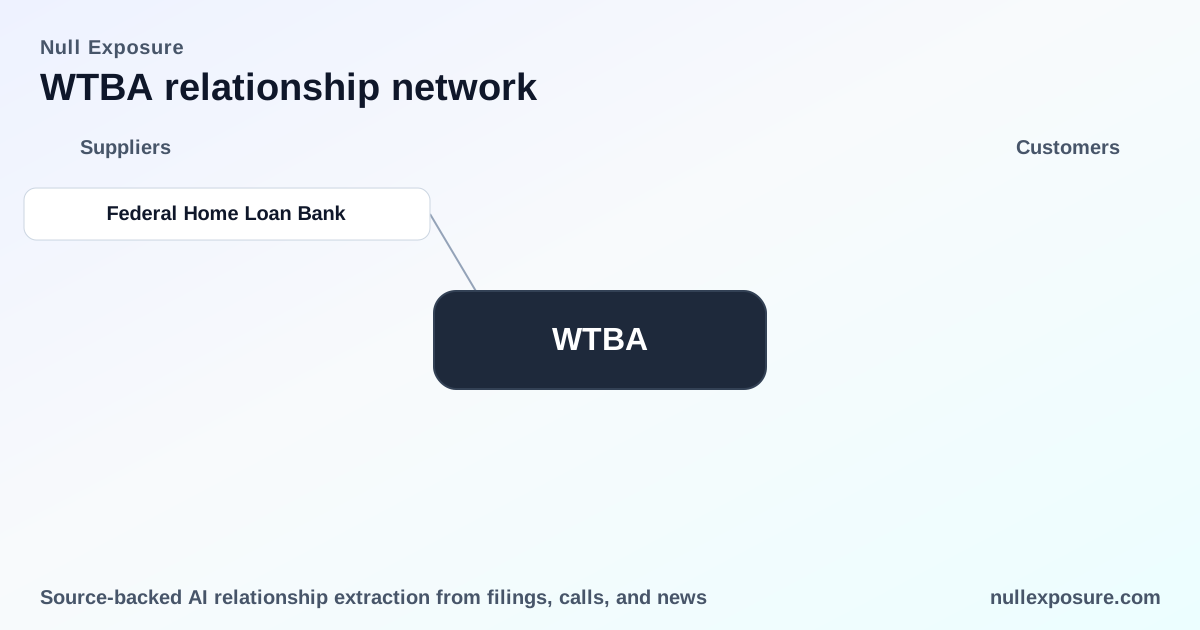
Federal Home Loan Bank advances: West Bancorporation’s public disclosures include advances from the Federal Home Loan Bank, with the press release text referencing advances “270,000” in the reported period. According to West Bancorporation’s January 29, 2026 press release summarizing Q4 2025 financial results and the declared dividend, the company listed Federal Home Loan Bank advances in its funding mix (GlobeNewswire, January 29, 2026: https://www.globenewswire.com/news-release/2026/01/29/3228578/0/en/West-Bancorporation-Inc-Announces-Fourth-Quarter-2025-Financial-Results-and-Declares-Quarterly-Dividend.html).
- Why this matters: FHLB advances are a primary form of secured wholesale funding for regional banks, providing predictable liquidity but creating dependency on borrowing capacity, advance pricing, and collateral availability. Monitor advance balances and the terms (pricing, maturity) to understand pressure on net interest margin.
Operational implications: liquidity, margin, and counterparty risk
The combination of FHLB advances and active swap counterparties has direct implications for WTBA’s economics:
- Liquidity management: FHLB advances provide committed liquidity and can be drawn or repaid to manage balance-sheet growth; sustained reliance on advances is a signal that deposit growth may not be fully funding loan growth.
- Net interest margin: The cost of advances and the expense of swaps to hedge rate risk both compress or protect margin depending on rate moves; the weighted-average maturity of ~2.4–2.6 years implies exposure to medium-term rate repricing.
- Counterparty concentration and criticality: Public evidence shows a small set of counterparty types (FHLB, swap counterparties). That concentration is not automatically a weakness, but it elevates the importance of each relationship’s terms and the robustness of contingency plans.
What to watch in upcoming filings and calls
Active investors should prioritize the following disclosures and questions in future filings and calls:
- Track FHLB advance balances and maturities quarter to quarter, and how they compare to deposit and loan growth.
- Monitor swap notional amounts, counterparty identities (if disclosed), and effectiveness tests referenced in the risk disclosures.
- Watch for changes in the weighted-average maturity of funding and for any shift from long-term to short-term instruments that would increase rollover risk.
- Evaluate dividend policy vs. retained earnings and liquidity buffers — WTBA currently pays a regular dividend (DividendPerShare = 1; DividendYield ≈ 4.34%), so coverage and capital flexibility are key. For supplier-level strategic due diligence and monitoring tools, review Null Exposure.
Relationship-by-relationship coverage (complete)
Federal Home Loan Bank — West Bancorporation’s Q4 2025 disclosures reference advances from the Federal Home Loan Bank, reported with a figure of 270,000 in the company’s January 29, 2026 press release, indicating active use of FHLB wholesale funding for liquidity and lending support (GlobeNewswire press release, January 29, 2026: https://www.globenewswire.com/news-release/2026/01/29/3228578/0/en/West-Bancorporation-Inc-Announces-Fourth-Quarter-2025-Financial-Results-and-Declares-Quarterly-Dividend.html).
Risks and where supplier relationships could flip from strength to vulnerability
- Concentration risk: A small number of funding and hedging counterparties can speed execution but creates single‑point sensitivity to pricing or access changes; the public record shows counterparty activity concentrated in FHLB advances and swap relationships.
- Maturity‑profile risk: A weighted-average maturity of about 2.4–2.6 years reduces short‑term rollover exposure but generates medium-term repricing and reinvestment risk that will be material if rates move or collateral values shift.
- Operational counterparty risk: Swap counterparties are service providers that underpin hedging programs; disruptions or covenant-triggered terminations would immediately affect interest‑rate risk management.
Bottom line and investor action items
West Bancorporation is a profitable regional bank with visible use of FHLB advances and active hedging relationships that materially affect liquidity and margin. Investors should treat supplier counterparties as part of the bank’s core operating model — not ancillary relationships — and watch advance balances, maturity profiles, and swap positions closely. For continuous supplier-level monitoring and tailored exposure reports, visit Null Exposure.
Key takeaways:
- FHLB advances are an explicit, active component of funding (publicly referenced in the company’s January 29, 2026 press release).
- Weighted-average funding maturity of ~2.4–2.6 years signals a medium-term funding posture that reduces immediate rollover risk but creates repricing exposure over the next several years.
- Swap counterparties are active service providers in WTBA’s hedging program, making counterparty resilience an operational priority.
For a deeper look at counterparties and the supplier relationships that shape bank economics, explore Null Exposure.