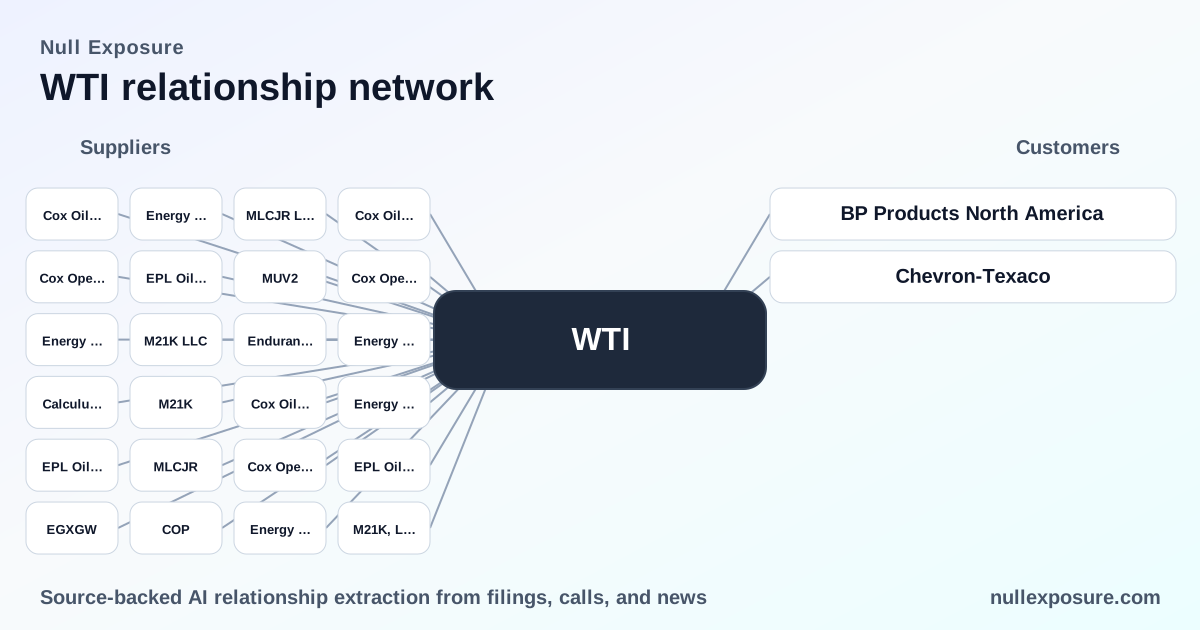
W&T Offshore (WTI): Supplier relationships that shape an opportunistic Gulf operator
W&T Offshore is an independent Gulf of Mexico upstream operator that monetizes by acquiring, operating and optimizing shallow- and deep-water oil and gas assets and selling produced volumes into the market. The company generates cash flow from producing fields, pursues bolt-on acquisitions to increase per-well recovery economics, and finances activity through a mix of credit facilities, notes and insurance-backed instruments. For investors and operators, W&T’s commercial profile is defined by opportunistic asset purchases, concentrated operational suppliers, and material counterparty exposure to insurers and lenders. Learn more at https://nullexposure.com/.
How W&T’s supplier relationships map to its operating model
W&T runs a lean operating model: it purchases producing and near-producing Gulf assets and integrates them into a mid-sized production base. This posture produces predictable operational contracting patterns: repeat relationships with field services and marine logistics providers, episodic counterparties tied to asset acquisitions, and a clear reliance on insurance and credit capacity to manage balance-sheet volatility.
- Contracting posture: active buyer and operator — outsources marine transport and logistics while retaining operatorship on many acquired fields.
- Concentration: a small pool of large suppliers is likely given material single-vendor payments reported in company disclosures.
- Criticality: insurance, surety and credit relationships are high criticality because they underpin both operations and financing.
- Maturity: the company’s supplier ecosystem skews toward experienced Gulf vendors and legacy counterparties rather than early-stage service providers.
A company-level disclosure shows a marine transport/logistics vendor that employs the CEO’s spouse received $20.3 million in payments in 2024, which signals a material, active supplier relationship in the $10–100 million spend band (company statement). This is a company-level signal and not attributed to a named supplier in the public excerpts.
Explore a deeper supplier risk view at https://nullexposure.com/.
Counterparties tied to the January 2024 Gulf asset purchase
W&T completed a series of bolt-on asset purchases from several Gulf sellers that were offered as part of a debtor sale process. These counterparties supplied the assets W&T acquired; each is listed below with the source of the transaction report.
Cox Oil Offshore, L.L.C. / Cox Oil Offshore LLC
W&T was the successful bidder for assets originally offered by Cox Oil Offshore as part of a multi-entity sale of Gulf of Mexico properties; the closing effective date was January 16, 2024. (Reported by World Oil and OGJ, Jan 22, 2024 and Industry coverage.)
Cox Operating, L.L.C. / Cox Operating LLC
The operating company Cox Operating supplied assets in the same package that W&T purchased; W&T’s bid consolidated these shallow-water assets under its operating platform. (Reported by World Oil and OGJ, Jan 22, 2024.)
Energy XXI GOM, LLC / Energy XXI GOM LLC
Energy XXI GOM was among the debtors that marketed legacy Gulf assets; W&T acquired specific synergistic interests from that estate to expand its shallow-water position. (Reported by World Oil and OGJ, Jan 22, 2024.)
Energy XXI Gulf Coast, LLC / Energy XXI Gulf Coast
Energy XXI Gulf Coast’s Gulf assets were included in the auctioned portfolio and transferred as part of the transaction that closed in mid-January 2024. (Reported by World Oil, OGJ and OE Digital, Jan 2024.)
EPL Oil & Gas, LLC / EPL Oil & Gas
EPL Oil & Gas assets were part of the multi-entity sale and were bought by W&T in the January 2024 closing; these are legacy Gulf producing interests that fit W&T’s shallow-water focus. (Reported by World Oil and OE Digital, Jan 2024.)
M21K, LLC / M21K
M21K’s assets were bundled with the package W&T purchased; the company reported the transaction’s effective date and described the assets as synergistic to W&T’s existing footprint. (Reported by World Oil and OE Digital, Jan 2024.)
MLCJR LLC / MLCJR
MLCJR was the final named seller in the package; W&T described the acquisition as a cost-effective way to increase production from complementary shallow-water fields. (Reported by World Oil and OGJ, Jan 22, 2024.)
(Primary coverage of the acquisition package was published in World Oil and the Oil & Gas Journal in January 2024; OE Digital and Offshore also reported on the closing and effective date.)
Insurers, lenders and legacy operator counterparties
These counterparties drive W&T’s financing flexibility and risk profile.
Munich Re (MUV2)
W&T disclosed that repayment activity allowed it to redeem $275 million of second-lien notes and pay off a $114 million term loan provided by Munich Re, indicating a direct lending/credit role in prior financings. (Company remarks in a Q1 2025 earnings call transcript cited on InsiderMonkey, FY2025.)
Endurance Assurance Corp.
Endurance Assurance Corp., a surety provider owned by Japanese holding company Sompo, was named among insurers involved in a dispute where W&T sought to limit an insurance companies’ $250 million demand for additional collateral. This underscores the high criticality of surety and insurance counterparties. (Reported by Offshore Magazine, FY2024.)
Calculus Lending
W&T reported replacing a prior $50 million credit facility provided by Calculus Lending with a new $50 million revolving facility that matures in July 2028; the prior facility’s undrawn status and replacement underscore active creditor management. (Cited in the Q1 2025 earnings call transcript via InsiderMonkey, FY2025.)
ConocoPhillips (COP)
In a separate historical transaction, W&T acquired a 75% working interest and operatorship of the Magnolia field from ConocoPhillips for $20 million, demonstrating W&T’s strategy of taking operatorship of mature deepwater pockets purchased from majors. (Reported by OE Digital, FY2019.)
What investors and sourcing teams should take away
- Acquisition-first growth: W&T’s supplier ecosystem is shaped by frequent asset purchases from distressed or divesting Gulf sellers; expect short-term integration suppliers and legacy vendor handoffs after each deal. The January 2024 package exemplifies this behavior.
- Insurance and credit exposure are strategic risks: Surety and lender disputes (Endurance/Sompo, Munich Re, Calculus Lending) are business-critical and influence capital availability and collateral demands. Underwriting counterparties are as material to operations as field service contractors.
- Concentrated operational spend: Public excerpts show a single marine/logistics vendor with multi-year payments in the tens of millions, which signals concentration and related-party risk that requires active governance and disclosure monitoring.
- Operational maturity: Acquired assets are largely producing shallow-water fields and some legacy deepwater interests; this reduces geological exploration risk but emphasizes production and lift-cost optimization as the core supplier value drivers.
For an operational risk brief or counterparty exposure mapping, start here: https://nullexposure.com/.
Recommended actions for investors and operators
- Review recent insurance and surety filings and collateral calls to quantify short-term liquidity demands tied to underwriter positions.
- Add targeted due diligence on marine logistics vendors given the reported high single-vendor spend; verify governance and related-party controls.
- Monitor W&T’s credit agreements and paydown schedule—lender relationships (Munich Re, Calculus/other facilities) directly affect capital flexibility for further bolt-ons.
To pursue a supplier risk or counterparty diligence project tailored to Gulf operators, visit https://nullexposure.com/ and request a briefing.
W&T’s model is straightforward: buy accretive producing assets, operate them efficiently, and lean on lenders and insurers to smooth capital cycles. That model delivers growth potential but concentrates operational and financial risk in a small set of counterparties — exactly where investor and operator scrutiny should focus.