Westwater Resources: supplier relationships that shape near-term delivery and dilution risk
Westwater Resources operates as a developer of energy materials, advancing the Kellyton Graphite Plant while using third-party supply and capital-market partners to bridge production and funding gaps. The company monetizes through developing and selling graphite and related battery materials, while relying on purchased graphite concentrate and registered-at-the-market (ATM) financing to sustain operations until its Coosa deposit reaches production. Investors should view supplier contracts and financing agents as operational levers that directly affect throughput risk, working-capital needs, and dilution.
Explore supplier and financing exposures at https://nullexposure.com/.
Why supplier and financing relationships matter for Westwater’s economics
Westwater’s balance between project development and purchased feedstock drives both cost structure and time-to-revenue. The company reports no meaningful operating revenue in recent filings, so the ability to source graphite concentrate and raise cash through equity programs is central to executing ramp plans for Kellyton and financing the Coosa development. That combination makes suppliers like graphite sellers and intermediaries such as placement agents functionally critical to near-term execution and capital availability.
Operationally, the company is a buyer of feedstock and a frequent issuer of equity under ATM arrangements. These two relationship types converge: feedstock contracts keep plants running before mine production begins, while ATM and underwriting relationships convert operational needs into near-term liquidity — at the cost of share dilution.
Active relationships you should know (one-per-entry, no omissions)
-
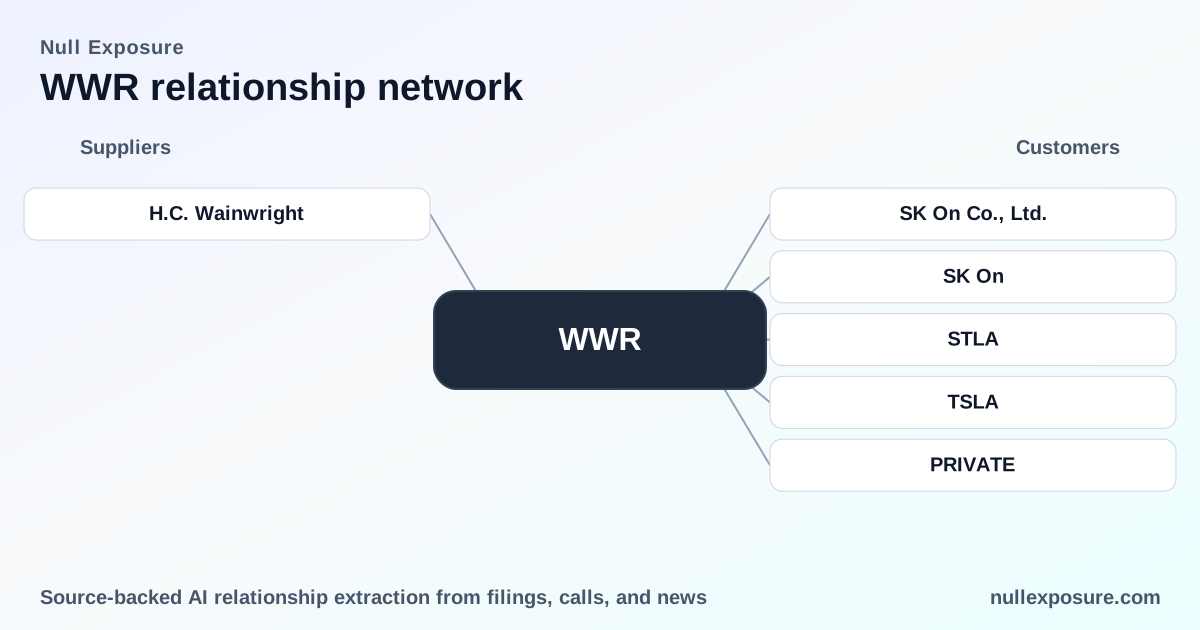
H.C. Wainwright — Westwater’s ATM placement partner: According to a TradingView report on March 10, 2026, Westwater registered a $75 million stock offering that was described as “part of an existing ATM Agreement with H.C. Wainwright,” indicating an ongoing financing channel through that firm. (TradingView, March 10, 2026: https://www.tradingview.com/news/tradingview:b4696995bcbad:0-westwater-resources-registers-75m-stock-offering/)
Implication: H.C. Wainwright is the conduit for equity issuance and thus directly influences dilution timing and capacity. -
Syrah Resources Limited — contracted graphite supplier for Kellyton: Westwater discloses that it currently purchases graphite flake concentrate for the Kellyton Graphite Plant under a supply contract with Syrah Resources Limited and expects to continue purchasing from Syrah and/or other sources until the Coosa Graphite Deposit is developed and in operation (company disclosures).
Implication: Syrah is a primary short-term feedstock supplier whose contract status determines Kellyton’s ability to process feedstock and generate product once production begins.
What the constraints tell us about Westwater’s operating model
The constraint signals supplied with the relationship data reveal structural aspects of Westwater’s supplier posture:
-
Contracting posture — buyer: Westwater operates as a buyer of graphite concentrate under explicit supply contracts. This is not an ad hoc procurement model; contracts underpin plant feedstock supply and therefore production cadence. Because the company identifies itself as a contracting buyer, counterparties have counterparty risk but also negotiating leverage where supply is scarce.
-
Concentration and criticality: The company’s reliance on purchased concentrate until Coosa is operational creates concentration risk: a disruption in supply from Syrah or other contracted suppliers would directly impair Kellyton throughput. The contractual relationship is therefore operationally critical rather than merely ancillary.
-
Maturity — active, interim stage: Contracts are characterized as active and transitional; Westwater intends to continue buying concentrate until its own deposit is online. That makes these relationships temporary but high-impact: they bridge a development gap rather than represent long-term, immovable procurement arrangements.
-
Capital relationship overlay: The ATM arrangement with H.C. Wainwright shows an explicit financing channel. Equity issuance under an ATM converts operational and working-capital needs into share dilution, which investors must price into valuation and runway calculations.
These constraints are company-level signals about how Westwater runs projects: operate plants using secured external feedstock while financing development through active, market-based equity programs.
How these relationships change the investment calculus
Two practical investor takeaways arise from the relationship map and constraints:
-
Execution risk is operational and financial. A supplier disruption (Syrah) directly impairs production ramp; a financing slowdown or unfavorable market for ATM offerings (H.C. Wainwright pathway) constrains cash and forces more dilutive raises. Both influence time to revenue and equity value.
-
Counterparty selection matters. Syrah’s ability to deliver concentrate on agreed terms and H.C. Wainwright’s capacity to place shares efficiently will determine short-term survivability and longer-term de-risking. Westwater’s disclosures frame these partners as essential to bridging the period before Coosa becomes a self-sufficient feed source.
For deeper visibility into counterparties and exposure, check consolidated supplier intelligence at https://nullexposure.com/.
Specific risk factors to monitor closely
- Supply continuity: Contract performance metrics and alternative sourcing options for graphite concentrate—any interruption raises the risk of missed production targets at Kellyton.
- Dilution and market access: Volume and timing of ATM placements through H.C. Wainwright determine near-term dilution; watch registration amounts, put-through rates, and market appetite.
- Timing of Coosa ramp: The anticipated transition from purchased feedstock to self-supply is a de-risking event; delays prolong dependency on third-party supply and recurring financing.
- Counterparty concentration: Continued reliance on a small number of suppliers increases negotiation risk and vulnerability to price shifts.
Bottom line and recommended next steps
Westwater’s supplier and financing relationships are structural to the firm’s strategy: purchased graphite keeps processing viable today; ATM arrangements keep the lights on financially until in-house production relieves both operational and capital pressure. Investors should treat these relationships as leading indicators of execution risk rather than peripheral details.
- For a rapid read on counterparties and contract status, visit https://nullexposure.com/ to see organized supplier exposures and filings.
- Track announcements concerning ATM placements and supply contract amendments; those signals will lead earnings or milestone surprises.
Investors evaluating Westwater must price both supply continuity and equity issuance into any short-term valuation. The company’s path to positive operating cash flow depends on timely supplier performance and efficient access to capital through partners such as H.C. Wainwright.