Wynn Resorts (WYNN): Supplier relationships, contracts, and what they mean for investors
Wynn Resorts operates and monetizes a portfolio of high‑end integrated resorts and casinos, generating revenue from gaming, rooms, food & beverage, and destination amenities while relying on long‑lived real estate footprints and a high‑margin customer base. The company’s earnings profile reflects premium pricing and significant operating leverage: FY TTM revenue roughly $7.14B with EBITDA near $1.75B, a market cap around $10.5B and a forward P/E that discounts expected earnings growth. For investors and operators evaluating WYNN’s supplier posture, the critical lens is contract duration, vendor criticality, and information‑security exposure—areas that materially affect operating continuity and reputational risk. For a consolidated view of supplier risk and supplier relationships, see NullExposure’s homepage: https://nullexposure.com/
How Wynn’s operating model shapes supplier risk
Wynn’s business is capital and brand intensive. That combination produces four operating realities that investors should treat as constraints on cash flow and optionality:
- Long‑dated property commitments and triple‑net leases create fixed obligations and limit flexibility to reallocate capital quickly. These leases constrain short‑term liquidity planning and embed long planning horizons into operating decisions.
- High reliance on third‑party service providers for IT, HR systems, and back‑office functions makes vendor security, uptime, and contractual SLAs a direct determinant of operational continuity.
- Concentration in premium customer experiences pushes Wynn to maintain strict vendor standards for guest‑facing tech and hospitality services, increasing switching friction and vendor lock‑in.
- Maturity of operations and brand criticality means supplier failures can translate into outsized reputational and regulatory costs relative to the absolute dollar value of a contract.
These are company‑level signals derived from Wynn’s filing language and public reporting about contractual terms and vendor governance; they are not assigned to a specific supplier unless the underlying excerpt names one explicitly.
Key financial context to keep in mind
- Market capitalization: $10.49B
- Revenue TTM: $7.14B; EBITDA: $1.75B
- Trailing P/E: 32.05; Forward P/E: 16.13
- Profit margin: 4.59%; Operating margin: 15.7%
These figures underline that operational shocks from suppliers or contract stressors flow through a business with meaningful fixed costs and concentrated brand exposure.
For an in‑depth supplier map and ongoing monitoring of relationships, visit https://nullexposure.com/ for curated supplier intelligence.
Supplier relationships investors should know now
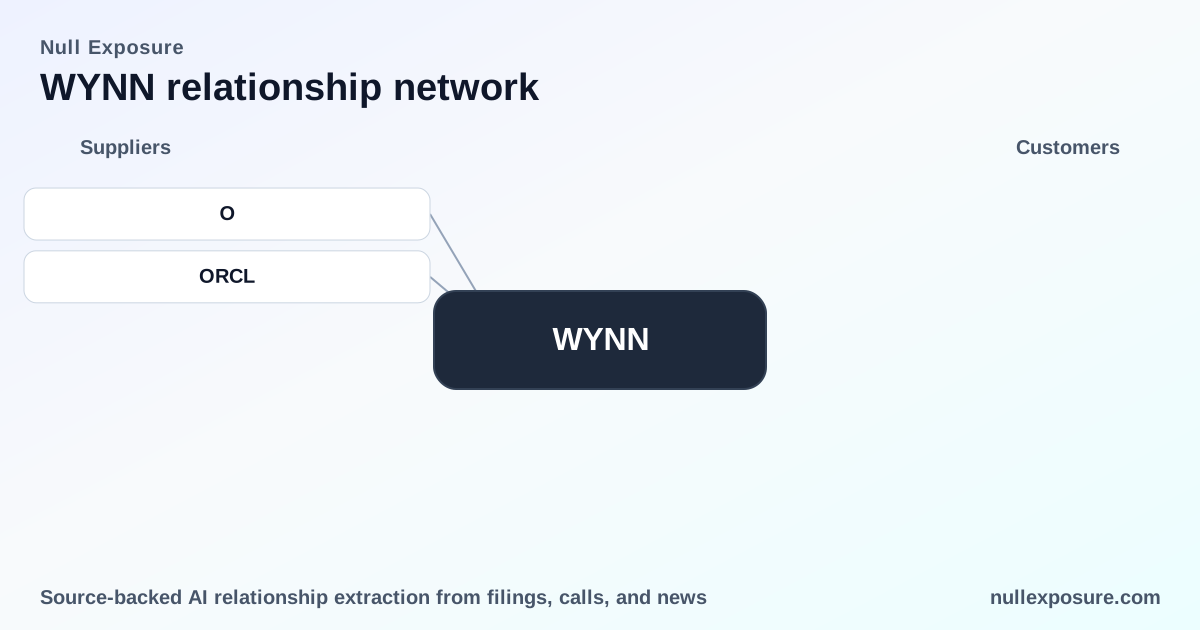
Realty Income — long‑term landlord relationship
Realty Income leases properties to a variety of tenants, including Wynn Resorts, which gives Realty Income a stable client base that includes major retail and hospitality operators. This relationship reflects Wynn’s reliance on external landlords or structured long‑term lease arrangements for certain real estate positions. According to The Globe and Mail, Realty Income’s leased tenant roster includes Wynn Resorts (reported March 10, 2026).
Oracle — payroll/HR systems implicated in a data incident (FinancialContent)
A market analysis noted that a hacking group claimed to have exfiltrated employee and customer records by exploiting a vulnerability in Oracle PeopleSoft, linking Oracle technology to the breach reported at Wynn. That account connects Wynn’s use of PeopleSoft and Oracle services to a significant data security incident, raising vendor risk around identity and compensation data controls (Markets.FinancialContent report, Feb 24, 2026).
Oracle — confirmation of PeopleSoft‑related data exposure (BleepingComputer)
Separate reporting confirmed that threat actors asserted they stole data from Wynn’s Oracle PeopleSoft environment, and Wynn publicly confirmed an employee data breach after an extortion threat. This follow‑up coverage underscores the operational impact when core HR/payroll platforms are targeted, elevating regulatory and employee‑relations risk (BleepingComputer, reported Mar 10, 2026).
(Each of the above relationships is drawn from public reporting in March and February 2026; the Oracle references are two public reports that together document the same technology vendor linkage and its security consequences.)
What these relationships imply for procurement and operations
- Contracting posture: Wynn’s public disclosures and lease language indicate a pattern of long‑term, locked‑in contracts—particularly in real estate—so any supplier failure or renegotiation runs against long horizons and high exit costs.
- Concentration risk: The PeopleSoft/Oracle coverage highlights concentration in a critical HR/IT vendor: when one platform serves payroll and employee data for a large hospitality operator, a single vulnerability creates outsized operational and reputational exposure.
- Criticality and maturity: Vendor relationships sit at the intersection of mature operational processes and high service criticality; downtime or data loss propagates quickly across payroll, regulatory filings, and guest trust.
- Security and vendor governance: Wynn’s own controls language signals an established vendor governance program, but recent incidents show that governance alone does not eliminate systemic vendor risk.
Near‑term investor implications and monitoring checklist
- Track legal and regulatory disclosures tied to the Oracle incident for potential class actions, fines, or remediation capex that could compress margins.
- Monitor lease schedules and any refinancing language for material properties that might affect liquidity or covenant tests given Wynn’s long lease terms (the public record cites 30‑year triple‑net structures as the norm for certain assets).
- Assess vendor concentration: identify which third‑party platforms are single points of failure (HR, payments, property management) and whether Wynn has meaningful diversification or fallbacks.
- Watch management commentary around cyber insurance recovery and vendor SLAs; insurance proceeds and vendor indemnities materially affect net economic exposure after a breach.
If you want a tailored supplier risk briefing that maps each contract to financial exposure and breach scenarios, NullExposure offers actionable reports: https://nullexposure.com/
Bottom line: what investors should act on now
Wynn’s premium business model depends on long‑term property commitments and a small set of critical service providers. The Realty Income relationship reiterates the length and stickiness of real estate contracts. The Oracle/PeopleSoft reports make vendor security a live risk that affects payroll, employees, and customer trust. For active investors, the priority is threefold: validate management’s remediation and indemnity position, stress test cash flow under a vendors‑related disruption, and monitor disclosures for legal liabilities.
For ongoing supplier intelligence and to convert these relationship signals into investment‑grade monitoring, visit NullExposure: https://nullexposure.com/