Xenetic Biosciences (XBIO) — supplier relationships and what they tell investors
Xenetic Biosciences operates as a small-cap biopharma developer focused on advancing an individualized CAR T platform (XCART) and an adjunctive systemic DNase I program. The company monetizes by advancing clinical-stage assets through research collaborations, third-party clinical services, and out-licensing or commercialization partnerships when programs reach proof-of-concept; revenue today is limited and episodic, driven by milestone, collaboration, and small operational reimbursements rather than product sales. For investors and operator partners, the supplier footprint and contracting posture show a R&D-heavy, outsourced operating model with concentrated, short-term commercial exposures. Learn more at https://nullexposure.com/.
Quick company snapshot that frames the supplier picture
Xenetic is a NASDAQ-listed, research-driven biotech with minimal manufacturing capabilities and small scale financials (negative EBITDA, under $3m revenue TTM). The market cap and balance sheet imply the company will continue to rely on partners for manufacturing, trial execution, and investor communications rather than internal scale. That operating profile produces a supplier set that is highly strategic for clinical progression but low in long-term commercial spend.
What the supplier relationships are — plain English, no omissions
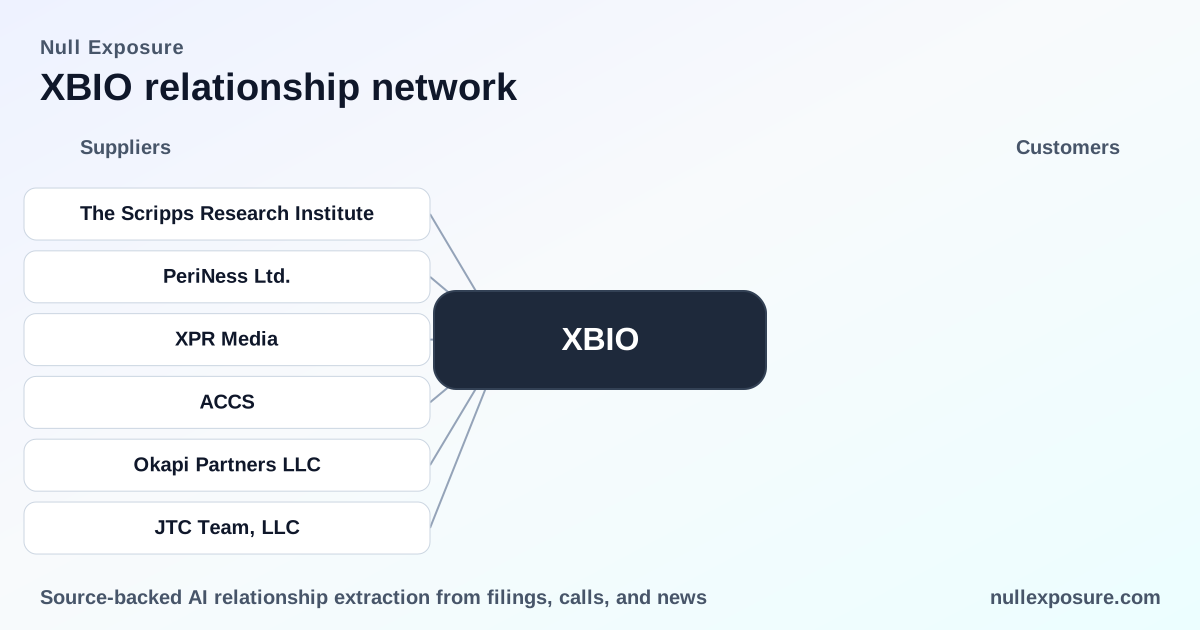
Below are the supplier or partner names that show up in recent communications and what each relationship means for investors.
The Scripps Research Institute
Xenetic has an ongoing research collaboration with The Scripps Research Institute to advance the combination of systemic DNase I and CAR T-cell therapies; this relationship was extended in FY2025 and continued into FY2026 as noted in company press releases. According to a March 2026 press release, the collaboration continues to support preclinical and translational work on DNase I plus CAR T approaches. (Press release distribution, March 2026 and November 2025.)
PeriNess Ltd.
PeriNess is the contracted clinical trial services provider that Xenetic engaged to lead regulatory approval and operational management for exploratory investigator-initiated studies of recombinant DNase in Israeli medical centers. The company disclosed a Clinical Trial Services Agreement with PeriNess in late 2024 and reiterated the engagement in its 2025 financial update. (Q2 2025 financial results press release, published in 2026.)
XPR Media
XPR Media functioned as a press release distributor for Xenetic’s corporate announcements, as the company’s adjournment notice for the 2025 annual meeting was distributed via XPR Media. This is a standard communications supplier rather than a scientific or clinical partner. (Press release distribution, FY2026.)
ACCESS Newswire
ACCESS Newswire was used as the original distributor or host for the company’s press release about its 2025 annual meeting adjournment; the company’s investor communications routinely flow through multiple wire services. This is another communications vendor supporting shareholder outreach. (Press release distribution, FY2026.)
Okapi Partners LLC
Okapi Partners is referenced as the proxy and transfer agent contact for shareholder voting questions in the annual meeting adjournment notice, indicating Xenetic uses Okapi for vote execution and investor services. This is a governance-focused supplier handling shareholder services. (Proxy/annual meeting notice, FY2026.)
JTC Team, LLC
JTC Team, LLC — specifically a named contact for investor relations — handled media and investor queries tied to the annual meeting release, demonstrating reliance on external PR/IR firms for market communications. This is an outsourced investor relations and communications relationship. (Annual meeting press release, FY2026.)
How these relationships shape the operating model and supplier constraints
Xenetic’s supplier set underscores a few structural characteristics important to investors:
- Contracting posture: outsourced and transactional. The company explicitly states it has no internal manufacturing capabilities and moves work to CROs, CMOs, academic partners, and clinical service vendors. That produces flexibility in spending and speed to pivot but creates execution dependence on external parties.
- Short-term, low-duration commitments dominate. Disclosed office leases and the nature of CRO and clinical services engagements indicate a preference for short-term contracts and extensions rather than multi-year fixed obligations. Company disclosures note a six-month shared-office lease and a terminated 12-month Miami lease, demonstrating an aversion to long-term fixed real estate exposure.
- Concentration on research-critical vendors, limited commercial spend. Relationships are concentrated around research (Scripps), trial execution (PeriNess), and communications/governance (wire services, proxy agents). Expenditure bands are modest — the company disclosed an expense of roughly $50,000 associated with a specific agreement and approximately $45,000 recorded as a prepaid balance at year-end — which signals low per‑vendor spend relative to later-stage biopharma norms.
- Execution-critical services are externalized and early-stage. Manufacturing, clinical operations, and trial oversight are outsourced; this is normal for a company at Xenetic’s scale, but it elevates operational risk in trial timelines and regulatory interactions because vendors are gatekeepers to data quality and approvals.
Investment implications — what investors and operators should watch
- Catalyst dependency. Progress at Scripps and PeriNess are direct value drivers; successful translational results or investigator-initiated study readouts will materially increase program value. Monitor press releases and study registries tied to these partners.
- Execution risk concentrated in few providers. With core services outsourced to a small number of scientific and clinical vendors, delivery failure or delays from a single provider would have outsized effect on timelines and cash burn.
- Low fixed overhead but limited runway extension options. Short-term leases and modest vendor spend make Xenetic agile, but the company’s small market cap and negative profitability mean partnerships and capital raises will be required to carry programs beyond early clinical stages.
- Communications and governance are externally managed. Use of multiple wire services, Okapi for proxy services, and JTC for IR indicates externalized investor-relations efforts — relevant for investors tracking share-owner engagement and disclosure cadence.
For deeper supplier analysis and to monitor future press disclosures and relationship changes, visit https://nullexposure.com/ to set alerts and view supplier intelligence.
Bottom line and recommended actions
Xenetic’s supplier footprint is consistent with an early-stage clinical developer: concentrated R&D collaborations, outsourced clinical operations, and lean commercial infrastructure. That structure keeps fixed costs low but makes program success heavily dependent on external partners and milestone events. Investors should treat short-term clinical milestones and third-party trial execution as the primary valuation levers.
- If you track Xenetic as a speculative biotech investment, prioritize monitoring announcements from The Scripps Research Institute and PeriNess for tangible clinical progress.
- For operators and potential partners, the company’s outsourced posture suggests negotiable, short-duration contracts and opportunities to become a strategic vendor if first-stage evidence supports program advancement.
For ongoing supplier monitoring, sign up at https://nullexposure.com/ — our platform aggregates press disclosures, vendor mentions, and contract signals so you can act on supplier-driven catalysts.