Exicure (XCUR) — supplier relationships, strategic posture, and what investors need to know
Exicure is a clinical‑stage biotechnology company that develops therapeutic candidates using its proprietary spherical nucleic acid (SNA) platform and monetizes through licensing, asset transactions, milestone and royalty structures, and eventual product commercialization. The company funds R&D through capital markets and strategic deals, while its commercial upside is tied to successful clinical development and licensing revenue streams. Investors should evaluate Exicure through the lens of partner dependency, milestone-driven cash flows, and the operational implications of recent asset acquisitions. For ongoing supplier-relationship monitoring and intelligence, visit the NullExposure homepage: https://nullexposure.com/
How Exicure operates and where the money comes from
Exicure is not a commercial-stage manufacturer; it is a science‑and‑asset company. The business model centers on advancing SNA-enabled programs through clinical proof‑of‑concept and then capturing value via partnerships, out‑licensing, or product sales. Financials confirm this posture: no revenue reported over the trailing twelve months, negative EBITDA, and a market capitalization of roughly $29 million (latest quarter: 2025-09-30). The funding and valuation dynamic leans heavily on binary clinical milestones.
Key operating characteristics investors should treat as company-level signals:
- Contracting posture: Exicure executes licensing and asset purchase agreements that include milestone payments and royalty commitments, which convert development progress into contingent liabilities and upside.
- Concentration: The company’s commercial prospects depend on a limited set of programs and counterparties rather than broad product lines.
- Criticality: Supplier and partner relationships are mission‑critical—success or delay in partner programs directly affects cash flows and valuation.
- Maturity: Clinical-stage profile implies high technical and regulatory risk, short operating history of commercial revenues, and ongoing capital intensity.
These attributes frame how to value supplier exposures: focus on counterparty creditworthiness, milestone schedules, royalty floors, and the legal terms that determine control of development and commercialization.
What the relationship data shows — transactions with GPCR Therapeutics
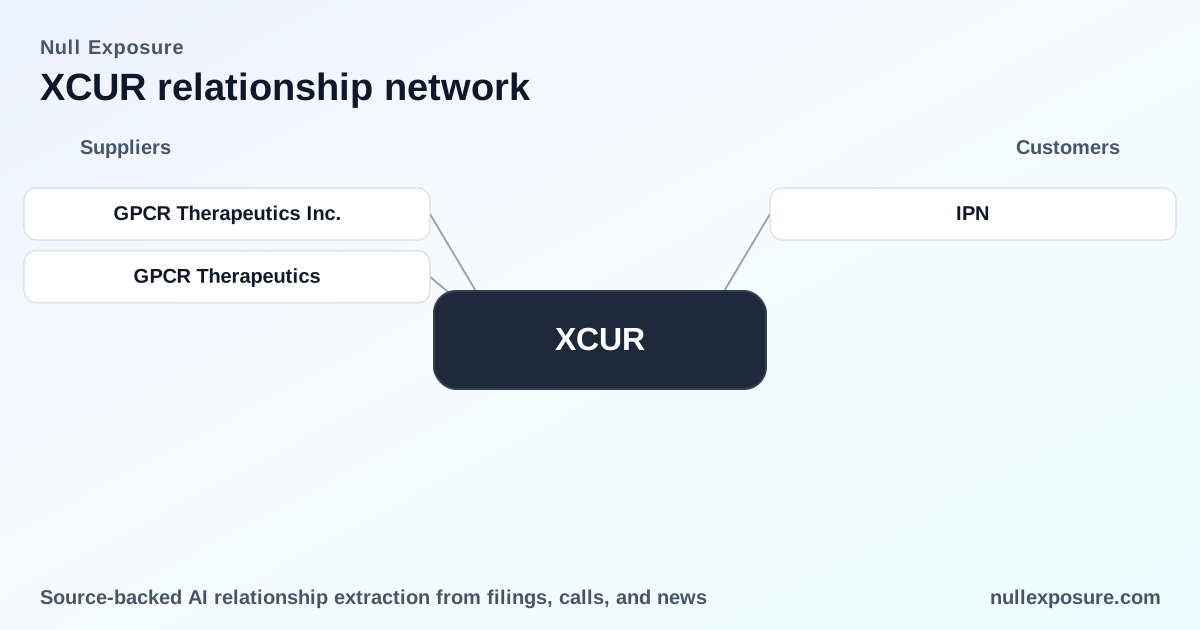
Below I cover every supplier relationship identified in public reports. Each relationship entry is summarized in plain English with source attribution.
GPCR Therapeutics Inc. — purchase agreement with milestone and royalty obligations
Exicure executed a purchase agreement for assets from GPCR Therapeutics that creates contingent payment obligations tied to clinical, regulatory, and sales milestones, plus a recurring royalty equal to at least 10% of net sales under the license and commercialization terms. This structure shifts near‑term balance‑sheet risk into contingent liabilities while providing Exicure with program rights and near‑term pipeline expansion. Source: BioSpace press release dated March 10, 2026 (https://www.biospace.com/press-releases/exicure-inc-announces-purchase-agreement-with-gpcr-therapeutics-inc).
GPCR Therapeutics — acquired Burixafor and expanded development scope
The acquisition included Burixafor, a selective CXCR4 antagonist, which Exicure is now evaluating across indications such as sickle cell disease, rare transplant‑eligible disorders, and as an adjunct in cell and gene therapy settings; the program contributed to a material re‑rating event in market commentary following positive Phase 2 signals. This deal demonstrates Exicure’s strategy of buying development assets to broaden its pipeline and create near‑term catalysts tied to clinical readouts. Source: StockTwits news article covering March 10, 2026 market reaction (https://stocktwits.com/news-articles/markets/equity/exicure-stock-soars-40-after-stem-cell-drug-helps-most-patients-hit-phase-2-goal/cLIscD7RENO).
What these relationships mean for investors and operators
The GPCR transaction is a textbook example of how a small biopharma converts balance‑sheet cash into pipeline optionality and attaches commercial rights to contingent payments. Two investor takeaways are immediate: (1) Exicure has increased its exposure to downstream royalty obligations (fixed floor of ~10% on net sales), and (2) the company added a program with multiple clinical pathways that serve as potential near‑term value drivers.
From an operator perspective, the transaction implies:
- A need to integrate acquired programs into existing R&D operations quickly to realize milestones.
- Responsibility for managing royalty forecasting, reporting, and potential future payment streams tied to commercialization.
- Heightened reliance on clinical timelines that directly affect cash runways and financing needs.
For actionable intelligence, review Exicure’s agreements carefully for milestone schedules, termination rights, and royalty calculation mechanics; for monitoring coverage, NullExposure offers targeted supplier tracking and scenario analysis: https://nullexposure.com/
Risk profile refined by the relationship structure
The structural features of the GPCR deal change Exicure’s risk map in measurable ways:
- Liquidity pressure becomes calendar-driven. Milestones accelerate or defer cash needs; missed readouts increase financing risk.
- Royalty commitments compress long‑term margins. The 10% net‑sales floor is material if a program reaches commercialization.
- Execution risk concentrates. With few commercial programs, single-program failures have outsized valuation impact.
Exicure’s capital structure amplifies these risks: insiders hold a large stake (about 35% ownership), institutional penetration is low (~2.3%), shares outstanding are modest, and trailing financials show negative EPS and limited liquidity. These metrics reinforce that partner deals and milestones are the primary levers for value creation.
Constraints and company-level signals
There are no explicit supplier-constraint excerpts recorded in the available relationship dataset. As a company-level signal, the absence of listed constraints indicates that public records in this batch do not surface binding supplier‑side limitations or counterparty restrictions beyond the documented milestone and royalty terms. Investors should still demand contract-level transparency on termination, exclusivity, and indemnification clauses during diligence.
Investment implications and next steps
Exicure is a high‑volatility, high‑binary‑event investment that monetizes primarily through licensing, milestone receipts, and commercial royalties. The GPCR acquisition materially repositions pipeline optionality but creates contingent liabilities and concentrated execution risk. For investors seeking event-driven exposure, monitor upcoming clinical readouts and the schedule of milestone payments; operators should prioritize integration and regulatory strategy to de‑risk timelines.
If you want continuous supplier and counterparty intelligence for Exicure and similar small biotechs, NullExposure provides tailored coverage and alerts: https://nullexposure.com/
Final recommendation: treat Exicure as a speculative development play supported by a single notable asset transaction; underwrite financing needs around milestone calendars and quantify the impact of the 10% minimum royalty on long‑term returns. For subscription access to ongoing supplier relationship monitoring, analysis, and alerts, visit https://nullexposure.com/ and sign up for targeted coverage.