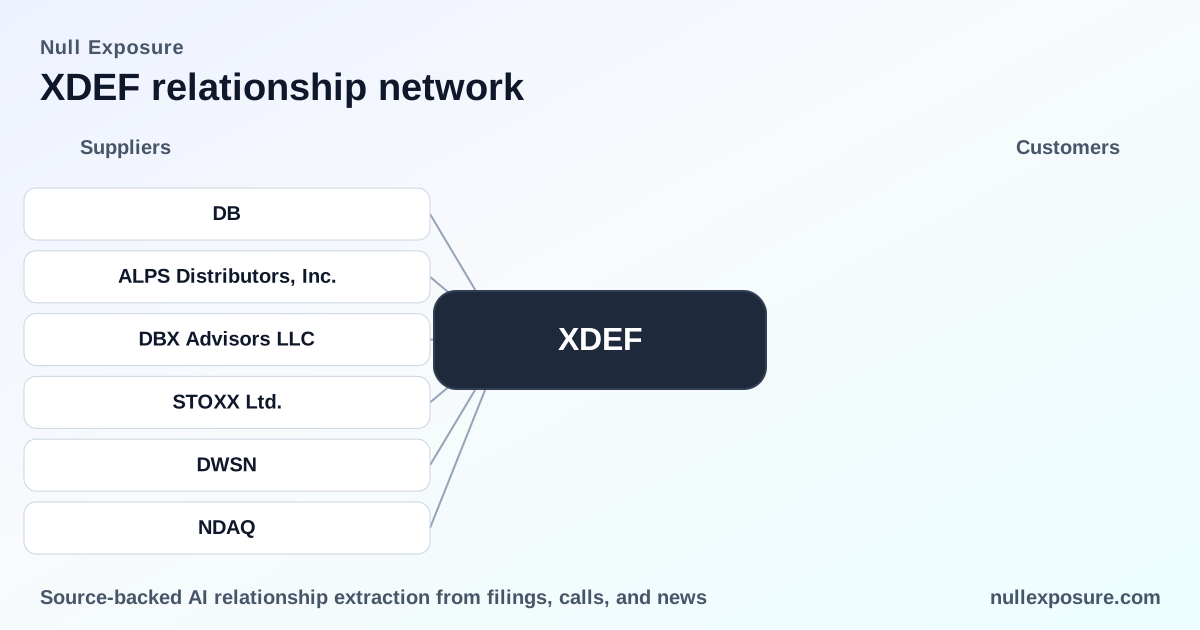
XDEF supplier map: who powers the Xtrackers Europe Defense Technologies ETF and what it means for investors
XDEF is an ETF product marketed under the Xtrackers platform and monetized through ETF management and distribution economics: an asset manager structures and sponsors the fund, third-party index licensing and distribution partners enable product packaging and market access, and listing venues generate trading liquidity that supports fee capture. Revenue accrues to the manager and issuer through management fees and measurable distribution reach, while counterparties—index provider, advisor, distributor, and exchange—provide the operational plumbing that determines adoption and risk. For investors and operators, the supplier roster defines concentration, contractual posture, and the day‑to‑day resilience of the product offering. Explore the supplier relationships below and what they imply for commercial and operational risk. For further supplier intelligence, visit https://nullexposure.com/.
How XDEF is structured in plain language
The fund is marketed under Deutsche Bank’s Xtrackers brand, managed and launched through DWS’ product capability, tracks a STOXX index, uses DBX Advisors as an advisor and ALPS for distribution, and lists on Nasdaq. That combination places product control with an established asset manager while outsourcing index calculation and distribution—a standard ETF operating model that prioritizes brand and go‑to‑market scale over vertical integration.
Every supplier relationship and what it contributes
Deutsche Bank Aktiengesellschaft — Deutsche Bank issues XDEF under the Xtrackers brand, which positions the product within a global ETF franchise and leverages Deutsche Bank’s balance sheet and brand for issuance and regulatory wrapper. According to TradingView analysis (March 10, 2026), XDEF shares are issued by Deutsche Bank AG under the Xtrackers label.
DBX Advisors LLC — DBX Advisors serves as the primary advisor to the fund, providing fiduciary and advisory services that interface between manager and shareholders, a typical governance layer in U.S.-listed ETFs. TradingView’s March 10, 2026 coverage names DBX Advisors LLC as the fund’s primary advisor.
ALPS Distributors, Inc. — ALPS plays the distributor role, facilitating placement and selling of shares to intermediaries and retail channels; distribution partners influence shelf presence and secondary market liquidity. TradingView (March 10, 2026) lists ALPS Distributors, Inc. as the distributor.
DWS (DWS Group) — DWS is the asset manager behind the Xtrackers product launch and brings portfolio construction, marketing, and fee economics that underwrite fund yield. MarketsMedia reported on March 10, 2026 that DWS launched the Xtrackers Europe Defense Technologies ETF in the U.S., expanding its Xtrackers offerings to a European thematic index exposure.
STOXX Ltd. — STOXX is the index provider; the ETF tracks the STOXX® Europe Total Market Defence Space and Cybersecurity Innovation 50-25 index, making STOXX a critical rules‑based input for index composition and rebalancing methodology. MarketsMedia’s March 10, 2026 article describes STOXX’s collaboration with DWS on the index used by the fund.
Nasdaq — Nasdaq is the listing venue for XDEF, providing the primary exchange for trading and visibility to market makers and institutional investors; listing on Nasdaq materially affects liquidity and accessibility. MarketsMedia (March 10, 2026) notes the ETF was listed on Nasdaq following prior Xtrackers listings in Europe.
What the supplier mix says about operating posture and business model
The supplier roster shows a classic ETF operating model: a branded issuer (Deutsche Bank/Xtrackers), a professional asset manager (DWS), an index licensor (STOXX), an advisor layer (DBX Advisors), and a distributor (ALPS), listed on a major exchange (Nasdaq). That configuration implies:
- Contracting posture: Standardized, arm’s‑length commercial contracts dominate (index license, advisory agreement, distributor contract, exchange listing). Expect contractual terms that favor predictable fee schedules and tiered data/licensing clauses rather than bespoke integrations.
- Concentration: Product control is concentrated at the brand/manager level (DWS/Xtrackers); however, operational dependency is distributed across several third parties, lowering single‑point vulnerability but increasing interparty coordination risk.
- Criticality: Index and listing relationships are highly critical—index methodology drives exposure and rebalancing costs; Nasdaq listing drives tradability. Distributor and advisor relationships are important for go‑to‑market but are replaceable if needed.
- Maturity: The operating model is mature and replicable across ETF product lines, relying on well‑known incumbents with established operational playbooks and legal templates.
No explicit contractual constraints or exceptions were surfaced in the collected supplier references for XDEF; the public reporting examined does not include bespoke constraint excerpts. That absence should be treated as a company‑level signal: the launch follows established industry norms rather than bespoke or restrictive counterparty arrangements.
Key investor implications: risk, optionality, and monitoring
- Concentration of strategic control at DWS/Xtrackers and Deutsche Bank concentrates product strategy and fee economics; investors should monitor DWS’s product governance and any strategic changes at Deutsche Bank that affect Xtrackers branding.
- Index licensing is a single point of truth for exposure construction; changes in STOXX methodology or licensing costs would directly affect tracking error and operating expense profile.
- Listing and distribution affect liquidity and scale: Nasdaq listing supports market access, while ALPS’ distribution footprint will influence initial flows and secondary market depth.
Watch items for the next 12 months:
- Index reconstitution rules published by STOXX and any licensor fee announcements.
- Fee schedule and SEC filings from the manager and advisor that disclose expense ratios and revenue sharing.
- Distribution agreements and market‑making commitments that influence bid/ask spreads.
For a deeper supplier risk profile and to map counterparty concentration across your portfolio, start here: https://nullexposure.com/.
Final read and practical next steps
XDEF is built on established industry infrastructure—brand issuance, a clear asset manager lead, an external index provider, distributor, advisor, and a major exchange listing. That architecture delivers operational clarity and replicable economics while creating dependence on a small set of counterparties for index integrity and market access.
If you evaluate exposures or run operational diligence on ETFs, integrate counterparty checks on index licensing terms, distribution agreements, and liquidity commitments into your standard checklist. For ongoing supplier surveillance and a turnkey view of counterparties across funds, visit https://nullexposure.com/ to see how continuous supplier mapping supports investment and operational decisions.
Major takeaway: the supplier roster for XDEF reflects a conventional, market‑grade ETF structure—low novelty, predictable contractual relationships, and concentrated commercial control at the manager/issuer level; monitor index and listing mechanics for the most material risks.