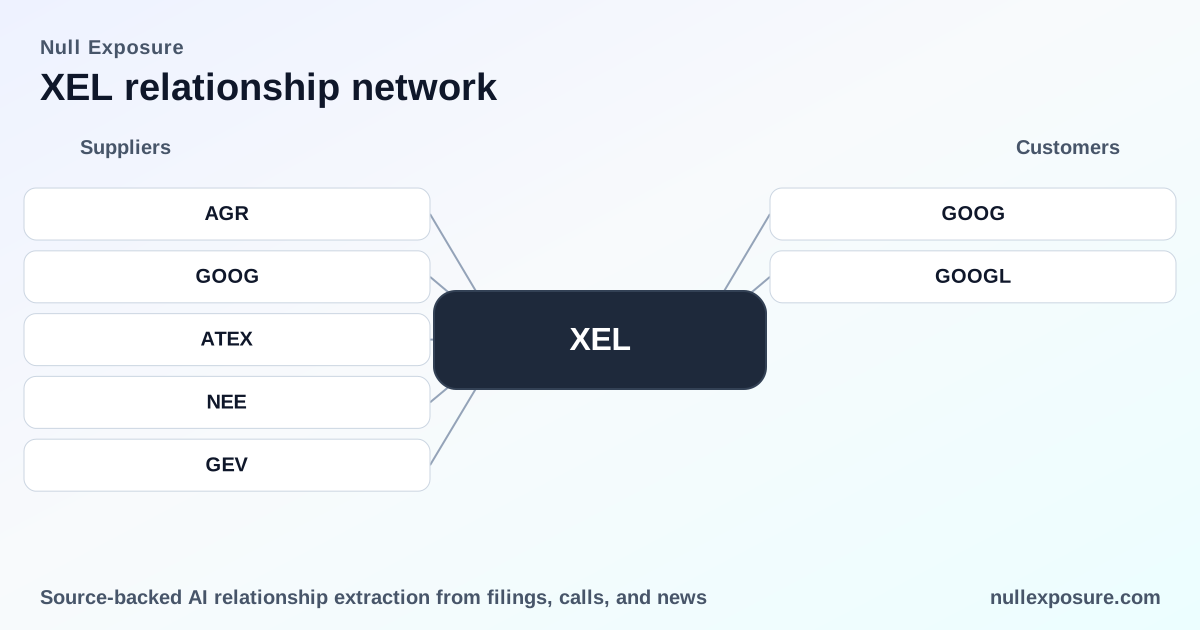
Xcel Energy’s supplier map: where risk and scale meet regulated cash flow
Xcel Energy (XEL) operates as a large regulated utility that monetizes through retail electricity and gas sales, regulated returns on invested capital, and wholesale offtake arrangements. The company secures generation capacity and fuel through a mix of long‑term power purchase agreements (PPAs), shorter-term market purchases and project‑level contracts, then passes costs and investments through regulatory proceedings to ratepayers within its multi‑state footprint. For investors, the supplier picture is a direct lens into Xcel’s execution risk on decarbonization, capital deployment cadence and near‑term cash‑flow volatility given the scale of purchases and insurance costs. For deeper supplier intelligence, visit https://nullexposure.com/.
How Xcel contracts and why that matters for returns and risk
Xcel’s procurement posture is clearly hybrid: the company runs a portfolio of long‑dated PPAs and fuel supply agreements while using the spot market to satisfy residual requirements. That combination is deliberate — long‑term contracts secure capacity and predictable pricing, supporting capital recovery under utility regulation; spot purchases provide flexibility but introduce volatility into fuel and purchased‑power costs.
- Long‑term commitments are material to operations. Public disclosures show multi‑decade contracts for fuels and purchased capacity with expiration dates stretching into the 2040s and beyond, and roughly 3,751 MW of capacity under PPAs as of year‑end 2024. Those commitments underpin ratebase recoveries but also lock Xcel to counterparties and supply timelines.
- Spot and short‑term procurement are used tactically. Xcel leverages liquid markets for remaining needs, which keeps procurement nimble but exposes near‑term margins to market swings.
- Scale of spend is nontrivial. Contracted purchases and insurance programs (including an excess liability program with roughly $130 million annual premium) indicate supplier spend bands in the $100m+ range and potential concentration in key equipment categories globally sourced.
These company‑level signals translate to practical investor considerations: counterparty strength on PPAs, on‑time delivery of large electrical equipment, and insurance/force‑majeure exposure are material drivers of earnings trajectory.
For portfolio managers focused on supplier continuity, research teams and procurement officers seeking counterparties, more detailed relationship mapping is available at https://nullexposure.com/.
Company‑level supplier constraints and what they imply
The public disclosures produce a concise set of constraints investors should track as part of Xcel’s operating profile:
- Contract types: High prevalence of long‑term PPAs and fuel contracts (confidence high). Evidence also shows routine use of the spot market for residual needs and a smaller set of short‑term project bonds — together this indicates a deliberate mix of commitment and flexibility.
- Geography and sourcing: Xcel participates in a global supply chain for major equipment, which raises delivery‑lead and price risk for turbines, transformers and other large assets.
- Materiality: Some supplier exposures are assessed as immaterial (e.g., nascent equipment manufacturing contracts), while other disruptions — particularly to generation or insurance markets — would be material to results.
- Roles and segments: Xcel acts primarily as a buyer of fuel and capacity, while also depending on manufacturers and service providers for equipment, digital hardware, and software support. These relationships cross hardware, software and services segments.
- Spend concentration: Contracted purchases and insurance indicate supplier spend above $100m in aggregate, implying strategic leverage for large suppliers and significant counterparty importance to Xcel’s operating model.
These constraints point to a mature, capital‑intensive utility with high counterparty dependence on a limited set of large suppliers and the regulatory ability to recover many costs — an important offset for investors, but not a substitute for active counterparty monitoring.
Mid‑report note: to explore supplier linkages and risk heatmaps, visit https://nullexposure.com/ for tailored intelligence.
Who Xcel is dealing with — headline relationship summaries
Below are the active relationships visible in public reporting and news coverage. Each entry is a plain‑English summary with the source noted.
-
Avangrid / Avangrid, Inc. — Xcel extended its existing power purchase agreement for the 150 MW MinnDakota wind project, remaining the sole offtaker for electricity from the site and preserving a contracted renewable capacity stream for the company. Reporting on the extension was published in Renewables Now and Energy Global in February–March 2026 and reflected broadly in market wire coverage. (Renewables Now, Energy Global, Finviz — Mar 2026)
-
Google — Xcel will supply electricity for a new Google data center in Pine Island, Minnesota, and Xcel’s program announcements tied the deal to a broader pipeline that includes bringing significant clean energy online and a $50 million battery initiative. News outlets reported the arrangement as part of Xcel’s strategic customer wins in early 2026. (TS2 Tech and regional press coverage, Mar 2026)
-
Anterix Inc. — Industry reports list Anterix receiving payments, including approximately $3.2 million from Xcel Energy, reflecting commercial transactions for radio‑spectrum or communications services used by utilities. This is consistent with point payments to specialised vendors supporting grid communications. (Bitget reporting on vendor receipts, Mar 2026)
-
NextEra Energy — Market commentary and analyst briefs referenced strategic alliances between Xcel and NextEra that accelerate generation delivery and scale project execution, positioning Xcel to expand its renewable pipeline more rapidly through collaborative arrangements. (Tikr analysis, Mar 2026)
-
GE Vernova — Coverage groups GE Vernova into strategic supplier and alliance references, with GE’s equipment and services positioned as part of Xcel’s pathway to speed and scale in generation delivery. This signals continued reliance on tier‑one equipment OEMs for turbine, transformer and plant delivery. (Tikr analysis, Mar 2026)
Investment implications: what to watch and how to position
Xcel’s supplier relationships structurally support its regulated earnings profile but create three persistent investor focal points:
- Counterparty and execution risk on long‑term PPAs. Long‑dated offtake commitments underwrite project economics; ensure counterparties and contract terms are enforceable and aligned with regulatory recovery.
- Supply chain timing for major equipment. Global demand has stretched lead times for turbines and transformers; delays or cost inflation can shift in‑service dates and capital spend schedules.
- Concentration of spend and insurance exposure. Large single‑supplier or program exposures (including high annual insurance premiums) can produce outsized earnings impact if disrupted.
Active monitoring should include PPA roll rates, project COD schedules, and any regulatory filings that adjust rate recovery mechanics; these are the direct levers for return timing and volatility.
For teams managing utility exposure, Xcel’s supplier footprint and counterparty commitments are central to credit and operations diligence — start with a supplier risk review at https://nullexposure.com/.
Bottom line
Xcel Energy runs a capital‑intensive, contract‑driven supply model where long‑term PPAs and strategic alliances with large OEMs and developers shape the pace and predictability of earnings. The company’s regulated framework cushions some supplier risk, but execution on renewables delivery, equipment sourcing and key commercial partnerships remains the single biggest determinant of near‑term multiple expansion or compression. Investors should prioritize transparency on contract terms, counterparty strength and project timelines when evaluating XEL exposure.