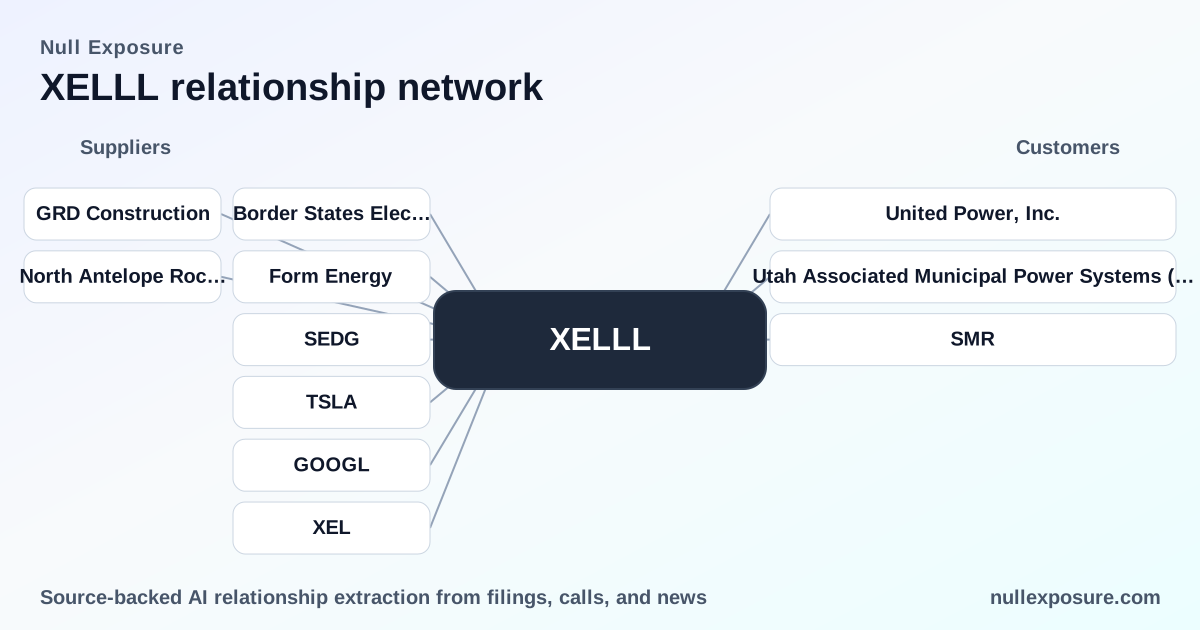
XELLL (Xcel Energy notes): how supplier relationships shape credit and operational risk
Xcel Energy operates as a vertically integrated regulated utility that generates, purchases, transmits and sells electricity, monetizing through regulated rate structures, long-term power purchase arrangements and capacity/energy charges — and the XELLL security represents long-dated subordinated debt financing of that platform. For investors analyzing exposure through supplier relationships, the critical issue is not only who delivers components and fuel, but how Xcel structures contracts (long-term vs. spot), how concentrated and critical those suppliers are to system reliability, and the size and maturation of capital programs that drive counterparty risk. Visit https://nullexposure.com/ for a consolidated view of counterparties, contract posture, and spend signaling.
Why suppliers matter for a regulated utility debt holder
Xcel’s operating model is capital-intensive and contract-driven. Company disclosures show a mix of long-term fuel and purchased-power contracts that extend into the 2030s and beyond, together with substantial short-term and spot-market activity to balance operations. This combination embeds both predictability (long-term contracted cash flows and capacity charges) and exposure to execution risk (construction contractors, battery suppliers, and global equipment supply chains). According to company filings, Xcel’s long-term fuel and power purchase contracts expire between 2025 and 2060 and long-term purchased-power contracts typically include both capacity and energy charges, creating predictable obligation structures for creditors.
Contracting posture and procurement characteristics that drive credit outcomes
- Long-term commitments dominate fuel and dispatchable capacity procurement. Company statements identify long-term purchase commitments for coal, nuclear fuel and natural gas with multi-decade expirations, and long-term purchased-power contracts that include capacity and energy charges.
- Short-term and spot procurement remain active levers. Xcel uses spot markets and short-term bilateral purchases to meet daily system requirements and to replace company-owned generation when needed, creating variable procurement cost exposure.
- Global sourcing and vendor risk controls. Xcel participates in a global supply chain for materials and components and applies vendor security risk assessments for third-party service providers at integration and renewal points.
- High-spend capital programs. Disclosure-level spend bands indicate both mid-sized contract flows ($10m–$100m) and very large capital commitments (>$100m), signaling substantial contractor dependency across transmission, storage and generation projects.
These operating characteristics create a profile where execution on large capital projects, counterparty performance on long-term PPAs and vendor security for technology integrations are the principal supplier risks for holders of subordinated notes. For a more granular counterparty map, see https://nullexposure.com/.
On-the-ground supplier and partner relationships — short takes
Below are the relationships surfaced in recent reporting, with concise takeaways and source context.
-
Border States Electric — A local report notes that the utility provider acquired a 4.2‑acre property in 2021 from Border States Electric, indicating transactional real‑estate dealings between the parties and local service relationships. Source: Sioux Falls Business (article on local industrial-area redevelopment, reported March 2026).
https://siouxfalls.business/citys-longtime-industrial-area-sees-new-expanded-uses/ -
Form Energy — Xcel’s upcoming Pueblo project will deploy long‑duration energy storage systems comprised of iron‑air batteries built by Form Energy, making Form Energy a strategic equipment supplier for multi‑day storage capability. Source: CBS News Colorado (coverage of Pueblo power plant, reporting on storage vendor choice).
https://www.cbsnews.com/colorado/news/xcel-colorado-pueblo-power-plant-renewable-energy-storage-ldes/ -
SolarEdge — SolarEdge is one of two battery vendors included in Xcel’s Renewable Battery Connect program; Xcel has attempted to expand inclusion but has run into visibility and communications challenges with additional vendors. Source: Latitude Media (Colorado energy coverage, FY2024/FY2025 reporting on VPP program).
https://www.latitudemedia.com/news/despite-new-colorado-law-xcel-says-the-biggest-vpp-hurdle-is-still-the-tech/ -
Tesla — Tesla is the other incumbent battery partner in Xcel’s Renewable Battery Connect program, with integration and visibility constraints highlighted by Xcel grid strategy leadership. Source: Latitude Media (VPP program reporting).
https://www.latitudemedia.com/news/despite-new-colorado-law-xcel-says-the-biggest-vpp-hurdle-is-still-the-tech/ -
Google — Institutional-scale offtakers are part of Xcel’s commercial footprint; analysts reported that Xcel will power a new Google data center in Minnesota, illustrating large corporate demand relationships that affect load profiles and potential behind‑the‑meter or dedicated supply arrangements. Source: MarketScreener summarizing analyst coverage (March 2026).
https://www.marketscreener.com/news/bmo-capital-adjusts-price-target-on-xcel-energy-to-90-from-87-maintains-outperform-rating-ce7e5ad9dd81f125 -
Quanta Infrastructure Solutions Group — Quanta serves as a primary contractor on major transmission projects for Xcel, including the Elbert County power pathway; Quanta’s simultaneous work on other large transmission corridors underscores contractor capacity and schedule linkage across large projects. Source: The Colorado Sun (coverage of transmission permitting and contractor role, June 2025).
https://coloradosun.com/2025/06/23/xcel-transmission-line-elbert-county-power-pathway/ -
GRD Construction — GRD Construction crews are installing structures, cables and lines on a $1.7 billion transmission project tied to Xcel’s expansion, indicating GRD’s role in field execution for high-dollar transmission buildouts. Source: CBS News Colorado (story on Elbert County project opposition and construction).
https://www.cbsnews.com/colorado/news/elbert-county-votes-deny-xcel-energy-transmission-line/ -
North Antelope Rochelle Mine — Xcel’s coal-fired assets have historically sourced coal from large Wyoming mines such as North Antelope Rochelle; plant-level reporting cites fuel volumes delivered from that mine, highlighting legacy thermal fuel supply linkages. Source: St. Croix 360 (coverage of Allen S. King plant closure/conversion, April 2025).
https://www.stcroix360.com/2025/04/new-details-revealed-about-closure-and-conversion-of-allen-s-king-power-plant/
If you want a consolidated supplier risk scorecard and contract maturity ladder tied to these relationships, review the consolidated counterparty intelligence at https://nullexposure.com/.
What investors and operators should watch next
- Execution risk on large transmission and storage projects is the primary near‑term credit driver. Quanta and GRD are performing critical construction work on multi‑year projects; slippage, permitting reversals or contractor defaults would have direct operational and cost consequences.
- Integration risk for distributed batteries affects load management and VPP ambitions. The Renewable Battery Connect program’s technology visibility issues with Tesla and SolarEdge constrain Xcel’s ability to scale distributed resources into wholesale‑grade services.
- Fuel and PPA maturity create asymmetry in certainty. Long‑term fuel and PPA contracts create predictable obligations, but substantial spot and short‑term procurement activity leaves Xcel exposed to market price swings during stress periods. Company filings highlight both the long-term contract backbone and active spot market use (excerpts referencing contracts through 2060 and remaining procurements via spot markets).
- Vendor security and global supply chains are material to operations. Company risk disclosures treat third‑party service providers as subject to security and risk assessment processes; a breach or supply interruption could disrupt critical business functions and reputation, a material signal for subordinated debt holders.
Practical next steps for due diligence
- Request counterparty lists and contract maturity schedules for major PPAs, storage supply agreements and transmission EPC contracts.
- Monitor construction progress and permit status for the Elbert County/Power Pathway project and Pueblo LDES deployment.
- Evaluate concentration of large-dollar suppliers in the >$100m band and the second-tier $10m–$100m band, and align those exposures with financial strength indicators for each contractor.
For a tailored counterparty exposure report and deeper contract-maturity mapping relevant to XELLL, start here: https://nullexposure.com/. If you prefer a bespoke analysis for institutional portfolios, contact the research team via https://nullexposure.com/ and request the supplier risk pack for Xcel Energy.