XEML supplier review: index licensing, concentration risk, and what STOXX tells investors
XEML funds their products by licensing third-party indexes to construct exchange-traded products and monetizing through management fees, transaction flows, and distribution economics tied to ETF asset levels. For investors and operators evaluating supplier risk, the important distinction is that XEML’s commercial model relies on a small set of upstream intellectual property providers and distribution partners rather than manufacturing proprietary indices or data in‑house. This puts index licensing terms and partner stability squarely at the center of supplier due diligence.
Explore more supplier intelligence at https://nullexposure.com/.
One clear relationship on the record: STOXX and the Xtrackers linkage
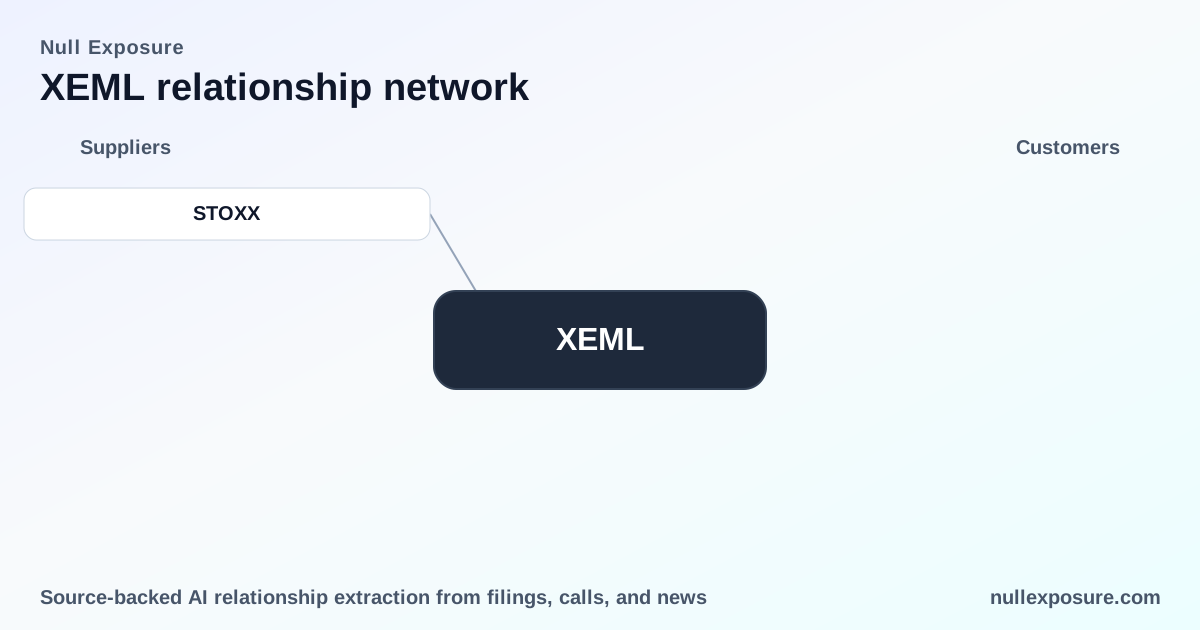
The searchable record for XEML contains a single supplier relationship: STOXX. According to a Traders Magazine article published March 10, 2026, Xtrackers launched a Europe defence technology ETF that tracks the STOXX Europe Total Market Defence Space and Cybersecurity Innovation Index. In plain English, XEML (through the Xtrackers vehicle referenced) is using a STOXX index as the investable roadmap for a new ETF product, which implies a direct licensing and operational dependency on STOXX for index calculation and maintenance (Traders Magazine, March 10, 2026).
Why that relationship matters to investors and operators
- Index providers are strategic suppliers: An index vendor like STOXX supplies the rules, rebalancing schedule and underlying constituent logic that determine product behavior and investor outcomes. For XEML, that translates to operational dependency on index accuracy and continuity.
- Revenue alignment through product launches: New ETFs tied to STOXX indexes expand product offerings and assets under management, directly supporting XEML’s fee income; successful launches increase the leverage of the index provider relationship.
- Contractual levers are critical: Licensing language controls fees, sublicensing rights, termination triggers and use of trademarks — all of which influence margin and product stability.
A tradersmagazine.com report from March 2026 provides the direct reference for the STOXX linkage.
Constraints and what the absence of constraints says about XEML
No supplier-specific contractual constraints are present in the available disclosure set for XEML. As a company-level signal, the lack of disclosed constraints suggests either limited public contractual friction or minimal voluntary disclosure about supplier terms. Investors should interpret that absence proactively:
- Contracting posture: With no visible constraints, XEML’s public record does not reveal restrictive supplier concessions or onerous termination clauses; that can indicate a neutral-to-strong negotiating position, but it also increases the need for private diligence on fee schedules and exclusivity.
- Concentration and criticality: The record shows a reliance on an established index provider, which is typical in ETF manufacturing; without additional supplier disclosures, concentration risk cannot be dismissed and should be treated as strategically material.
- Maturity of supplier relationships: The single relationship in the public filing indicates the model leans on mature, industry-recognized index vendors rather than nascent providers, which reduces certain operational risks but does not eliminate contractual exposure.
For a deeper supplier exposure readout, visit https://nullexposure.com/.
Operational implications: what this means for risk and execution
- Switching costs are meaningful. Replacing an index provider is not merely a procurement exercise — it involves re-registration, investor communication, potential re-branding and performance tracking differences. That elevates supplier lock-in risk for XEML.
- Regulatory and reputational sensitivity is elevated. Index methodology disputes, mispricing episodes, or data errors from a supplier like STOXX would transmit immediately to the fund’s NAV and investor sentiment.
- Product innovation depends on partner alignment. Building differentiated ETFs (for example, defense technology or cyber exposure) often requires close cooperation on index design and telemetry; the STOXX relationship demonstrates XEML’s route to product expansion through licensing rather than in‑house methodology creation.
Key takeaway: STOXX is not a peripheral contractor — it is a functionality provider whose stability and contract terms materially affect XEML’s product economics and operational continuity.
The relationships, one by one
STOXX — Traders Magazine reported on March 10, 2026 that Xtrackers launched a Europe defence technology ETF tracking the STOXX Europe Total Market Defence Space and Cybersecurity Innovation Index, indicating XEML’s use of STOXX index licensing for new ETF products (Traders Magazine, March 10, 2026).
Practical next steps for investors and operations teams
- Conduct targeted contract diligence on index licensing terms (fees, termination rights, indemnities, and rebalancing notice periods).
- Model sensitivity of fee revenue to a hypothetical loss or renegotiation of the STOXX relationship; quantify switching timelines and investor attrition in your scenario work.
- Establish operational playbooks for index disputes and communication protocols to minimize NAV and reputational damage if an index provider issue arises.
For managed supplier maps and deeper supplier intelligence, see https://nullexposure.com/.
Final verdict: concentrated dependence, manageable if actively managed
XEML’s public supplier footprint shows concentrated dependence on recognized index providers like STOXX, which is standard for the ETF manufacturing model but creates a single point of provider risk that scales with product expansion. Investors should price in both the upside from expanded product offerings and the downside from licensing disputes or forced transitions. Operators should prioritize contractual clarity and operational readiness to change providers without disrupting investor trust.
If you want a consolidated supplier risk brief or an expanded relationship map for XEML, start here: https://nullexposure.com/.