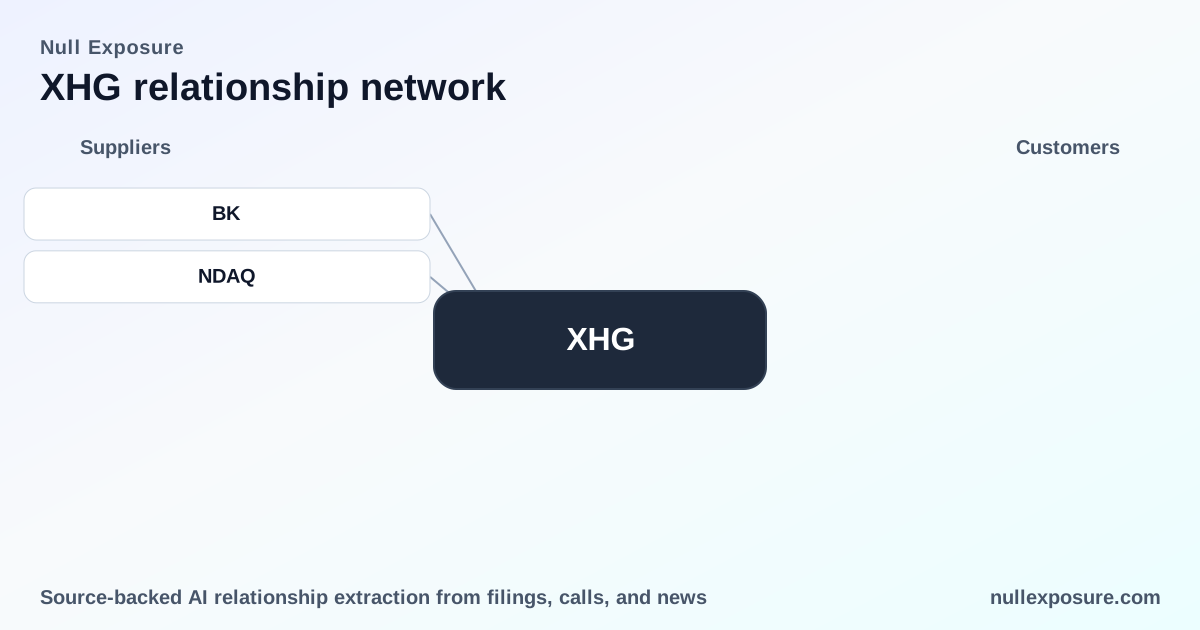
XHG (XChange TEC.INC): Depositary mechanics and market plumbing that matter to investors
XChange TEC.INC operates as a Shanghai-headquartered insurance brokers and financial services provider that monetizes primarily through brokerage commissions, service fees and client-facing insurance product facilitation, reported at $387.3 million revenue (TTM). The company lists American Depositary Shares (ADSs) on Nasdaq, which creates an intermediary layer—and corresponding counterparty relationships—that directly affect shareholder mechanics, liquidity and corporate action execution. Investors evaluating supplier risk should treat the company’s depositary and listing relationships as operationally critical service contracts rather than commodity vendors.
Explore supplier exposure and counterparty profiles at https://nullexposure.com/.
Key facts that drive how XHG runs as a supplier to its own markets
XChange TEC is a NASDAQ-listed Chinese insurance-brokerage business with a modest market capitalization (about $46.3 million per latest public snapshot) and meaningful TTM revenue. The company’s presence in U.S. capital markets is implemented via an ADS program, which creates two operational imperatives: (1) a depositary bank that administers ADS conversion and corporate actions, and (2) a listing venue that governs trading, disclosure and listing requirements. Those two relationships determine investor access, ADR mechanics and the speed at which corporate restructurings are reflected in share price and float.
- Market signals: revenue of $387.3M TTM and a small market cap mean that execution of corporate actions and maintenance of an orderly market depends heavily on service providers' timely performance.
- Corporate-action posture: the company is actively using its depositary to implement a mandatory ADS exchange (a 20:1 consolidation), which highlights high operational dependence on depositary processes.
If you want a full supplier snapshot for due diligence, start here: https://nullexposure.com/.
The Bank of New York Mellon — the depositary executing ADS consolidation
BNY Mellon functions as the depositary for XHG’s ADS program and was named in the company’s corporate action communication requiring ADS holders to surrender old ADSs for a consolidated new ADS ratio of 20 old for 1 new. This is a mandatory exchange mechanism handled by the depositary that impacts holders’ recordkeeping, custody and settlement flows. According to the company announcement published on Yahoo Finance on March 10, 2026, holders must surrender their old ADSs to the depositary to receive the new consolidated ADSs for every twenty old ADSs surrendered. (Source: Yahoo Finance press release, Mar 10, 2026.)
The Nasdaq Capital Market — trading venue continuity and regulatory overlay
XHG’s ADSs continue to trade on The Nasdaq Capital Market under the symbol "XHG," so the stock remains subject to Nasdaq listing rules and public trading liquidity frameworks. The same Yahoo Finance release on March 10, 2026 reiterates that trading will continue on Nasdaq under the existing ticker, preserving public market access and disclosure oversight. (Source: Yahoo Finance press release, Mar 10, 2026.)
What these supplier relationships mean for investors and operators
The depositary and exchange ties are not optional back-office details — they shape market structure and investor experience. Practical implications:
- Corporate-action execution risk is concentrated. The mandatory 20:1 ADS consolidation places heavy operational responsibility on the depositary to process surrenders, reissue new ADSs, and coordinate with custodians; execution failures would immediately affect holder fungibility and trading.
- Liquidity and float dynamics change materially. A 20:1 consolidation reduces ADS count and raises per-ADS price post-consolidation, which can compress float, increase bid-ask volatility and change eligibility for certain passive or index investors.
- Regulatory continuity supports market access. Remaining on Nasdaq preserves U.S. disclosure discipline and electronic liquidity, reducing the risk that trading mechanisms or venue delistings impair investor exit options.
- Concentration of critical services. Both depositary and listing venue are single points of operational continuity for XHG’s U.S. investor interface; that concentration is a strategic characteristic of the business model rather than an incidental detail.
Company-level constraints and operating posture
There are no supplier constraints recorded in the available relationship data for the supplier scope. As a company-level signal, the lack of explicit supplier constraints indicates no disclosed third-party contractual limitations or supplier-imposed covenants captured in the public supplier relationship feed. For investors, that absence translates into two practical inferences: (1) the firm’s ADS program and listing governance operate under standard, well-understood contractual forms rather than bespoke restrictive supplier covenants, and (2) risk assessment should emphasize operational resilience and concentration over unknown contractual encumbrances.
Operationally, XHG’s posture is best described as:
- Contracting posture: Standardized, centralized counterparty arrangements (single depositary, single exchange) rather than diversified supplier panels.
- Concentration: High; a few critical provider relationships control shareholder-facing mechanics.
- Criticality: Very high for the depositary and exchange — both are essential for liquidity, corporate actions and investor access.
- Maturity: Institutional — these are long-established market infrastructures, not ad hoc vendors, which mitigates counterparty credit risk but preserves operational dependency.
Risk and opportunity checklist for investors
- Risk — Execution of the 20:1 consolidation. Administrative delays or custodian mismatches could create temporary illiquidity or settlement mismatches.
- Opportunity — Potential per-share re-rating. Consolidations that reduce ADS count often lead to higher per-ADS trading levels and can change investor composition, which some issuers use to meet listing price thresholds or improve market perception.
- Risk — Small market cap and volatility. XHG’s market cap and historical price range imply susceptibility to market swings post-consolidation; investor due diligence should factor in potential liquidity gaps.
For a deeper supplier exposure analysis and counterparty scorecards, visit https://nullexposure.com/.
Bottom line: treat the depositary and exchange as strategic counterparties
XChange TEC’s depositary relationship with BNY Mellon and its continued Nasdaq listing are core operational contracts that materially affect shareholder liquidity and corporate-action normalcy. Investors must evaluate these relationships not as background plumbing but as strategic counterparts whose performance directly impacts valuation mechanics. For active investors and operational risk teams, prioritize verification of depositary processing timelines, custodian interoperability and post-consolidation float statistics when modeling scenarios.
If you need a focused supplier review or counterparty monitoring tailored to ADS mechanics, start your analysis at https://nullexposure.com/.