Xilio Development (XLO): Supplier relationships that shape manufacturing, licensing and access to capital
Xilio operates as a clinical-stage biotechnology company that designs and develops immunotherapies and monetizes primarily through proprietary programs, licensing arrangements and milestone‑driven partnerships, while outsourcing manufacturing and much of development execution to third parties. The firm's commercial progress and risk profile are driven as much by its supplier and capital markets relationships as by its science — manufacturing concentration in APAC and recurring access to equity capital are core value drivers and risk vectors. For a closer look at counterparties and operational constraints, read on.
Discover supplier risk dashboards and contract intelligence at https://nullexposure.com/ — your starting point for supplier risk due diligence.
How Xilio makes money and how suppliers fit into the model
Xilio’s revenue and valuation dynamics reflect a biotech development model: modest current revenues (Revenue TTM ~ $31.8M) alongside persistent operating losses (Diluted EPS TTM -8.54) and a reliance on equity markets and partner milestones to fund operations. The company licenses key biological rights, relies on third‑party CDMOs for process development and manufacture, and uses underwritten equity offerings to replenish cash. These commercial patterns make supplier relationships operationally critical (manufacturing continuity) and strategically important (licensing can lock up IP rights). For capital markets context and transaction activity, see the company’s recent underwritten offering led by Leerink Partners. If you are mapping counterparties for investment or procurement strategy, start here: https://nullexposure.com/.
The supplier map — each named relationship and what it does for Xilio
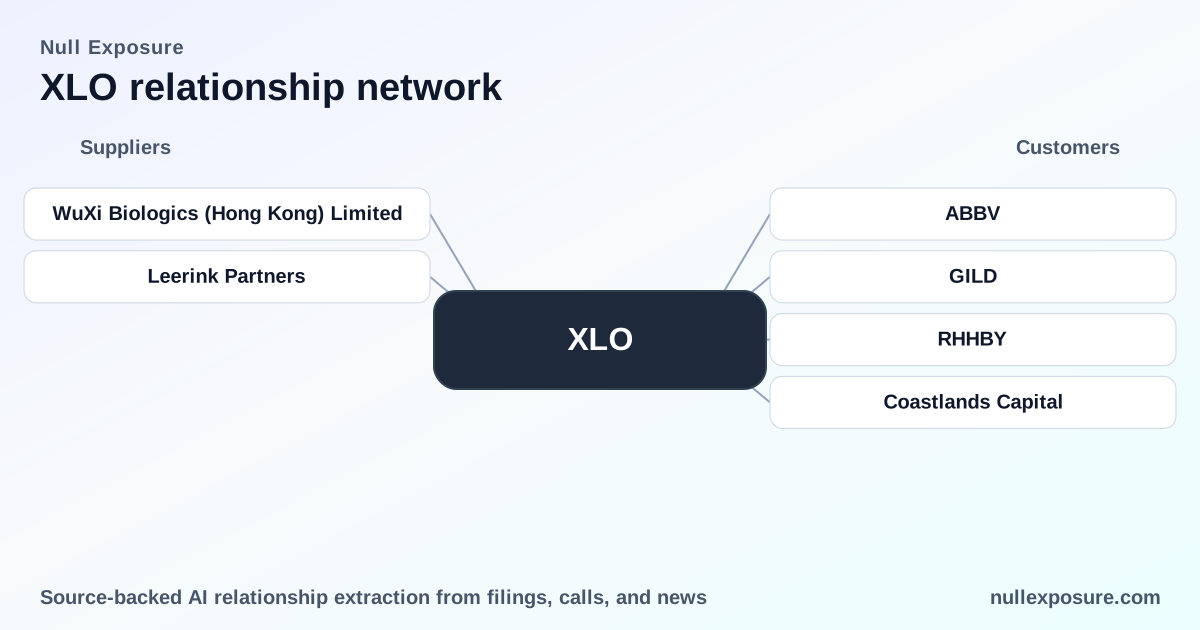
WuXi Biologics (Hong Kong) Limited
Xilio directs certain research, development and manufacturing activities through WuXi Biologics in China, and the company discloses that it currently depends on WuXi for developing the manufacturing processes needed to supply product candidates. According to Xilio’s FY2024 Form 10‑K, this relationship includes both CDMO services and an earlier license arrangement that granted Xilio rights to certain monoclonal antibodies and know‑how. (Source: Xilio 2024 Form 10‑K, filed February 2026.)
Leerink Partners
Leerink Partners acted as the sole bookrunner on Xilio’s prefunded warrant offering announced in February 2026, executing the underwritten financing that replenished capital. Multiple press releases in February 2026 name Leerink as the sole bookrunner for the offering and place the firm squarely in Xilio’s capital markets execution pipeline. (Source: GlobeNewswire press release, February 12, 2026; related industry coverage February 2026.)
Manufacturing, licensing and contracting posture — what constraints reveal
The company's disclosed constraints in filings and press materials create a clear picture of supplier posture and concentration:
- Contract type: licensing. Xilio’s program architecture is built on exclusive license agreements for core monoclonal antibody IP; licensing is a foundational contractual mechanism that governs freedom‑to‑operate and downstream monetization. (Company‑level signal derived from licensing excerpts in the FY2024 filing.)
- Geographic concentration: APAC exposure. Several suppliers and service providers — most notably WuXi — operate in China, exposing Xilio to export controls, sanctions risk and supply‑chain disruption tied to geopolitical shifts. This is a company‑level signal supported by explicit references to supplier operations in China.
- Relationship roles: licensee and manufacturer. Xilio functions as a licensee for academic and third‑party IP and simultaneously depends on CDMOs for manufacturing; excerpts explicitly reference exclusive license agreements with City of Hope and WuXi Biologics and the current dependence on WuXi for process development.
- Service reliance and maturity: active CDMO engagement. The firm reports active milestone payments and incurred development costs related to its partners, indicating mature and ongoing supplier relationships rather than one‑off engagements.
- Segment focus: manufacturing. Contract manufacturing is a pronounced segment risk and operating necessity; Xilio’s business model is structured to outsource production through CDMOs for both preclinical and clinical supplies.
Where constraint excerpts explicitly name a counterparty (for example, City of Hope and WuXi Biologics), the connection to that supplier is direct; other signals describe company‑level posture and should be treated as strategic context rather than single‑vendor assignments.
Interpreting concentration and criticality for investors
- Concentration risk is material. Xilio’s operational continuity is highly dependent on a small set of vendors for process development and clinical supply, with WuXi explicitly called out in filings — that creates both a single‑point‑of‑failure risk and negotiating leverage asymmetries against Xilio.
- APAC manufacturing offers scale but adds political/regulatory tail risk. Proximity to large biologics CDMOs in China lowers production cost/time tradeoffs but raises export control, sanctions and logistics exposures that investors must price into scenario analyses.
- Licensing locks and milestone liabilities. Exclusive licenses for core antibody rights accelerate program control but create obligatory milestone payments (the filing notes aggregate milestone payments to date), influencing cash needs and future financing cadence.
- Capital markets access is active and essential. The February 2026 underwritten offering with Leerink demonstrates both the company’s ability to tap markets and the resulting dilution/financing dependency that investors should weigh alongside R&D and clinical milestones.
Practical takeaways for diligence and portfolio positioning
- Treat WuXi exposure as a high‑impact supplier risk: validate secondary supply options, inspect contract termination and transition provisions, and stress test timelines in the event of cross‑border constraints. (Source: Xilio FY2024 10‑K.)
- Consider financing cadence: underwritten equity placements executed by Leerink support runway but increase dilution potential; monitor shareholder composition and follow‑on financing terms. (Source: GlobeNewswire press release, February 12, 2026.)
- Prioritize covenant and milestone review in any M&A or partnership diligence: exclusive license language and milestone obligations drive both upside capture and cash outflows.
For a structured supplier risk analysis and to download relationship profiles for investment memos, visit https://nullexposure.com/ — actionable supplier intelligence and contract insights are available there.
Closing view: an investment lens
Xilio’s scientific promise is paired with a supply model that concentrates operational risk in a small set of APAC suppliers and a financing model that relies on underwritten equity. That combination creates a classic development‑stage biotech risk/return profile: high upside from clinical progress, and clear counterparty and capital‑access vulnerabilities that move faster than the science. Active monitoring of WuXi contractual terms, contingency manufacturing options, and Xilio’s financing instruments led by firms like Leerink is essential for any investor or operator engaged with the company.
If you want supplier‑level briefings or to map counterparty exposure across a portfolio, start with our platform at https://nullexposure.com/ — we aggregate the disclosures and signals that matter for investment decisions.