XLYO: What investors need to know about supplier links after the delisting
XLYO completed its lifecycle as a public equity through an acquisition and subsequent delisting, and the primary commercial relationship that remains visible in public records is the depositary role that handled share issuances and cancellations during that transition. The company’s monetization in this phase was realized through a corporate transaction and the administrative wrap-up of public equity mechanics, not through ongoing operating revenue disclosed in these records. For investors and operators assessing counterparty risk, the relevant focus is the administrative counterparties and the finality of ledger and issuance work that accompanies an M&A delist.
Visit Null Exposure for deeper counterparty intelligence: https://nullexposure.com/
Transaction close and administrative suppliers: why the depositary matters
When a company exits public markets via acquisition, depositary banks and custodians become critical single-point providers: they close books, cancel or re-issue instruments, and finalize shareholder entitlements. The public record for XLYO shows precisely this posture — a short, high-criticality engagement focused on final settlement and record-keeping rather than long-term vendor supply of operating services.
This operational posture implies several company-level signals: contracting is transaction-focused and short-lived, supplier concentration is effectively low for the public-equity wrap-up phase, criticality of the depositary role is high during the closing window, and the maturity of the engagement is terminal — work concludes once books are closed. These are structural characteristics of companies undergoing a delisting, and they shape both legal exposure and operational obligations for counterparties.
The one supplier relationship public records show
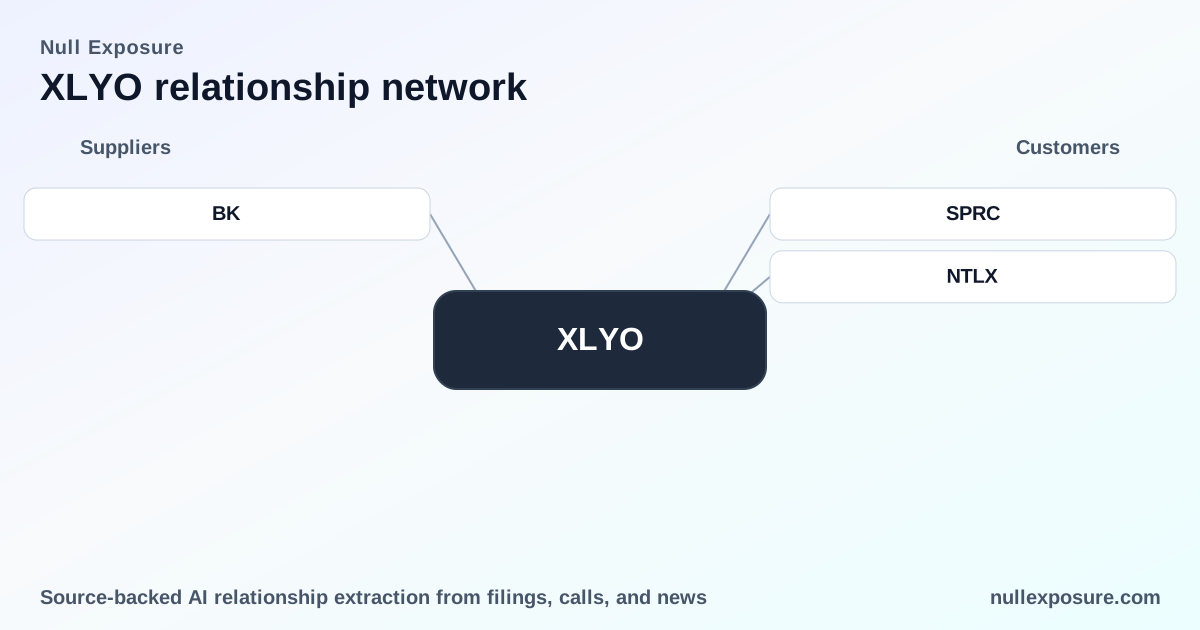
The dataset returned a single relevant counterparty: The Bank of New York Mellon in its capacity as depositary. According to a Globe and Mail press release reporting the delisting, The Bank of New York Mellon, acting as the depositary, closed its books for all issuances and cancellations after August 21, 2025, signaling administrative finalization tied to the acquisition and delisting process (press release reported March 10, 2026). This source documents the administrative closure rather than an ongoing operational supply contract. (Source: The Globe and Mail press release on XYLO’s delisting, reported 2026-03-10.)
What that single relationship implies for risk and operations
- Concentration risk during wind-down is low by count but high by criticality. Even a single depositary is operationally essential for completing equity cancellations and transfer mechanics; any dispute or delay there can delay legal finality for shareholders.
- Contracting posture is short-term and transactional. The role referenced is administrative and bounded to the delisting timeline — no continuing vendor integration is evident in the record.
- Maturity of the engagement is terminal. The depositary’s closure of books after a specific cutoff date is consistent with a closed project rather than an ongoing engagement.
These attributes change how investors should prioritize diligence: focus on the completeness of transfer documentation, escrow reconciliation, and any outstanding registrarial obligations rather than long-term vendor KPIs.
Practical checklist for investors and operators evaluating XLYO counterparty closure
- Confirm that the depositary (or equivalent custodian) has recorded cancellations and re-allocations to the buyer; documentary finality matters more than vendor SLAs in this phase.
- Verify cut-off dates and any residual claims window against shareholder registers; the press release notes an August 21, 2025 cut-off for issuances and cancellations. (Source: Globe and Mail press release, 2026-03-10.)
- Assess whether any escrow, indemnity, or retention tranches remain unpaid; these create lingering counterparty risk even after books are closed.
- If operational continuity is relevant (for example, if software or services continue under the acquirer), map transitional service agreements and their expiries.
For a tailored review of closure mechanics and counterparties for XLYO, see Null Exposure’s supplier intelligence hub: https://nullexposure.com/
How to interpret the public record and its limits
Public disclosures around a delisting emphasize the final administrative counterparties and legal milestones; they do not disclose every operating vendor unless those vendors were material to public filings. The single relationship identified here reflects that dynamic: the depositary role is visible because it governs share mechanics, while operating suppliers that would matter for an ongoing business — if any continue under the acquirer — are typically absent from this kind of notice.
Given the limited public trail, prudent investors should treat the absence of additional supplier listings as a signal of either low residual public-facing supplier risk or simply a lack of public reporting rather than proof of no remaining contractual obligations.
Closing takeaways and next steps
- The public trail for XLYO is dominated by the depositary relationship that closed equity issuance records following the acquisition. That administrative counterpart is essential to legal finality.
- Operational supplier risk post-delisting is low in public records but requires direct verification against transaction documents and any transition services agreed with the acquirer.
- Focus diligence on legal finality, shareholder reconciliation, and any residual indemnities rather than on long-term vendor performance metrics.
If you need a focused, evidence-backed review of XLYO’s counterparty and closure mechanics, start with Null Exposure’s supplier intelligence resources: https://nullexposure.com/ — our tools help translate administrative signals into actionable risk assessments. For bespoke support, the team at Null Exposure can map contractual timelines and highlight any remaining counterparty exposures tied to this delisting. Visit https://nullexposure.com/ to get started.