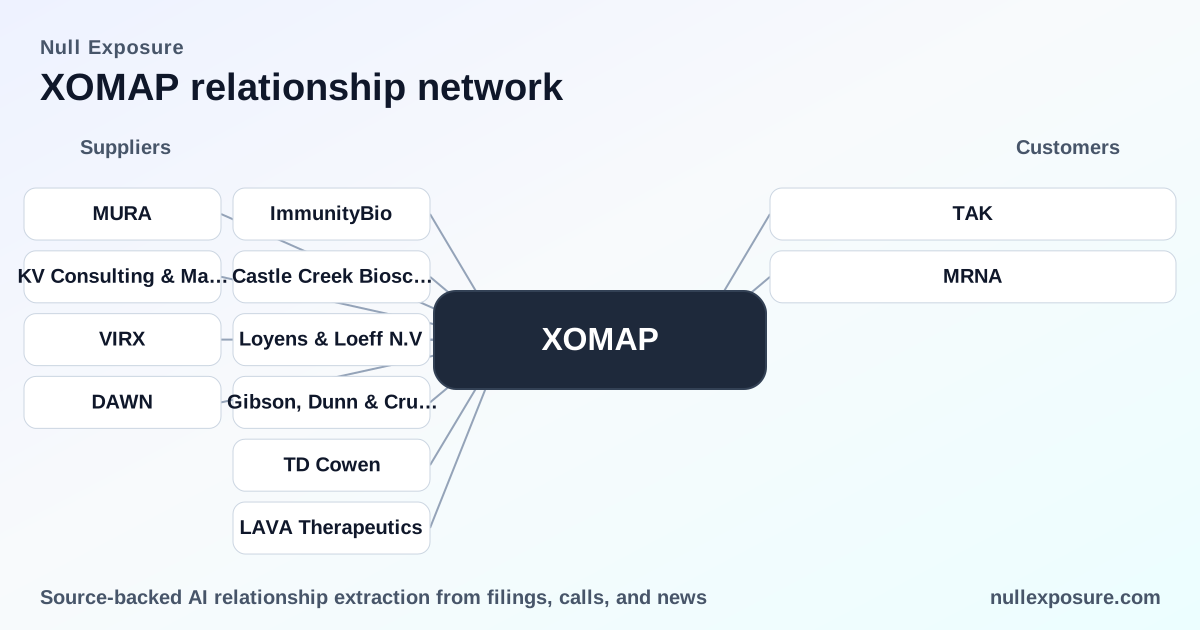
XOMA Corp (XOMAP) — What supplier and counterparty relationships reveal for investors
XOMA is a biotech royalty aggregator that acquires royalty streams, milestone rights and related receivables and monetizes them through ongoing royalty collections and portfolio-level financings. Its operating model buys future cash flows from developers and turns them into present income while selectively participating in syndicated royalty financings and tuck‑in acquisitions. For investors evaluating supplier and counterparty risk, the firm’s counterparties reveal a strategy focused on long‑dated contracts, active portfolio integrations, and professional legal and financial advisors. Explore more company relationship intelligence at https://nullexposure.com/.
Why relationships matter for an aggregator business
XOMA’s economics depend on the quality and structure of the rights it purchases and the counterparties that enable transactions: originators of royalty streams, co‑investors, legal counsel and placement agents. Contracts skew long‑term and global in scope, which concentrates exposure into a small number of asset backstops (royalty‑bearing products) while smoothing cash flow across multiple years. This undertaking requires reliable legal advisers and capital markets partners — a pattern visible across XOMA’s public disclosures.
- Business model driver: buying rights upfront for future royalties turns idiosyncratic product performance into predictable receipts when diversified.
- Operational posture: XOMA acts predominantly as a buyer of royalty/receivable rights and as a sponsor of portfolio financings.
- Risk concentration: long contract tenors and global sales bases create dependency on a handful of commercial products and counterparties.
If you want a consolidated supplier view and ongoing monitoring for XOMA counterparties, visit https://nullexposure.com/ for detailed tracking.
Deal-by-deal relationship map (plain English, sourced)
ImmunityBio
XOMA terminated the ImmunityBio License Agreement in June 2024 and executed an amendment to the LadRx RPA, reflecting an alteration of previous royalty arrangements and a reallocation of contractual rights (FY2024 10‑K). This is recorded in XOMA’s 2024 Form 10‑K.
Castle Creek Biosciences
In February 2025 XOMA contributed $5.0 million to a $75.0 million syndicated royalty financing for Castle Creek, a transaction led by Ligand, demonstrating XOMA’s role as a co‑investor in syndicated royalty financings (FY2024 10‑K mention of the February 2025 contribution).
Loyens & Loeff N.V
Loyens & Loeff N.V served as the Dutch legal advisor to XOMA Royalty on the LAVA Therapeutics acquisition closing, confirming the use of international law firms for cross‑border transactions (GlobeNewswire release, Nov 21, 2025).
Gibson, Dunn & Crutcher LLP
Gibson Dunn acted as XOMA Royalty’s U.S. legal advisor on at least two material closings, including the LAVA Therapeutics acquisition (Nov 21, 2025) and the Generation Bio tender offer and acquisition closing (GlobeNewswire, Feb 9, 2026), underlining continuity in top‑tier legal counsel across deals.
TD Cowen
TD Cowen served as financial advisor to Generation Bio in the transaction XOMA closed, indicating the presence of institutional investment banking support in execution of material acquisitions (GlobeNewswire, Feb 9, 2026).
LAVA Therapeutics
XOMA integrated assets from LAVA Therapeutics into its royalty portfolio post‑acquisition; industry research commentary flagged the acquisition as an example of XOMA’s portfolio expansion strategy (PredictStreet / FinancialContent deep‑dive, Dec 13, 2025).
Mural Oncology
Mural Oncology assets were also cited among recently integrated acquisitions, which XOMA used to expand its royalty and milestone receivable base; market coverage referenced successful integration of these assets into XOMA’s portfolio (PredictStreet / FinancialContent, Dec 13, 2025).
KV Consulting & Management
KV Consulting & Management is identified as XOMA Royalty’s media contact (Kathy Vincent) in the Generation Bio closing release, indicating outsourced or retained public relations support for transaction communications (GlobeNewswire, Feb 9, 2026).
Viracta
In December 2024 Viracta assigned to XOMA all its rights, title and interest in a license with Day One related to OJEMDA, representing a direct acquisition of license‑related rights and the transfer of revenue streams to XOMA (FY2024 10‑K).
Day One
XOMA applied $8.5 million against long‑term royalty receivables from the Viracta RPA and recognized $0.5 million as income from purchased receivables, illustrating XOMA’s accounting treatment for acquired receivables and the monetization path for those assets (FY2024 10‑K).
Key operational constraints and what they imply for investors
XOMA’s public disclosures and constraint signals create a coherent profile of the company’s operating model:
- Long‑term contracting posture: The firm consistently acquires royalty rights with multi‑year tenors and potential milestone upside; this locks cash flows across extended horizons and sets exposure to product lifecycle risk rather than short‑term market cycles.
- Global revenue exposure: The company collects royalties on worldwide net sales for certain assets, which diversifies geographic risk but increases sensitivity to global commercialization performance and regulatory environments.
- Buyer‑centric role: XOMA predominantly acts as an acquirer of rights (buyer) across multiple programs, with occasional seller‑type dispositions; this signals a forward‑looking portfolio build strategy rather than a services reseller model.
- Active stage of relationships: Public receipts (for example VABYSMO collections reported for a 12‑month span) demonstrate active cash inflows from commercial assets, not just passive holdouts.
- Transaction scale: Typical spend bands and contingency disclosures imply deal sizes concentrated in the low‑to‑mid millions for many transactions, with material syndications on larger deals.
These signal that XOMA’s credit and counterparty risk is a function of portfolio composition and product commercial success rather than short‑term revenue volatility. Investors should treat XOMA as a cash‑flow arbitrage business tied directly to clinical and commercial outcomes of underlying assets.
For a focused monitoring feed and relationship intelligence on XOMA counterparties, visit https://nullexposure.com/ — our platform centralizes the same filings and news threads used here.
Investment implications and the risk checklist
- Upside: The royalty aggregator model converts concentrated R&D risk into diversified cash flows; XOMA’s active use of legal and banking advisers reduces execution risk on cross‑border acquisitions.
- Downside: Long tenors and global commercial exposure create path dependency on a limited number of products; accounting treatments for purchased receivables and contingency recognition can compress near‑term earnings if milestones fail to trigger.
- Governance and execution: Repeated engagement with high‑caliber law firms (Gibson Dunn, Loyens & Loeff) and capital markets advisors (TD Cowen) supports deal execution and regulatory navigation.
If you are evaluating counterparty concentration and contract tenors for model stress tests, our proprietary relationship index tracks these exact counterparties and document references — check it at https://nullexposure.com/.
Bottom line
XOMA operates as a proactive buyer and portfolio manager of royalty and milestone cash flows, supported by established legal and banking partners and a set of active integrations. The company’s supplier and counterpart relationships confirm a repeatable M&A and financing playbook: buy rights, integrate assets, collect royalties, and finance larger opportunities via syndications. Investors should weight long‑dated contract exposure and product commercial risk when valuing XOMA’s preferred stock. For ongoing monitoring and a consolidated view of counterparties and filings, visit https://nullexposure.com/.