Twenty One Capital (XXI): supplier map and what it means for investors
Twenty One Capital runs a Bitcoin-native corporate treasury and financial services business that monetizes by structuring corporate balance sheets around BTC exposures and providing related treasury services. The company operates from Austin, Texas, with a public equity valuation driven more by its bitcoin-linked positioning than by reported operating revenues — a strategic posture that makes its counterparty relationships and asset transfers central to underwriting risk and upside. For hands-on diligence, explore full coverage at https://nullexposure.com/.
Snapshot: how XXI shows up to counterparties and markets
Twenty One Capital is listed on the NYSE under XXI, classed in financial services but registered in public records as a shell company; market capitalization is roughly $2.52 billion while reported trailing revenue is $0, which signals a valuation built on asset exposures rather than current cash flows. Key practical takeaways: balance-sheet deployment of bitcoin, a small institutional ownership footprint, and a wide spread between 52-week high and low indicating market volatility around the story.
Why supplier and counterparty relationships are the fulcrum of XXI’s model
XXI’s business is not a traditional fee-for-service franchise; its economics depend on counterparties that deliver BTC and settlement services into the company structure. That makes the identity, size, and contractual posture of suppliers a direct input to capitalization, liquidity and operational continuity. Monitoring supplier transfers, custody arrangements, and the legal structure of BTC inflows is equivalent to monitoring cash flow for a traditional bank. For an investor who values counterparty transparency, begin here: https://nullexposure.com/.
Supplier relationships discovered in the record
The following section covers every supplier relationship present in the available results.
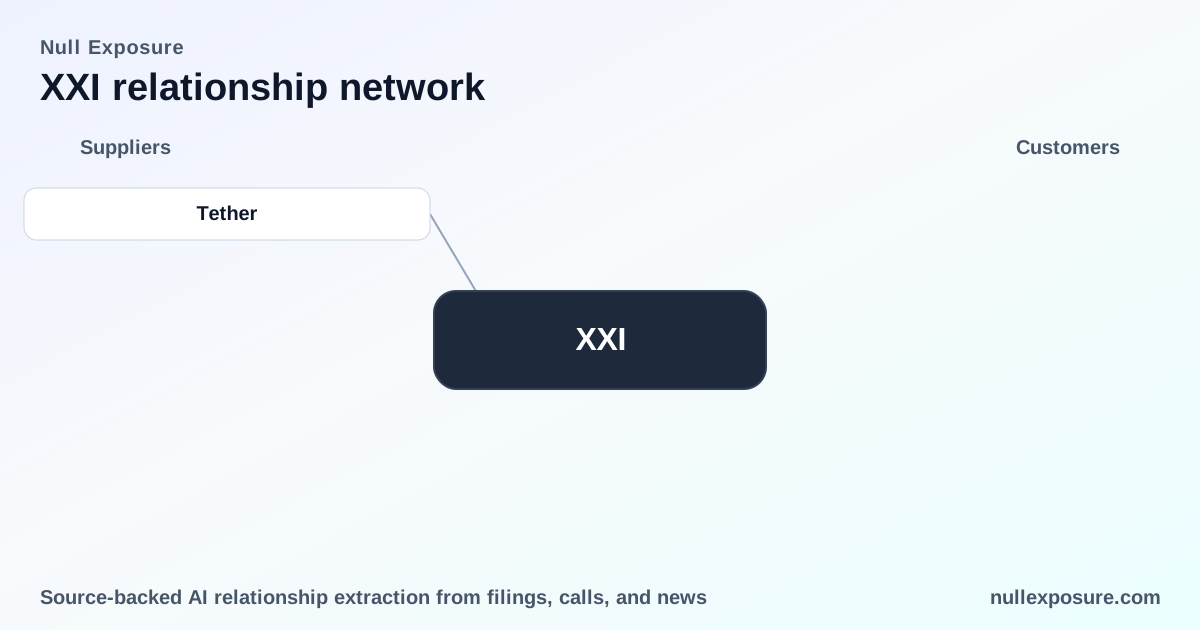
- Tether — A TS2 Tech news report for FY2025 documents a planned transfer of roughly 5,800 BTC from Tether into the company structure as part of the transaction, which represents a material in-kind asset movement supporting XXI’s treasury position. (Source: TS2 Tech, March 10, 2026; https://ts2.tech/en/twenty-one-capital-xxi-stock-nyse-debut-bitcoin-treasury-bet-and-2026-outlook/)
This is the only supplier-side relationship captured in the provided results. The Tether transfer is an operationally meaningful event because it increases on-balance-sheet BTC exposure without traditional cash flows, and it therefore feeds directly into market valuation and liquidity considerations.
Operational constraints and company-level signals
No supplier-specific contractual constraints were recorded in the available material; that absence itself is a company-level signal. From the public facts and the single documented relationship, derive these operational characteristics:
- Contracting posture — asset-transfer and bilateral arrangements dominate. The disclosed Tether transfer is an example of an in-kind settlement approach rather than a classic supplier-for-service contract, indicating counterparty agreements are structured around token transfers and custody instructions.
- Concentration — single large transfers imply concentration risk. With only one supplier relationship surfaced (Tether) and a large BTC inflow described, the company shows exposure sensitivity to a small number of counterparties for balance-sheet growth.
- Criticality — counterparties are functionally critical to both funding and the company’s asset base. The operational continuity of XXI depends on counterparties delivering BTC and on robust custody and settlement mechanics.
- Maturity — commercial maturity is early. Zero reported TTM revenue and a shell-company classification suggest corporate operations are nascent and that the public equity valuation is forward-looking, anchored to asset positions and strategic partnerships rather than recurring service income.
These signals affect diligence priorities: contract terms for transfers and custody, counterparty credit and operational resiliency, and governance around asset custody and verification should be reviewed before attributing intrinsic value to the market cap.
What the Tether relationship implies for investors
The recorded transfer from Tether is not a routine vendor payment; it is an infusion of BTC that increases XXI’s balance-sheet exposure. That structure concentrates value creation on asset custody, verification, and legal clarity—not on recurring operating revenue. Investors must therefore evaluate the legal documentation governing transfers, escrow/custody counterparties, and regulatory posture in jurisdictions affecting both XXI and its suppliers. The TS2 Tech piece (March 10, 2026) provides the transaction-level disclosure referenced above.
Risk checklist for investors and operators
- Counterparty concentration: A limited supplier set creates single-counterparty risk that can rapidly shift market perception and liquidity.
- Custody and verification: On-chain receipts are necessary but not sufficient; legal title, custodial guarantees and segregation structures are primary risk mitigants.
- Valuation disconnects: Large market caps with zero reported revenue indicate valuation is driven by asset price assumptions rather than operating cash flows.
- Regulatory and legal clarity: Transfers of BTC across entities introduce cross-jurisdictional legal risk that affects recoverability and enforceability.
- Liquidity management: In-kind BTC inflows do not equal fiat liquidity; investors should stress-test the company’s ability to meet cash obligations without forced asset sales.
Final read and next steps
Twenty One Capital’s model is explicitly counterparty-driven: its market value is anchored to BTC holdings and the partnerships that supply those holdings. The documented relationship with Tether—an incoming transfer of roughly 5,800 BTC—illustrates the operational reality that investors must underwrite: asset provenance, custody arrangements, and counterparty dependency. For deeper supplier mapping and to track updates to these relationships, use the coverage hub at https://nullexposure.com/.
To commission tailored supplier due diligence or to integrate these signals into your investment workflow, visit https://nullexposure.com/ for direct access and research products.