YHGJ supplier profile: what investors need to know about counterparties and cost exposure
YHGJ operates as a manufacturer-dependent business with raw-material-driven margins and limited long-term procurement commitments. The company monetizes by producing finished goods where input costs constitute a material portion of total product cost, and revenue is generated through product sales rather than through long-term upstream contracts. For investors and operators assessing supplier risk, the key dynamic is cost volatility transmission from raw-material spot markets to YHGJ's margins, together with supplier relationship fluidity. For an on-demand, consolidated view of supplier disclosures and market signals visit https://nullexposure.com/.
How YHGJ buys and why that matters
YHGJ’s disclosed posture toward suppliers is transactional and short-term. Company statements indicate the absence of long-term supply agreements: “We do not have any long-term agreements for the supply of raw materials and may experience wide fluctuations in the cost of raw materials in the future.” This language establishes two firm characteristics of the operating model:
- Contracting posture: spot and transactional. YHGJ sources raw materials on the open market rather than through fixed multi-year contracts, which creates direct exposure to commodity cycles and supplier pricing power.
- Profit sensitivity: high materiality of inputs. Raw materials are described as a significant share of total product cost, which makes gross margin directly sensitive to cost swings.
These characteristics generate a predictable set of implications for investors: greater earnings volatility, the necessity of active hedging or pricing pass-through, and heightened importance of supplier diversification.
What the constraints tell us about operational risk
Two company-level signals summarize the supply-side constraints:
- Contract type — spot (evidence confidence 0.80): The company explicitly discloses no long-term raw-material contracts, which means procurement is executed on spot terms. That raises working-capital pressure during price spikes and limits forward price visibility.
- Materiality — material (evidence confidence 0.80): The cost of raw materials represents a significant portion of product cost and has a material effect on profitability. This is not a peripheral input; it is a margin driver.
From a structural perspective, these constraints indicate a mature manufacturing cost structure with significant input volatility rather than a nascent firm with embedded supplier lock-ins. Because constraints are stated at the company level, they reflect YHGJ’s overall operating model rather than a single counterparty relationship.
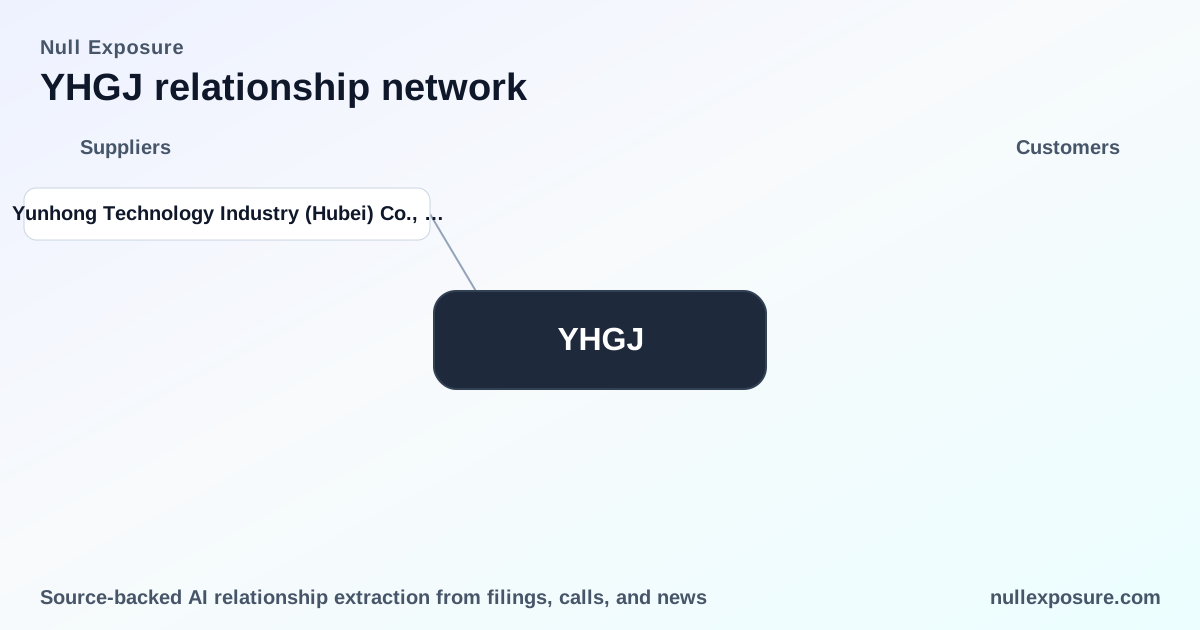
Documented supplier relationship: Yunhong Technology Industry (Hubei) Co., Ltd.
Yunhong Technology Industry (Hubei) Co., Ltd. — The Globe and Mail reported on March 10, 2026, that Yunhong Green CTI Ltd. unwound part of an asset purchase agreement with Yunhong Technology Industry (Hubei) Co., Ltd., originally entered on June 30, 2024. This notice signals contract renegotiation or transaction reversal between named parties and is relevant to counterparty stability in the supplier ecosystem. (Source: The Globe and Mail, March 10, 2026 — https://www.theglobeandmail.com/investing/markets/stocks/YHGJ-Q/pressreleases/36538177/yunhong-green-cti-cancels-part-of-asset-agreement/)
Implication for YHGJ: the documented unwind is a discrete event that highlights transactional instability among related parties; investors should interpret it as a signal that asset and supply arrangements can change rapidly in this group of counterparties.
How these relationships and constraints translate into investor risk
The combination of spot purchasing and high input materiality yields four practical risk vectors:
- Earnings volatility: With no long-term supply locks, cost spikes flow through to gross margin unless offset by rapid price increases to customers or active hedging.
- Negotiating leverage: Suppliers who control scarce inputs gain pricing leverage during tight markets, because YHGJ lacks long-term committed offsets.
- Operational continuity: Short-term contracts increase the risk of supplier churn; asset-agreement unwind events like the Yunhong transaction increase the chance of supply interruptions or terms re-pricing.
- Balance-sheet pressure: Raw-material shocks will stress working capital and possibly force inventory drawdowns or emergency purchases at elevated prices.
These are not abstract risks. The company’s own wording ties raw-material pricing to profitability directly, which makes supplier monitoring essential to any valuation or operational diligence.
What operators and investors should watch next
Monitor the following indicators on a rolling basis:
- Supplier contract language in quarterly filings and notes, looking for any shift from spot to multi-year purchase commitments.
- Raw-material price indices relevant to YHGJ’s input basket and whether management is implementing hedges or price-pass mechanisms.
- Notifications of asset transactions or unwinds among affiliated or major suppliers — the Yunhong event is a primer on how quickly contractual positions can change.
- Customer-facing price flexibility: evidence that YHGJ is successfully passing higher input costs to end buyers without losing volume.
For continual tracking of supplier disclosures and market moves, consult https://nullexposure.com/ for aggregated supplier intelligence and alerts.
Practical portfolio and operational recommendations
- For valuation: embed higher earnings volatility into scenario models and stress-test gross margins against commodity shocks rather than assuming steady-state margins.
- For risk mitigation: prioritize establishing early-warning supplier KPIs (days-of-inventory, share of spot purchases) and negotiate contingency clauses with critical suppliers where possible.
- For monitoring: require management to report the proportion of inputs bought under spot terms each quarter and any active hedging strategy.
If you need a concise briefing package or a fresh supplier-risk scorecard for YHGJ, start with an intelligence snapshot at https://nullexposure.com/. That page consolidates supplier signals and provides a practical entry point for due diligence.
Conclusion: live exposure to raw materials is the dominant story
YHGJ’s supplier posture is defined by spot procurement and material input exposure. The industry-reported unwind of an asset purchase agreement involving Yunhong Technology Industry (Hubei) Co., Ltd. underscores the transactional nature of related-party arrangements and the potential for rapid re-pricing or disruption. For investors and operators, the priority is to translate this structural exposure into active monitoring, conservative margin assumptions, and contingency planning. For immediate access to supplier-level alerts and deeper relationship mapping, visit https://nullexposure.com/ and request the YHGJ supplier dossier.