York Space Systems (YSS): Supplier Relationships, Strategic Posture, and Investment Implications
York Space Systems builds and sells small satellites on its modular LX-CLASS platform and monetizes through spacecraft manufacturing, systems integration, and adjacent commercial initiatives (including sponsorship and branding). The company extends value by integrating third‑party subsystems, pursuing software-led ground capabilities via acquisitions, and commercializing brand visibility—an operating mix that combines hardware production with strategic M&A and service-layer capture. For a deeper supplier map and relationship impact scoring, review the full profile at https://nullexposure.com/.
What the relationship roster tells investors in one line
York’s supplier and partner activity in FY2025 shows a platform-led supply chain model: third‑party specialist subsystems (propulsion, optical comms), a move to internalize ground software via acquisition, and one notable consumer-facing marketing deal to broaden corporate visibility.
If you want a consolidated view of YSS counterparties and exposure, visit https://nullexposure.com/ for the supplier dossier.
Key supplier and partner links — plain English summaries
-
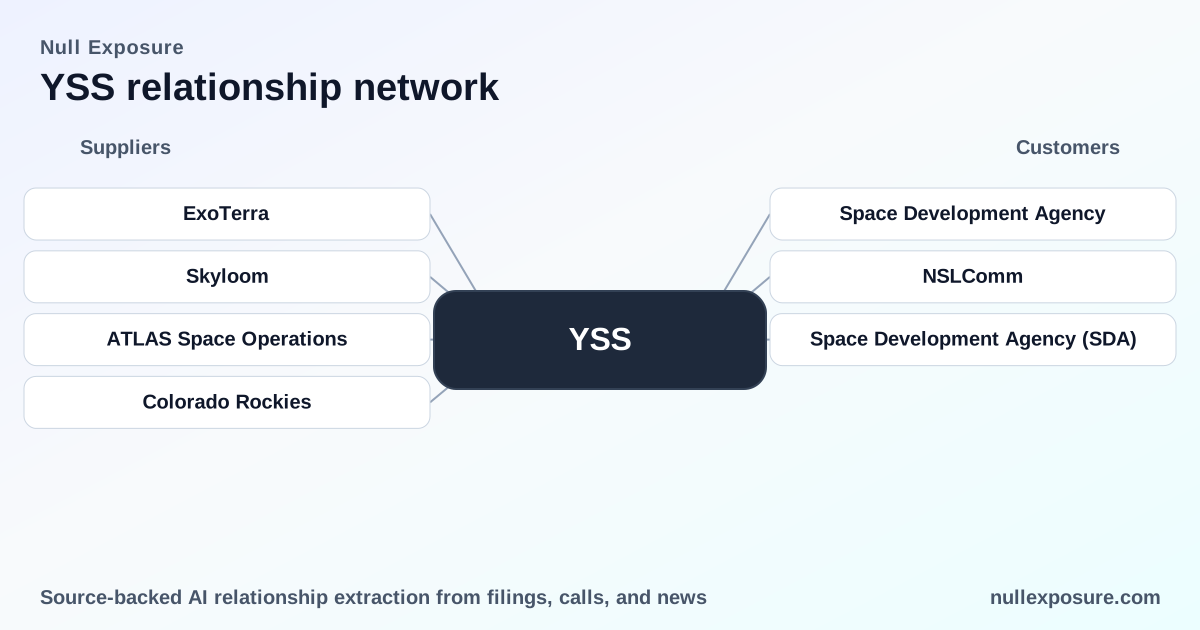
ExoTerra
York’s LX‑CLASS satellites are fitted with ExoTerra propulsion modules, indicating a direct supplier relationship for spacecraft propulsion on the tranche‑1 SDA satellites delivered by York in FY2025. This placement underscores York’s reliance on specialist propulsion vendors to populate its modular bus. Source: PayloadSpace, March 10, 2026 — payloadspace.com article covering York’s SDA deliveries. -
Skyloom
The LX‑CLASS platforms delivered in FY2025 were equipped with Skyloom optical communications terminals, signalling York’s integration of third‑party optical comms to support high‑bandwidth links on its constellation. This confirms York’s strategy of combining internal bus design with external payload specialists to accelerate capability delivery. Source: PayloadSpace, March 10, 2026 — payloadspace.com coverage of the tranche‑1 SDA sats. -
ATLAS Space Operations
York’s parent company moved to acquire ATLAS Space Operations to secure access to ATLAS’s software‑led ground architecture, reflecting a deliberate shift to own more of the ground segment stack and capture recurring ground‑ops revenue. The transaction frames York’s intention to pair hardware sales with proprietary ground services. Source: GovConWire, March 10, 2026 — govconwire.com article reporting the acquisition rationale. -
Colorado Rockies
York signed a 5.5‑year jersey‑patch sponsorship with the Colorado Rockies in a commercial branding play, making York the franchise’s first jersey‑patch sponsor and indicating a parallel effort to build public and investor visibility beyond traditional aerospace channels. Source: Sports Business Journal, July 1, 2025 — sbj.net article on the sponsorship deal.
How these relationships shape York’s operating model and business model constraints
The available records provide no supplier‑level contractual constraints; that absence is itself informative and the following points describe company‑level operating signals:
-
Contracting posture: York runs a hybrid contracting model—selling integrated spacecraft while outsourcing specialized subsystems (propulsion, optical comms) and in‑sourcing ground software through acquisition. This posture balances speed‑to‑market with incremental vertical integration to capture higher margin services.
-
Concentration and dependency: The relationship set signals moderate supplier concentration in mission‑critical subsystems (e.g., a single propulsion provider and a single optical comms provider on announced builds). Concentration on discrete high‑value suppliers increases execution risk for production ramps but simplifies integration and schedule alignment.
-
Criticality of relationships: Subsystem vendors like ExoTerra and Skyloom are mission‑critical for spacecraft performance; the ATLAS acquisition reduces external dependency for ground operations and increases York’s control over end‑to‑end service delivery.
-
Maturity and strategic trajectory: The firm’s sponsorship with the Colorado Rockies indicates corporate marketing maturity and an intent to broaden stakeholder awareness. The shift to own ground software via ATLAS demonstrates a move from a pure hardware vendor toward a hardware‑plus‑services provider, which supports durable recurring revenue potential.
Investment implications: upside, execution risk, and near‑term catalysts
York’s supplier ecosystem supports a clear revenue continuity path for launched LX‑CLASS satellites, while the ATLAS deal is a strategic inflection that repositions the company to monetize ground operations over long horizons. Integration of third‑party propulsion and optical comms reduces R&D burden and accelerates deliveries, improving unit economics when supplier relationships are stable.
However, concentration on a small set of specialized suppliers for mission‑critical subsystems introduces execution risk during scale‑up. Any supplier disruption—technical, contractual, or capacity‑related—would have immediate programmatic consequences for delivery schedules and revenue recognition. Investors should watch for evidence of supplier diversification, long‑term component contracts, and inventory or production hedging.
For a full supplier exposure analysis, including counterparty concentration metrics and contract maturity indicators, see the supplier intelligence center at https://nullexposure.com/.
Operational checklist for diligence teams
- Confirm long‑form contracts and exclusivity terms with ExoTerra and Skyloom to assess continuity risk. PayloadSpace reporting for FY2025 documents their equipment on the LX‑CLASS satellites, but contract length and priority remain verification items.
- Review integration plans and roadmaps for the ATLAS acquisition to quantify potential uplift in recurring ground services and cross‑sell opportunities to existing satellite customers. GovConWire commentary outlines the strategic rationale in FY2025 coverage.
- Assess the commercial impact and reputational reach of the Colorado Rockies jersey patch deal as a signal for broader corporate branding and investor relations strategy; Sports Business Journal covered the 5.5‑year arrangement in July 2025.
Final takeaways and recommended actions
- York is executing a platform‑plus‑ecosystem model: modular hardware combined with external specialist subsystems and newly acquired ground‑software capabilities.
- Key risks are supplier concentration and integration execution; the ATLAS acquisition reduces one such risk for ground ops but does not remove subsystem dependencies.
- Branding and commercial initiatives supplement aerospace credibility with broader market visibility, potentially supporting customer and investor relations.
For a consolidated supplier risk scorecard and ongoing monitoring of YSS counterparties, visit https://nullexposure.com/ to access the supplier dossier and alerts.
Concluding note: investors and operators should treat York’s FY2025 relationship map as a strategic blueprint—hardware delivered with specialist partners while the company acquires capabilities to convert one‑time spacecraft sales into recurring operational revenue. Explore the full supplier intelligence offering at https://nullexposure.com/ for decision-ready analysis.