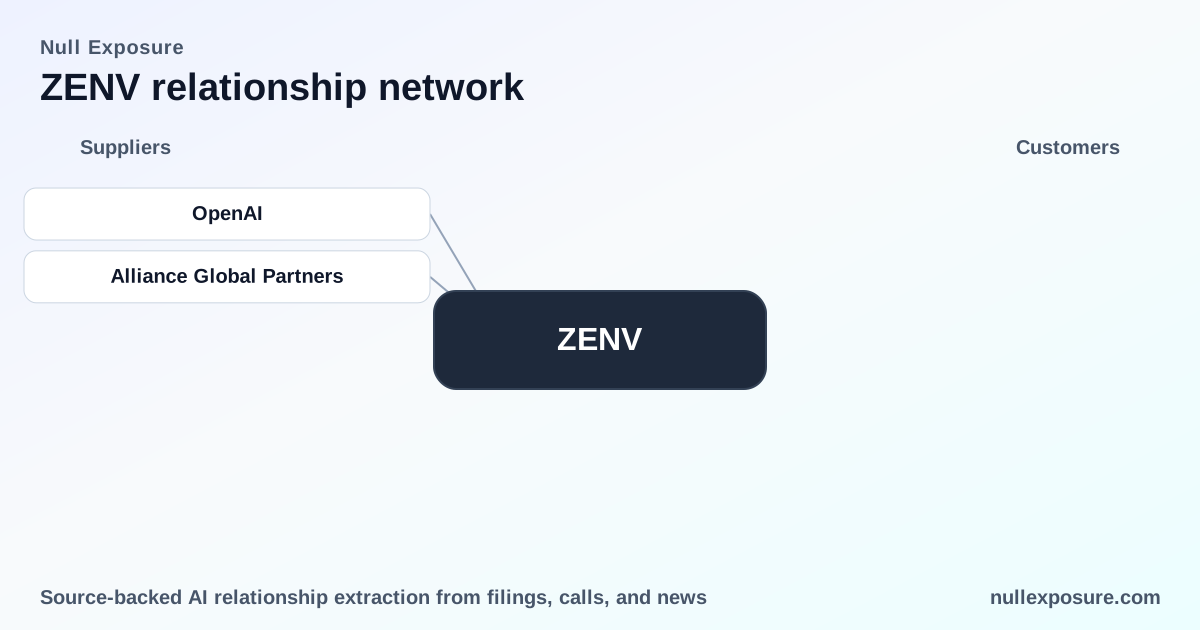
Zenvia Inc (ZENV): Platformed communications, plug‑in AI, and a liquidity‑driven capital story
Zenvia monetizes a cloud communications platform for customer engagement through subscription and usage fees (SMS, voice, email, social channels) plus higher‑margin add‑ons such as integrations and enterprise services. The company sells volume messaging and workflow tools to a broad base of clients across Latin America and is now layering third‑party AI into its product set to drive stickiness and usage. For investors, the story is a combination of top‑line growth and product leverage against a thin market valuation and concentrated insider ownership. Learn more on the company profile at https://nullexposure.com/.
How Zenvia actually makes money and why that matters to buyers and operators
Zenvia’s revenue model is SaaS + transaction: recurring platform subscriptions provide baseline ARR while per‑message and per‑campaign charges scale with client activity. That mix creates operating leverage when volume grows but also exposes margins to vendor costs for channels and integrated services. The company reports Revenue TTM of $1.0975B and Gross Profit of $244.4M, indicating meaningful scale but negative operating margins and EBITDA today, which reflect ongoing investment in product and expansion.
Key operating signals:
- Contracting posture: Predominantly subscription with usage overlays, meaning predictable revenue with episodic spikes depending on campaign volume.
- Concentration and criticality: With approximately 14,000 clients referenced in recent coverage, client breadth reduces single‑counterparty concentration and positions the platform as mission‑critical for customer communications.
- Maturity: Revenue growth is solid (quarterly revenue growth YOY 23.6%), but profitability remains immature—EBITDA is negative and operating margin TTM is -3.54%.
These factors combine to produce high leverage to volume growth but ongoing pressure on margins until scale and product margins improve.
Financial snapshot: valuation disconnect and governance characteristics
Zenvia trades at a modest market capitalization (about $70.7M) against roughly $1.1B in trailing revenue, producing a strikingly low price‑to‑sales and price‑to‑book ratio that reflects either market skepticism or an opportunity for event‑driven upside. Relevant figures investors should know:
- Revenue TTM: $1,097,532,000
- Gross Profit TTM: $244,402,000
- Market Cap: $70,688,000
- EV/Revenue: 0.219 and EV/EBITDA: 3.162
- Insider ownership: 60.67%; Institutional ownership: 8.13%
The ownership concentration presents governance and liquidity considerations: insiders control a majority stake while institutional holders are limited, increasing the importance of management credibility and capital decisions.
Strategic partnerships and capital relationships that shape execution
This section covers the supplier and capital relationships disclosed in public reporting and news coverage. Each item below includes a concise, plain‑English summary and a source note so investors can follow the trail.
-
Zenvia integrated OpenAI’s ChatGPT into its mass‑texting product Zenvia Attraction to personalize messages for its client base of roughly 14,000 customers. This integration positions Zenvia to monetize conversational AI as a premium add‑on to existing messaging flows and enhance campaign effectiveness for enterprise customers. According to media coverage in March 2026, the company launched the ChatGPT integration to increase personalization in high‑volume messaging campaigns (MediaPost, March 2026).
-
Zenvia entered an agreement with Alliance Global Partners to offer and sell up to $20 million of Class A common shares. This is a capital markets arrangement that provides immediate funding capacity and potential liquidity for corporate uses, while also creating dilution risk depending on take‑up and pricing. The share offering agreement was reported in March 2026 coverage on TradingView/Benzinga (TradingView/Benzinga, March 2026).
What these relationships mean for revenue, margins, and risk
OpenAI integration:
- Upside: Embedding ChatGPT broadens product differentiation and increases the value per message, improving average revenue per user if adoption scales. It strengthens stickiness by making message creation and orchestration more sophisticated and harder to replace.
- Risk: Dependence on third‑party AI services introduces a new cost line and vendor‑risk exposure (pricing, throttling, or contract changes) that can compress margins if Zenvia cannot pass those costs through to customers.
Alliance Global Partners share facility:
- Upside: Provides immediate access to capital to fund growth, product investments, or working capital needs without a prolonged equity offering process.
- Risk: The facility carries dilution and execution risk; investors should track actual issuance, pricing, and how proceeds are deployed.
Company‑level constraints and operating‑model signals
Public constraint disclosures for supplier relationships are not listed in the available reporting. As a company‑level signal:
- No explicit vendor constraints are filed in the provided results, which means investors must rely on separate diligence to confirm material supplier terms, SLAs, and data‑handling contracts.
- From an operating‑model perspective, the business shows moderate maturity (scale in revenue) but immature profitability, a contracting posture that mixes subscriptions with usage fees, and low institutional ownership—all of which define execution risk and opportunity for operational improvement.
Due diligence checklist for investors evaluating Zenvia supplier exposure
Focus your diligence on three pragmatic items:
- Contract economics with AI vendors: verify pricing mechanics, escalation clauses, and data‑use limitations for the ChatGPT integration to understand margin impact.
- Use and terms of the Alliance Global Partners facility: confirm how much equity has been issued under the agreement, pricing mechanics, and intended use of proceeds to gauge dilution and capital efficiency.
- Client adoption and retention metrics: quantify how many of the ~14,000 clients are using AI‑enhanced features and whether ARPU increases materially after adoption.
For a deeper look at supplier relationships and market implications, visit https://nullexposure.com/.
Bottom line and action items
Zenvia is a scaled communications platform under low market valuation with product tailwinds from AI integrations and immediate capital optionality via a share facility. Investors should weigh growth upside from product differentiation against margin pressure from third‑party costs, insider governance dynamics, and potential dilution from equity offerings. Confirm contract terms and adoption rates before increasing exposure; the next moves on vendor pricing and announced share issuances will be material catalysts.
To pursue further research or request a focused supplier‑risk brief, go to https://nullexposure.com/.