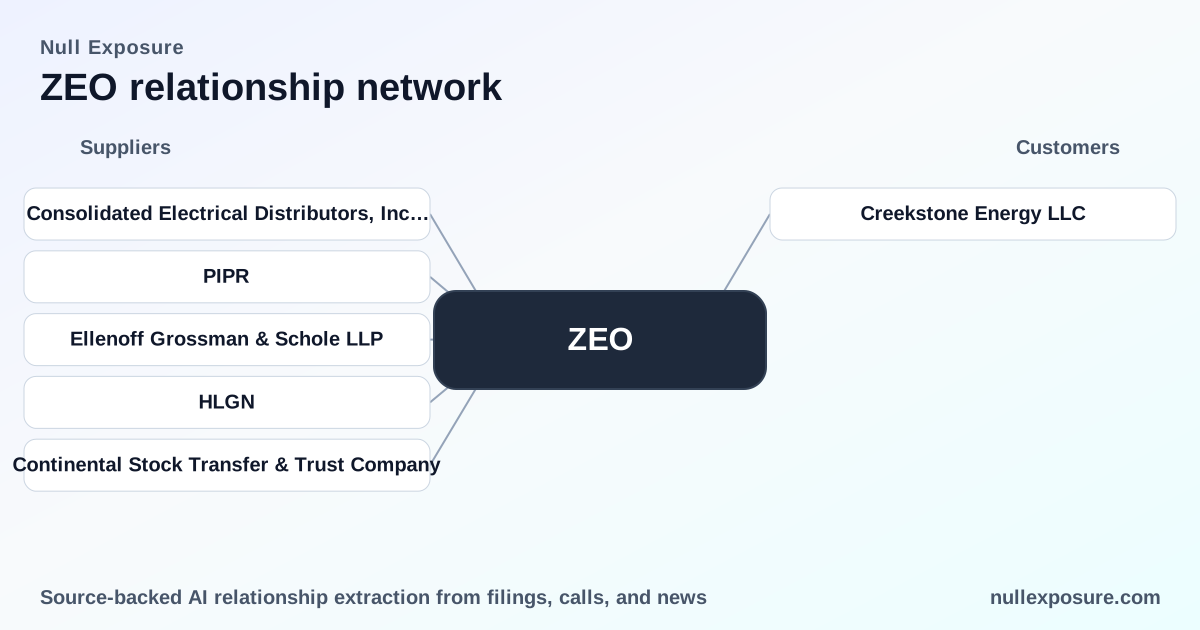
ZEO Supplier Map: Who Zeo Energy Depends On and Why it Matters to Investors
Zeo Energy Corp builds and sells solar energy systems and monetizes primarily through equipment sales and installation services, relying on a distribution-led supply chain and transactional capital events to fund growth and acquisitions. The company's topline is driven by installed-system revenue, while margins and working capital reflect heavy use of distributor drop‑ship models and short-term financing tied to corporate transactions.
Visit https://nullexposure.com/ for a structured view of supplier exposures and transaction counterparties.
Single‑supplier concentration is the headline risk
Zeo discloses that Consolidated Electrical Distributors, Inc. (d/b/a Greentech Renewables) supplied roughly 70% of the equipment installed in 2024, making this partner a critical node in Zeo’s supply chain. According to Zeo’s 10‑K for FY2024, Greentech also performs inventory management and direct drop‑ship deliveries to installation sites, which minimizes Zeo’s on‑hand inventory but creates single‑vendor operational dependency. (Source: Zeo 10‑K, FY2024)
Operational implication: the distribution relationship reduces Zeo’s capital tied in inventory but increases exposure to supplier disruption, pricing changes, and credit terms.
Who shows up around Zeo’s projects and deals
The transaction and advisory network that surfaces in FY2025 reflects Zeo’s recent acquisition activity and corporate housekeeping; these counterparties are not core equipment suppliers but are material to M&A, legal, and shareholder processes.
Piper Sandler & Co.
Piper Sandler acted as financial advisor to Zeo in its acquisition of Heliogen and related transaction announcements in FY2025, supporting deal structuring and investor communications. Multiple press reports list Piper Sandler as Zeo’s advisor in the Heliogen acquisition. (Sources: MarketScreener and CityBiz news coverage, FY2025; GlobeNewswire release, Aug 2025)
Ellenoff Grossman & Schole LLP
Ellenoff Grossman & Schole LLP served as legal counsel to Zeo on the Heliogen transaction, appearing in the same FY2025 news releases that describe the acquisition and closing. The firm’s role was transactional and governance‑focused. (Sources: CityBiz and MarketScreener reports, FY2025; GlobeNewswire release, Aug 2025)
Continental Stock Transfer & Trust Company
Continental Stock Transfer & Trust Company acted as transfer agent for Zeo in the context of disclosure around the Heliogen deal, a standard corporate-services relationship for share issuance and recordkeeping. (Source: MarketScreener, FY2025)
Heliogen Inc.
Heliogen was the target of Zeo’s FY2025 acquisition, and Bloomberg Law reported a stockholder lawsuit alleging deficiencies in the transaction paperwork for the roughly $10 million deal. That dispute introduces litigation and reputational considerations tied to Zeo’s M&A execution. (Source: Bloomberg Law coverage, FY2025)
Visit https://nullexposure.com/ to see how these counterparties fit into a broader supplier and transaction map.
What the constraints tell investors about Zeo’s operating model
Read together, the extracted constraints sketch a clear operational profile:
- Contracting posture: short‑term financing and convertible settlement mechanics. Zeo used a loan structure that is repayable by issuing shares if certain conditions are met within approximately a one‑year window, indicating reliance on short‑term, equity‑linked funding for specific transactions (evidence references loan to LHX with repayment via share issuance). This is a company‑level signal of financing cadence rather than a supplier detail.
- Geographic sourcing concentration: APAC/China exposure. Zeo sources many solar products from manufacturers in China and from suppliers that themselves depend on Chinese inputs, which elevates geopolitical and tariff risk in the procurement cost base.
- Role diversity across the supply chain: distributor, manufacturer, service provider. Zeo depends on distributors for inventory management and drop‑shipping, contract manufacturers for component supply, and subcontractors for installation and specialty services—indicating a mixed asset-light model with outsourced execution.
- Spend profile: mid‑market counterparties in the $1M–$10M band. Public excerpts reference a $4 million asset purchase plus equity consideration paid to a counterparty (LHX) and approximately $3.6 million in trade credit with equipment distributors, indicating material but not enterprise‑scale single transactions.
These constraints should be read as company‑level supply and financing signals rather than attributes of a single listed relationship, except where the text explicitly names the counterparty (for example, LHX is named in the asset purchase and loan excerpts).
Financial context that colors supplier risk
Zeo generated roughly $69.4 million in trailing‑12‑month revenue with gross profit of about $40.1 million, but the company is operating at a loss (negative EBITDA and negative EPS), which increases sensitivity to supplier payment terms and working capital shocks. High supplier concentration, short‑term financing structures, and APAC sourcing amplify the downside if revenues or installation cadence slow.
Practical takeaways for investors and operators
- Concentration risk is real: Reliance on Greentech for ~70% of equipment makes supply continuity and negotiation leverage a primary operational variable.
- Supply chain is geographically exposed: Sourcing tied to China elevates tariff, logistics, and lead‑time risk that will influence margins.
- Capital structure and transaction funding affect supplier relationships: Short‑term loans convertible into equity and mid‑single‑digit million purchases (e.g., LHX transaction) show Zeo runs transactional financing that affects counterparty confidence and cash availability.
- Advisors and agents are standard: Piper Sandler, Ellenoff Grossman & Schole, and Continental perform expected M&A, legal, and share‑agency roles; the Heliogen lawsuit is a governance flag to monitor for litigation outcomes.
For a vendor‑level risk model and supplier concentration dashboard, see the supplier intelligence landing page at https://nullexposure.com/.
Relationship snapshots (each partner in the record)
-
Consolidated Electrical Distributors, Inc. (d/b/a Greentech Renewables) — Zeo purchased approximately 70% of the equipment installed in 2024 from this distributor, which also handles inventory management and drop‑ship logistics. (Source: Zeo 10‑K, FY2024)
-
Piper Sandler & Co. — Acted as financial advisor to Zeo in the company’s FY2025 acquisition of Heliogen, appearing in multiple press releases and news reports about the deal. (Sources: MarketScreener, CityBiz, GlobeNewswire, FY2025)
-
Ellenoff Grossman & Schole LLP — Served as legal counsel to Zeo on the Heliogen transaction as documented in FY2025 transaction announcements. (Sources: CityBiz, MarketScreener, GlobeNewswire, FY2025)
-
Continental Stock Transfer & Trust Company — Functioned as transfer agent for Zeo in connection with the Heliogen acquisition announcements. (Source: MarketScreener, FY2025)
-
Heliogen Inc. — Target of Zeo’s FY2025 acquisition; a Bloomberg Law report covered a stockholder lawsuit alleging the sale to Zeo for about $10 million had paperwork deficiencies. (Source: Bloomberg Law, FY2025)
Final judgment and next steps
Zeo’s model is distribution‑centric, acquisition‑active, and financed with short‑term/transactional instruments, producing healthy revenue but negative operating profitability. For investors, the primary monitoring items are supplier concentration with Greentech, APAC sourcing risks, and outcomes of acquisition‑related litigation and financing arrangements.
To assess counterparty exposure across a broader portfolio or to receive an annotated supplier risk brief, start here: https://nullexposure.com/. For tailored supplier diligence or transaction due diligence on Zeo, use https://nullexposure.com/ to request a deeper analysis.