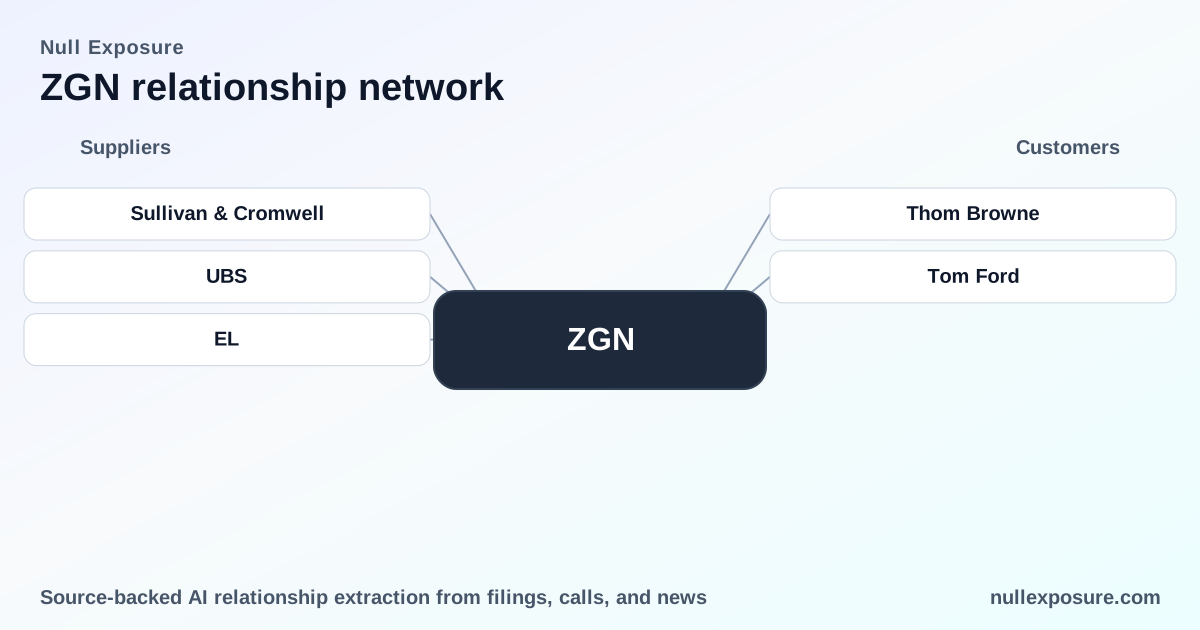
ZGN: Supplier and Advisor Relationships That Shape Zegna’s Strategic Footprint
Ermenegildo Zegna NV is a vertically integrated menswear house that designs, manufactures and sells premium apparel while monetizing through direct retail, wholesale channels and selective licensing arrangements. The company’s cash generation rests on brand-led gross margins, recurring retail sales and strategic licensing deals, supported episodically by capital markets transactions where global banks and legal advisers structure equity and PIPE placements. For investors evaluating supplier risk and strategic optionality, the supplier roster reveals how Zegna executes market access, legal compliance and brand expansion. Learn more at the Nillexposure homepage: https://nullexposure.com/
Why advisor and licensing partners matter for a luxury apparel supplier
Advisors and licensors are not just vendors; they shape financing, governance and brand reach. Zegna’s relationships show a classic luxury growth pattern: investment-bank-led capital events for market access, top-tier legal counsel for transactional governance, and a major consumer-products licensor to extend brand breadth. These are strategic, high-impact relationships rather than routine operational suppliers.
- Contracting posture: Zegna uses long-form transactional contracts (IPO and PIPE engagement, licensing agreements) that are typically durable and subject to performance covenants and multi-year terms.
- Concentration: The advisor set is small but top-tier, indicating high-consequence, low-count supplier exposure for capital and legal work.
- Criticality: Each listed relationship is mission-critical for specific functions—capital raising, legal protection, and brand monetization—rather than day-to-day manufacturing inputs.
- Maturity: The recorded relationships correspond to discrete corporate events (listing, acquisition, licensing) and therefore reflect mature, event-driven engagements rather than frequent vendor churn.
Explore how these signals change your supplier-risk profile at Nillexposure: https://nullexposure.com/
The ledger: every listed supplier and advisor, explained
Sullivan & Cromwell — legal advisor (FY2021)
Sullivan & Cromwell served as legal counsel to Zegna during its NYSE listing process, providing transaction-level legal work that supported the company’s governance and public offering structure. According to a Bebeez report from December 2021, Sullivan & Cromwell acted as legal advisor in the listing event (FY2021). Source: https://bebeez.eu/2021/12/20/zegna-listing-today-at-nyse-with-an-initial-2-4-bn-market-cap/
UBS Investment Bank — exclusive financial advisor and co-lead placement agent on the PIPE (FY2021)
UBS Investment Bank acted as the exclusive financial advisor to Zegna Group and co-led the private investment in public equity (PIPE) placement tied to the listing, indicating a full-service investment-banking engagement for equity structuring and bookrunning. The Bebeez coverage from December 2021 notes UBS as exclusive financial advisor and co-lead placement agent on the PIPE (FY2021). Source: https://bebeez.eu/2021/12/20/zegna-listing-today-at-nyse-with-an-initial-2-4-bn-market-cap/
The Estée Lauder Companies Inc. — long-term licensee relationship for Tom Ford (FY2023)
Following the acquisition of Tom Ford International, Zegna Group became a long-term licensee of Estée Lauder Companies for TOM FORD fashion and a broad range of associated product categories, enabling Zegna to capture brand extension revenue across apparel, accessories and lifestyle categories. A CityBiz article covering the FY2023 timeframe documents this licensing arrangement and its scope. Source: https://www.citybiz.co/article/409547/ermenegildo-zegna-group-completes-acquisition-of-tom-ford-international/
What the relationships collectively imply for investors
These three reported relationships map to three strategic functions: legal governance (Sullivan & Cromwell), capital markets execution (UBS) and brand monetization (Estée Lauder/Tom Ford licensing). That combination reduces execution risk on corporate transactions while increasing scale potential through licensing, but it also concentrates strategic dependency into a small set of high-impact partners.
- The advisory relationships align with Zegna’s 2021 listing and related PIPE financing, demonstrating concerted capital markets support at a pivotal corporate inflection.
- The Estée Lauder licensing connection is directly revenue-relevant because it expands product categories and geographic distribution for a high-margin luxury brand.
- No other supplier-level constraints are recorded in the available relationship set; this is a company-level signal that disclosed contractual constraints tied to suppliers are limited in the dataset.
Operational constraints and company-level signals
The supplied constraints array is empty, which itself is a datapoint: no supplier-side contractual constraints were flagged in this extraction. Treat this as a company-level signal rather than evidence that constraints do not exist—Zegna’s public reporting and filings should be consulted for full diligence. Company metrics that contextualize supplier risk include:
- Revenue TTM around $1.914B and gross profit of $1.285B provide a margin buffer that supports premium supplier and licensing arrangements.
- Insider ownership is high at ~63%, which indicates concentrated control and potential for long-term strategic alignment with major supplier decisions.
- Institutional ownership is modest (~25%), suggesting relatively lower external investor pressure on supplier choices compared with highly institutionally held peers.
Investment implications: what to watch and why it matters
- Brand licensing is a material growth lever. The Estée Lauder/Tom Ford licensing arrangement diversifies revenue streams and increases lifetime value per customer through multi-category exposure.
- Capital-markets capability reduces equity-execution risk. UBS’s role in the listing and PIPE shows access to top-tier execution for future capital needs.
- Legal robustness protects transactions. Engagement with Sullivan & Cromwell reflects standard practice for NYSE IPOs and complex cross-border deals.
Key risk checklist for investors:
- Monitor the terms and duration of the Tom Ford licensing for renewal risk and revenue recognition cadence.
- Watch for any disclosed supplier covenants or termination rights in future filings, since high-consequence advisors create concentration risk.
- Track governance and control dynamics given high insider ownership, which affects decision-making around partnership selection and renegotiation.
For a deeper supplier-risk signal set and continuous monitoring, visit Nillexposure: https://nullexposure.com/
Bottom line
Zegna’s visible supplier relationships are concise and strategic: top-tier legal counsel for governance, a global investment bank for market access, and a large consumer-products licensor for brand extension. These partnerships support the company’s monetization thesis while creating a small number of high-impact dependency points that investors should monitor through ongoing filings and event coverage. For further supplier-level analysis and alerts tied to Zegna and comparable luxury suppliers, see the Nillexposure platform: https://nullexposure.com/