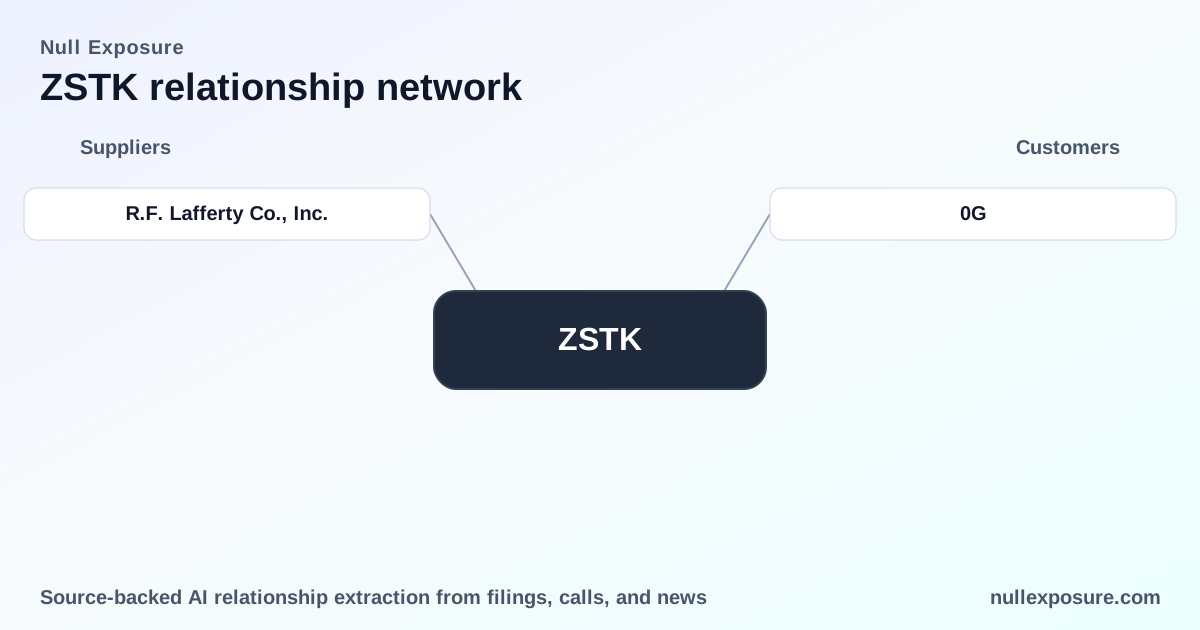
ZSTK supplier profile: what investors should know about counterparties, concentration and cash flow posture
ZSTK operates as a supplier-oriented business that sells products, controls distribution channels and participates in licensing arrangements; it monetizes through product sales and distribution margins, plus royalty streams where it acts as licensor or licensee. The firm’s operating model is characterized by short payment cycles, concentrated sourcing for some business units, and recurring third‑party fees that are large enough to register in annual spend disclosures. For research or deal diligence, focus on counterparty concentration, short-term working capital needs, and recurring royalty/distribution arrangements that influence margin volatility. For more detailed supplier mapping and discoveries, visit https://nullexposure.com/.
One partner on the public record — and what it signals
R.F. Lafferty Co., Inc.
- R.F. Lafferty acted as the sole book‑running manager for an underwritten public offering for Flora Growth Corp.; this is documented in a press release published March 10, 2026. This relationship is financial/intermediation in nature and indicates ZSTK’s ecosystem includes capital markets counterparties for equity or debt placements. (Source: news release via Newsfile, March 10, 2026.)
How the constraints in filings translate into business realities
The company’s public disclosures and filings reveal a set of operating constraints that define supplier risk, contracting posture and spend profile:
-
Short contractual maturity and tight working capital — Trade payables are contractually due in less than 90 days, which establishes a short-term cash conversion cycle and requires reliable operating cash or revolving liquidity to avoid supply interruptions. (Source: company filing disclosures referencing trade payable maturities.)
-
Critical supplier concentration — Several business units purchase substantially all of their inventory or materials from a single supplier, creating a meaningful concentration risk: a disruption at that vendor would have immediate operational impact. This is a company‑level red flag for resilience and negotiating leverage. (Source: company filing language on supplier concentration.)
-
Dual licensing roles are present in the business model — Filings describe a licensing arrangement where Harmony pays Hampstead a royalty of 3.5% of gross revenues from Harmony product sales, signaling that the firm’s legal and commercial structure includes both licensor and licensee positions in different agreements. That dual role creates asymmetric margin pressure: revenue upside from royalties versus cost obligations when acting as licensee. (Source: company filing excerpt describing the Harmony–Hampstead royalty.)
-
Seller and distributor mechanics — The company’s agreements include traditional seller obligations and distributor activities; for example, a disclosure states that United will sell products to the company to meet customer demand and will pay a monthly fee for management, sales, marketing and logistics services. The company also executed a share purchase to acquire a distributor (United Beverage Distribution Inc.) on January 30, 2025, indicating vertical integration into distribution. (Source: Share Purchase Agreement disclosure dated January 30, 2025.)
-
Segment emphasis on distribution — Corporate disclosures explicitly label a segment as distribution following the acquisition of United, underlining that distribution is a core operating segment rather than an ancillary channel. That creates operating complexity and integration risk post‑acquisition. (Source: company disclosure on the United Transaction, January 30, 2025.)
-
Professional fees are non-trivial — The company paid Davidson $773,081 in fees during 2024, which places recurring third‑party professional spend in the $100k–$1M band. That level of spend is material for SG&A planning and indicates reliance on external advisers for capital markets, accounting or deal execution work. (Source: company table of fees and expenses for years ended December 31, 2024 and 2023.)
Together these constraints produce a clear operating picture: short-term payables demand stable liquidity, supplier concentration creates single-point-of-failure exposure in inventory, and royalty/licensing obligations add fixed revenue-sharing costs that compress margins when sales volumes are volatile.
What this means for risk and valuation
-
Concentration risk is a valuation drag. When several units depend on one supplier, the company has lower negotiating leverage; investors should apply a higher discount to scenario models that assume stable gross margins unless alternative sourcing is visible. (Source: company disclosure on supplier dependency.)
-
Liquidity sensitivity elevates near-term execution risk. Payables under 90 days increase the likelihood that a short cash‑flow hiccup forces operational concessions or expensive working capital financing. Stress testing cash conversion cycles is essential. (Source: company filing on trade payable maturities.)
-
Licensing creates asymmetric earnings volatility. Royalty payments such as the disclosed 3.5% arrangement are fixed shares of revenue that reduce operating leverage on upside and worsen margins on downside; modelers should treat royalty burdens as a semi-fixed expense. (Source: company disclosure referencing the Harmony–Hampstead royalty.)
-
Integration and distribution costs have a near-term hit on margins. The acquisition and integration of a distributor (United) creates one-time and recurring costs; the disclosed fee structure and segment designation imply ongoing operational complexity. (Source: Share Purchase Agreement and segment disclosure, January 30, 2025.)
For continued supplier and counterparty monitoring, subscribe for updates at https://nullexposure.com/.
Tactical guidance for investors and operators
-
Underwrite scenarios where the principal supplier becomes unavailable for 30–90 days; quantify the inventory buffer and alternate sourcing lead times. Plan for at least one full quarter of disruption in highly concentrated units before assuming revenue continuity. (Source: company procurement disclosures.)
-
Treat royalty contracts as permanent structural costs when modeling multi‑year cash flows; build downside cases where revenue declines but royalty percentage remains. (Source: royalty arrangement excerpt.)
-
Monitor professional fee lines and capital markets relationships (e.g., R.F. Lafferty’s role as an underwriter) as leading indicators of financing activity and dilutive transactions. (Source: Newsfile press release and fee disclosures.)
-
For operators: prioritize supplier diversification and negotiate extended payment terms where possible to reduce working capital pressure; consider consolidating payable processing to capture early-pay discounts if margins are thin. (Source: trade payable maturity disclosure.)
Final read for decision-makers
ZSTK’s public disclosures show a supplier‑centric firm with short-term payables, critical supplier concentration, mixed licensing roles, and meaningful third‑party fee commitments — all of which shape near‑term liquidity and margin risk. Investors should price concentration and royalty drag into valuations and demand evidence of diversification or contingency plans before assigning full weight to growth assumptions.
Explore a deeper counterparty map and ongoing supplier signals at https://nullexposure.com/ — our platform centralizes filings, press releases and contract excerpts to support investment decisions.