Zoetis (ZTS) — supplier relationships and the Neogen genomic buy: what investors need to know
Zoetis operates as the global leader in animal health, generating revenue primarily from the sale of pharmaceuticals, vaccines, diagnostics and related services to livestock and companion-animal customers; the company monetizes by combining product sales with recurring service and diagnostic contracts and selective M&A to extend higher-margin precision-health capabilities. Acquisitions like the Neogen animal genomics asset are strategic moves to embed diagnostics and data-driven solutions into Zoetis’s commercial platform and strengthen cross-sell opportunities across its global footprint. For a focused look at supplier relationships and how they shape execution risk, visit https://nullexposure.com/.
Strategic context first, then granular supplier evidence and operating constraints that will determine whether this acquisition and broader supplier posture create durable shareholder value.
Deal snapshot: Neogen’s animal genomics business joins Zoetis
Zoetis has agreed to acquire Neogen Corporation’s animal genomics business, a targeted transaction that brings sequencing and genotyping capabilities into Zoetis’s precision-livestock offering. According to a March 4, 2026 news report from Sahm Capital, the deal is positioned to deepen Zoetis’s diagnostics and genomics footprint and accelerate commercialization of genomic services for producers (Sahm Capital, March 2026). Key takeaway: this is an inorganic route to expand diagnostics and data services rather than a broad diversification away from Zoetis’s core biological products.
Why the Neogen asset matters strategically
The Neogen genomics business gives Zoetis direct control over capabilities that support precision breeding, disease surveillance and farm-level diagnostics—areas that enhance per-customer revenue depth and recurring service flows. Company disclosures for the year ended December 31, 2025 emphasize a broader shift toward external innovation and increased use of third-party manufacturing and services, signaling that Zoetis is reorienting where it invests internally versus where it acquires capability externally. This acquisition fits a strategy of buying specialized capabilities to shorten time-to-market and avoid lengthy internal development cycles.
Operational and supplier posture — what investors should watch
Zoetis operates with a mixed contracting posture: it retains internal manufacturing sites while relying heavily on a global network of third-party contract manufacturing organizations (CMOs) and service providers. Filings disclose a global manufacturing network supplemented by over 90 CMOs, and the company has stated it uses third parties for logistics, IT hosting and cybersecurity assessments. That creates a set of operating characteristics that are relevant to the Neogen integration:
- Contracting posture: A hybrid model of captive sites plus extensive CMO reliance reduces fixed manufacturing cost but increases counterparty management needs and operational dependency on external quality systems.
- Counterparty diversity and concentration: The supplier base includes both large enterprises and small privately owned companies, which diversifies vendor risk but introduces variability in maturity and resilience.
- Criticality of relationships: Contract manufacturers, logistics providers and cloud infrastructure are operationally critical — disruptions in those links would affect product supply and customer-facing digital services.
- Maturity and governance: The company runs periodic independent cybersecurity assessments and is undertaking a multi-year ERP migration to cloud-based systems, which indicates a move to more standardized, modern supplier governance but also transition risk.
Filings also disclose enforceable purchase commitments and capital commitments totaling $427 million as of December 31, 2025, which include amounts related to contract manufacturing and IT services and signal multi-year dependency and financial exposure to suppliers.
Every supplier relationship surfaced in the review
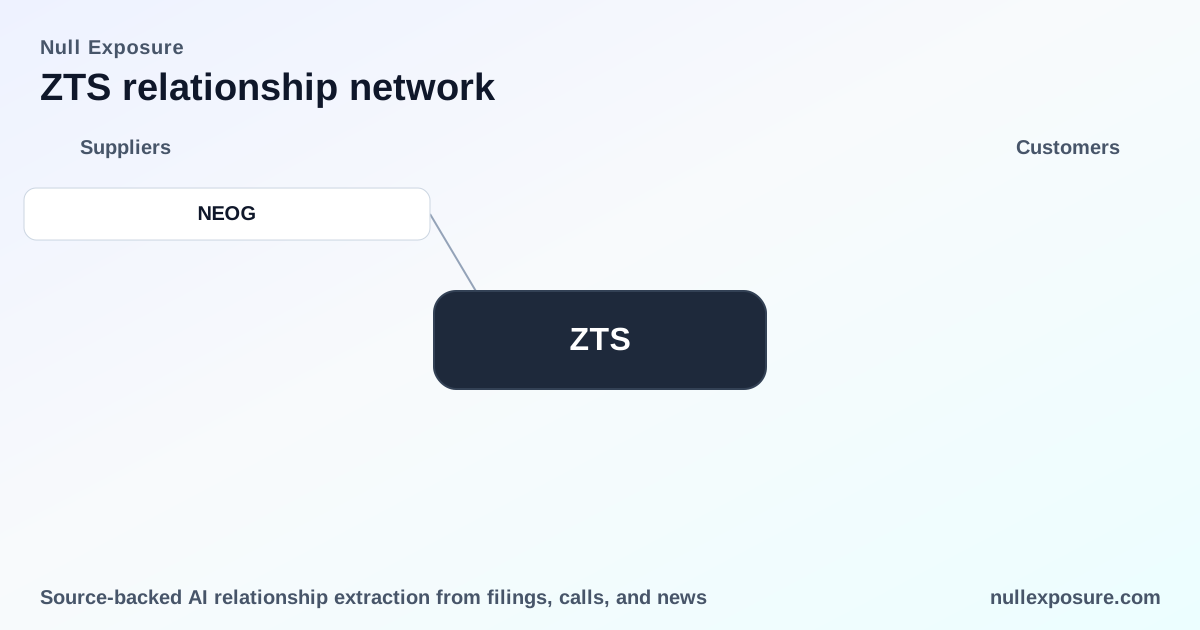
Neogen Corporation (NEOG) — Zoetis has agreed to acquire Neogen’s animal genomics business, bringing genomics capabilities that support precision livestock health directly under Zoetis’s control; the transaction was reported by Sahm Capital on March 4, 2026 (Sahm Capital, March 2026). This is the only supplier relationship surfaced in the current results.
Integration and execution risks investors should price
Bringing an acquired genomics business into a platform that already relies on numerous third parties increases integration complexity. Key risks:
- Integration of data and commercial channels. Zoetis must integrate genomic outputs into its existing diagnostics and sales workflows without disrupting partner-dependent supply chains.
- Supplier resilience. Reliance on many CMOs and small vendors limits single-vendor concentration but raises operational variability; the company’s disclosure of over 90 CMOs is a double-edged sword—diversified but administratively complex.
- Transition costs and restructuring. The company recorded restructuring charges for 2025 linked to a transition from internal to external innovation and manufacturing and site closures, which demonstrates real execution costs when shifting operating models.
- Regulatory and quality oversight. Diagnostics and genomics require strict quality controls; oversight of third-party manufacturers and labs will be essential to preserve product efficacy and brand trust.
- IT and cybersecurity posture. Zoetis uses third parties for hosting and conducts independent cybersecurity assessments about every 18 months, so cyber and data governance are material to protecting genomic and customer data.
Mid-read resources and deeper supplier mapping are available at https://nullexposure.com/ if you want a structured vendor-risk view tied to this transaction.
How this translates to investor action
The Neogen asset strengthens Zoetis’s strategic positioning in precision livestock health and the move toward external innovation accelerates capability acquisition, but investors must monitor integration execution, supplier governance, and the company’s ability to convert genomics capability into recurring, high-margin services. Catalysts to watch: customer adoption of genomics services, cross-sell into existing vaccine and pharmaceutical channels, and evidence of stable supply through CMOs and logistics partners.
For decision-ready, actionable supplier intelligence and to map counterparty risk across Zoetis’s network, consult the full platform at https://nullexposure.com/.
Conclusion
Zoetis is executing a clear strategy of buying specialized capabilities to fast-track precision-animal health offerings; the Neogen genomics acquisition aligns with that plan and addresses a growing market need for actionable genomic and diagnostic services. The ultimate value for shareholders will depend on integration discipline, supplier governance, and the company’s ability to convert genomics into recurring commercial revenue without material operational disruptions. Final due diligence should focus on CMO robustness, contract enforceability, IT/cloud transition progress, and the pace of customer adoption for genomics services.