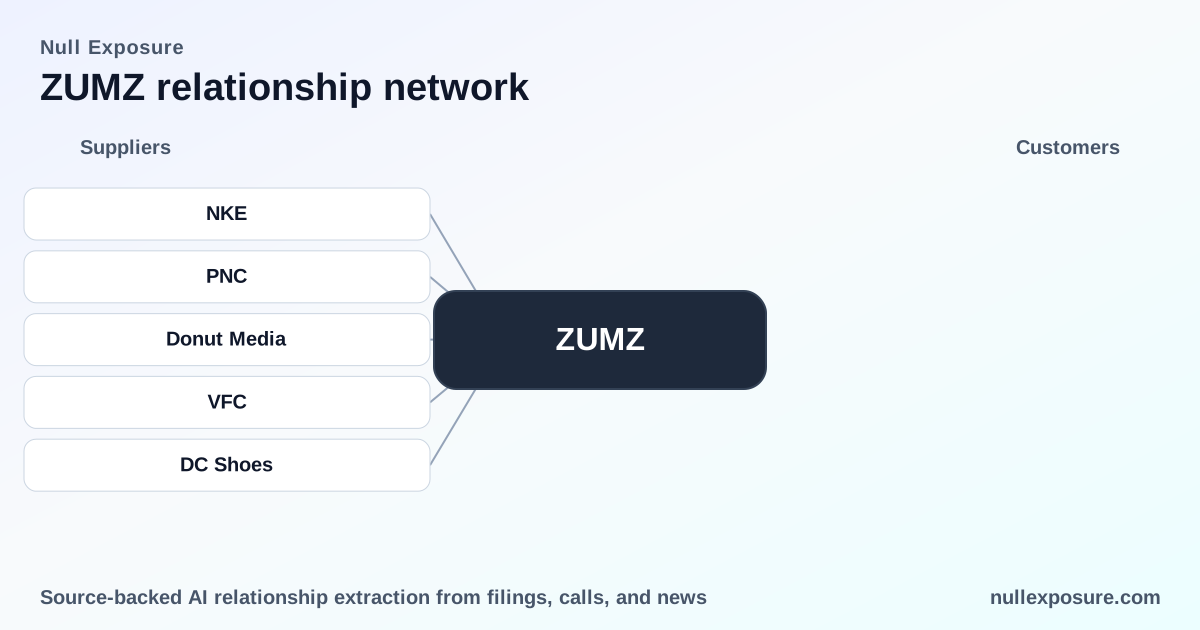
Zumiez (ZUMZ) supplier map: brand partners, lenders, and what they tell investors
Zumiez operates a specialty retail platform that monetizes through a mix of branded wholesale and proprietary private‑label merchandise sold across brick‑and‑mortar stores and e‑commerce, supported by significant purchase‑order commitments and a secured revolving credit facility. The company’s economics depend on third‑party brand relationships for traffic and assortment while private‑label sourcing drives margin, and liquidity is actively managed through bank financing. For an active view of counterparty exposures and supplier dynamics, visit https://nullexposure.com/.
How Zumiez sources product and the commercial logic investors should internalize
Zumiez curates a skate/lifestyle assortment that balances major third‑party brands (traffic drivers) with private‑label goods (higher gross margin). Third‑party brands are unlikely to dominate revenue given historical concentration limits, while private‑label manufacturing is outsourced globally, creating both cost leverage and geopolitical/supply‑chain exposure. Zumiez finances inventory and working capital through purchase orders that reached roughly $173–181 million outstanding across recent fiscal years and uses a secured revolving credit facility to smooth volatility.
If you evaluate supplier concentration or counterparty risk in retail portfolios, start with supplier mix and the company’s bank agreements — both are material to liquidity and margin. Learn more at https://nullexposure.com/.
Key branded relationships that drive store assortment and traffic
Below are the supplier and partner relationships identified in public reporting. Each entry is a concise, plain‑English summary with the cited source.
Nike SB — a core branded SKU supplier
Zumiez stocks Nike SB as one of several leading third‑party brands that drive category traffic and assortment, sitting alongside Vans and other skate heritage labels. According to a MarketBeat instant alert citing Zumiez product mix (Dec 2025), Nike SB is part of the company’s leading brand set.
Nike — strategic brand that helps shape category demand
Zumiez’s skate and action-sports category relies on a handful of major brands such as Nike to stimulate discovery and sales, particularly in growth periods following pandemic-era interest in skates. SGB Online reported commentary noting Nike’s role in FY2021 category dynamics.
Vans — a primary category driver across periods
Vans is repeatedly cited as a major player that drives category sales, appearing in reporting across fiscal periods; MarketBeat highlighted Vans among Zumiez’s leading third‑party brands (Dec 2025) and SGB Online flagged Vans’ central role in FY2021 category performance.
The North Face — part of the branded assortment
The North Face is included among Zumiez’s leading third‑party brands that populate store shelves alongside private label merchandise, underscoring Zumiez’s mix of lifestyle and outdoor heritage brands, as reported by MarketBeat (Dec 2025).
DC Shoes — another branded supplier in the assortment
Zumiez stocks DC Shoes as one of several third‑party labels contributing to its curated skate/lifestyle assortment, cited by MarketBeat’s coverage of the company’s brand mix (Dec 2025).
Donut Media — a content-to-retail merchandising partnership
Zumiez entered a retail partnership to carry Donut Media merchandise in all U.S. and Canadian stores and in select Blue Tomato locations, expanding lifestyle merchandising through content-driven brands; Tubefilter reported this distribution partnership on Sept 22, 2023.
PNC Bank — the committed working-capital lender
Zumiez extended its secured revolving credit facility through an amendment to its Credit Agreement with PNC Bank, signaling active management of liquidity and revolving capacity; TradingView reported the credit agreement amendment in relation to FY2025 reporting.
What the constraint signals tell investors about operating posture
Public excerpts provide company‑level signals that refine how investors should think about Zumiez’s supplier risk and contracting posture:
- Counterparty profile: smaller vendors present — Zumiez discloses that a number of vendors are smaller, less capitalized firms, which exposes the company to vendor fragility during economic downturns. This is a company‑level signal about supplier vulnerability rather than a comment on any single brand.
- Global sourcing for private label — Zumiez sources private‑label merchandise primarily from foreign manufacturers, which creates supply‑chain and geopolitical exposure tied to offshore production and logistics.
- Low concentration by brand — No single third‑party brand accounted for more than ~5–6% of net sales in recent fiscal years, indicating limited revenue concentration to any one branded supplier.
- Buyer with large committed spend — Outstanding purchase orders totaled approximately $173.0 million (Feb 1, 2025) and $180.9 million (Feb 3, 2024), demonstrating a material working‑capital commitment and exposure to inventory funding timing.
- Manufacturer role for private label — Zumiez acts as a buyer and sources manufacturing from global suppliers, so the company’s margin profile and fulfillment depend on third‑party manufacturing maturity and reliability.
- Spend band consistent with institutional procurement — The company’s outstanding purchase orders put its vendor spend squarely in the $100M+ band, signaling scale in procurement and bargaining power, but also meaningful contingent liabilities if inventory does not sell as planned.
Assessing concentration, criticality, and maturity
Zumiez’s supplier profile exhibits low single‑brand revenue concentration but high aggregate procurement exposure. Branded partners like Vans and Nike are important for traffic but do not constitute outsized revenue dependence, while private‑label manufacturing creates critical operational reliance on global suppliers. The company’s contracting posture blends retail buying (large POs) with third‑party brand agreements, and maturity of relationships varies: established consumer brands are mature partners, while smaller vendors and international manufacturers present earlier‑stage credit and operational risk.
For a deeper view on counterparty exposures and to map material counterparties across categories, visit https://nullexposure.com/ and compare supplier profiles across the retail sector.
Risk‑reward implications for investors and operators
- Upside: Control over margin via private‑label sourcing and stable traffic from recognized brands supports operating leverage. Partnerships like Donut Media illustrate merchandising innovation that drives incremental foot traffic and exclusives.
- Downside: Large committed purchase orders and reliance on foreign manufacturers create working‑capital and supply‑chain concentration risks, compounded by the presence of smaller, less capitalized vendors. The amendment with PNC Bank indicates active debt management; changes in credit capacity could compress liquidity during stress.
Bottom line and next steps
Zumiez runs a balanced supplier model: branded partners deliver traffic while global private‑label manufacturers deliver margin, funded through significant purchase‑order commitments and a secured revolving facility. Investors should monitor PO levels, credit facility terms with PNC, and supply‑chain signals from foreign manufacturers to track stress or opportunity in margins and liquidity.
To explore a full counterparty map and deep supplier analytics for retail names, go to https://nullexposure.com/. For tailored exposure reports and supplier concentration analysis, start at https://nullexposure.com/ and request a briefing.