Zymeworks (ZYME) — supplier relationships that shape near‑term commercial and operational risk
Zymeworks operates as a clinical‑stage biopharma that monetizes through out‑licensed programs and collaboration deals while outsourcing the majority of manufacturing and clinical services; revenues depend on milestone and licensing arrangements with commercial partners and any eventual product sales. Investors should read supplier relationships as direct drivers of commercialization upside and structural operational risk — partners enable market access and legal closure, while third‑party manufacturers and CROs represent single points of failure for trials and supply. For a broader view of comparable supplier footprints, visit https://nullexposure.com/.
Why suppliers matter for Zymeworks’ valuation
Zymeworks’ business model is twofold: (1) advance novel antibody candidates through clinical development and (2) monetize through licensing and commercialization partnerships that transfer commercialization risk while generating near‑term milestones and long‑term royalties. Operationally, the company outsources manufacturing, conjugation and fill/finish services and relies heavily on contract research organizations for trials — therefore, supplier performance directly affects time to market and revenue recognition.
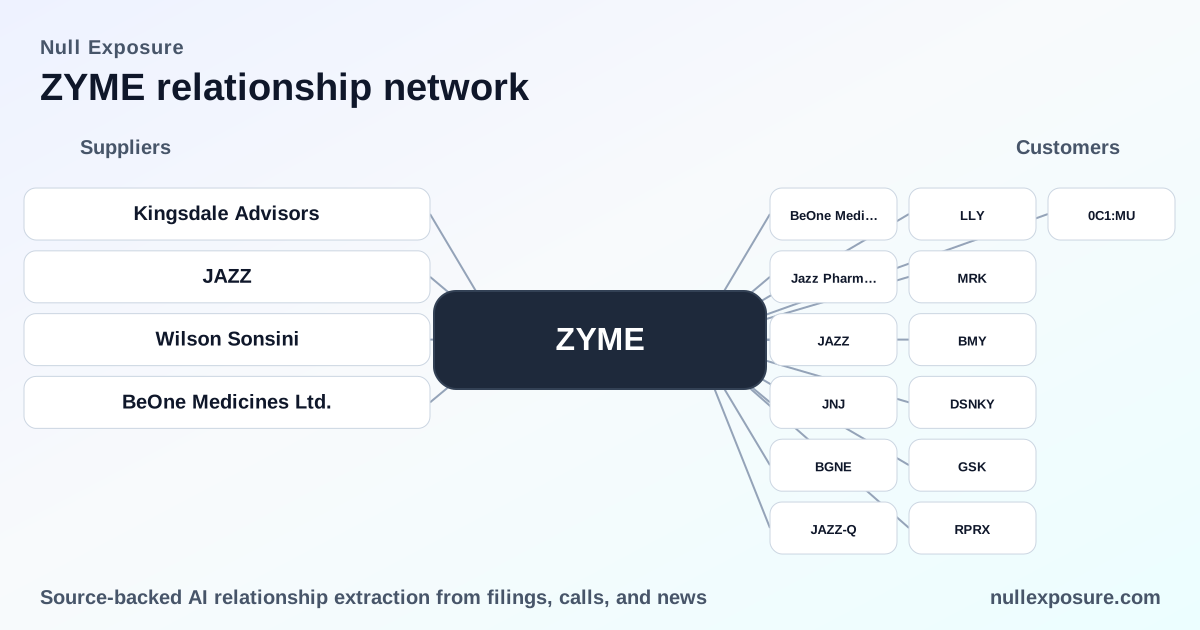
Supplier map — who’s in Zymeworks’ network and what they do
Kingsdale Advisors — governance and shareholder communications
Kingsdale served as strategic securityholder advisor, proxy solicitation agent, information agent and communications advisor around Zymeworks’ corporate redomicile activities in 2022. A BizWire filing in September–October 2022 documents Kingsdale’s role in supporting the company’s shareholder engagement and proxy process. (BizWire releases, Sept–Oct 2022)
Jazz Pharmaceuticals plc — commercialization partner for a lead program
Jazz Pharmaceuticals has been brought in to help commercialize a Zymeworks drug candidate, positioning Jazz as a potential revenue engine through licensing and commercialization. A March 2026 news report referenced Jazz’s involvement in commercializing the program. (Delta‑Optimist / local coverage, March 2026)
Wilson Sonsini — legal advisor on licensing arrangements
Wilson Sonsini advised Zymeworks on the exclusive licensing agreement with Jazz, offering legal support to finalize commercial terms and protect IP and transaction structure. The firm’s advisory role is documented in a client note and press mention tied to the Jazz licensing announcement. (Wilson Sonsini press note, 2022)
BeOne Medicines Ltd. — additional commercialization collaborator
BeOne Medicines Ltd. is named alongside Jazz as a partner engaged to help commercialize the candidate, indicating a multi‑party commercialization strategy rather than sole reliance on a single partner. This involvement was reported in the same March 2026 coverage that discussed Jazz’s role. (Delta‑Optimist / local coverage, March 2026)
What the constraints disclose about Zymeworks’ operating model
The collected constraints form company‑level signals about contracting posture, geographic reach, supplier criticality and maturity.
- Contracting posture: mixed tenure. Zymeworks holds a long‑term lease for its Vancouver offices through February 2032 with extension options, signaling a stable, headquarters‑level commitment to a single facility. Conversely, the primary U.S. office lease shows short‑term exposure with a lease expiring June 2026 (with an extension option), indicating near‑term footprint flexibility but potential rollover cost or relocation risk.
- Geographic footprint: global clinical reach. The company explicitly progresses IND submissions and Phase 1 sites across North America, Europe and the Asia‑Pacific region, supporting a multi‑region clinical strategy that increases complexity in regulatory and supplier coordination.
- Supplier criticality: manufacturing is mission‑critical. Zymeworks outsources all therapeutic antibody manufacturing — including linker‑toxin conjugation and fill/finish — to third‑party CMOs, and classifies these providers as critical to executing clinical programs.
- Service orientation: reliance on external CROs and professional services. Clinical development and many program costs are outsourced to CROs and other service providers; accounting and audit relationships are external as well, indicating a broad service‑provider posture rather than vertically integrated capabilities.
- Maturity signals: established corporate governance events. The engagement of proxy advisers and relocation/redomicile activities in 2022 indicate corporate governance maturity and active capital‑market management.
These constraints are company‑level interpretations supported by lease language, clinical site disclosures and outsourcing descriptions; they are not assigned to an individual supplier unless explicitly named in the underlying excerpt.
What investors and operators should read into these relationships
The Jazz and BeOne commercialization arrangements are primary value drivers: licensing and commercialization partners accelerate market access and shift commercialization cash requirements off Zymeworks’ balance sheet, while creating contingent revenue streams tied to milestones and royalties. Wilson Sonsini’s legal advisory role reduces execution risk on contract terms and IP protections, improving the odds that deals translate into enforceable revenue. Kingsdale’s engagement during the redomicile reflects active governance management, useful for assessing investor relations and potential future transactional activity.
At the same time, outsourced manufacturing and CRO dependencies are the most consequential operational risk: failed supplier compliance, capacity shortfalls or fill/finish issues directly delay trials and revenue realization. The mixed lease profile adds an extra layer — a long‑run headquarters commitment in Vancouver balanced against short‑term U.S. occupancy — creating both stability and a near‑term operational decision point that could influence overhead and talent access.
If you want a focused view of how supplier concentration and contract tenure change the investment case, check the firm‑level report at https://nullexposure.com/.
Actionable risk mitigation points for investors and operators
- Prioritize due diligence on the CMO roster and contractual protections for supply continuity, quality penalties and capacity guarantees. Third‑party manufacturing is mission‑critical.
- Monitor milestone timing and revenue recognition triggers in the Jazz/BeOne agreements and track Wilson Sonsini‑supported contract language that could affect payment waterfalls or IP reversion.
- Watch lease expiries and extension elections for potential cash flow or relocation events, particularly the U.S. lease expiration in mid‑2026.
- Assess geographic trial execution readiness across NA/EMEA/APAC; multi‑region development increases regulatory and supplier coordination risk but diversifies patient recruitment.
For ongoing monitoring and comparative supplier analytics, visit https://nullexposure.com/ to see how Zymeworks stacks up against peers.
Bottom line: concentrated operational leverage, diversified commercialization partners
Zymeworks’ immediate value profile is shaped by its commercialization partners (Jazz and BeOne) and by the structural risk from outsourced manufacturing and CROs. The company has mitigants — legal counsel and governance advisors — but ultimately clinical timelines and supplier reliability will determine when and if licensing economics convert into predictable cash flows. Operators should focus on hard contractual supply protections; investors should watch milestone realization and supplier performance indicators as the primary signals of valuation inflection. For a deeper supplier intelligence brief and comparative risk scoring, go to https://nullexposure.com/.